

This is something that many parents know all too well. Your two-year-old sees the box with the cartoon character on it while you’re in the cereal aisle. It starts to scream before you even get close. It’s not by chance. That’s exactly how it was meant to happen.
Kids who don’t want to eat have long been seen as a parenting issue that can be fixed by finding creative ways to hide vegetables, making reward charts, or just being patient. But more and more research, some of it linked to early childhood education networks like OMEP Aotearoa, is challenging that way of thinking. The argument is simple, but it makes me feel a little bad: what we call “picky eating” in kids is mostly the result of commercial engineering.
Researchers who talked to 34 parents of kids between the ages of one and eighteen found something that wasn’t really a parenting study but more like a report on how people behave when they shop. Parents weren’t just having a hard time with toddlers who wouldn’t behave. Companies with huge marketing budgets, high-tech product designs, and a deep understanding of how kids think and act were giving them a hard time. One mom said she took her little boy to the store and saw him lose it over a lollipop that was put right next to the register. That wasn’t just put there by accident. The crash wasn’t either.
The biology is important here. It’s in children’s genes to like sweet, high-calorie foods. This is an instinct that helped them stay alive in the past. In the food business, they know this and build on it. Ultra-processed foods are made with different amounts of sugar, salt, and fat that work together to make our brains feel good in ways that whole foods don’t. It’s not crazy for a child to only want a Nutella sandwich and turn down everything else. They are reacting to something that was made to be impossible to resist.
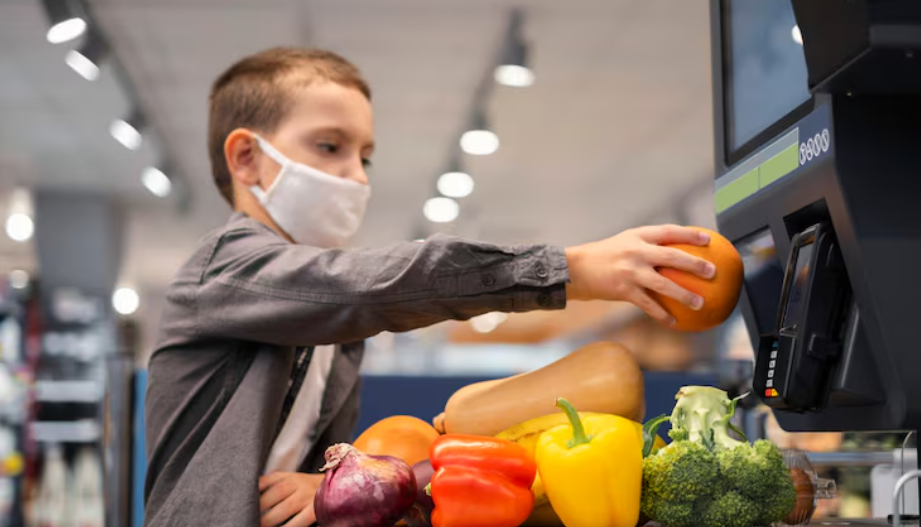
Parents have a harder time with this because food labels and health claims can be hard to understand. Several parents who took part in the study said they bought foods they thought were healthy because the label said so, but when they looked at the list of ingredients, they saw that it wasn’t true. It’s possible that no amount of work on your part can fully make up for a food environment that is built on purposeful confusion. It was made clear by a parent: you trust the label, but you probably shouldn’t.
Not enough attention is paid to the social aspect as well. In the study, a dad talked about how his son was enjoying eating hummus until everything changed. Every kid had chips and doughnuts at school, at birthday parties, and everywhere else. All of a sudden, hummus stopped being interesting. “It’s a battle we’re not gonna win,” he replied. We parents have all felt that way of giving up, and it’s okay to sit with it. There’s more than one source of pressure here. It comes from the normalized world that kids grow up in.
Also, the usual diet advice hasn’t changed much: eat as a family, keep giving out vegetables, and don’t use food as a reward. I agree with it. That being said, it wasn’t really thought out for a world where a cartoon character can overnight make a yogurt an obsession. Researchers in this field now say that parents should be praised instead of criticized, and that families shouldn’t have to fix their kids’ diets on their own.
More and more, people want the government to do something about it. They want stricter rules on marketing to kids, easier-to-understand labeling, and rules that take into account the business side of what has always been called a parenting issue. It’s still not clear if that pressure will lead to regulation in the end. The food business has a lot of money and time, so progress is usually slow.
But as I watch this conversation go on, I get the sense that something is changing. Kids who are fussy eaters are starting to be seen as more than just a normal part of growing up. It’s a sign that needs to be taken seriously at all times, not just at dinner.
