

What lies at the heart of this case is almost subtly ridiculous. Nothing dramatic enough to make the evening news, not an engine fire, not a catastrophic structural failure. Only wood. Travel trailers with regular wood roof trusses that were advertised in product literature as having “5-inch Crowned/Stamped Galvanized Steel Roof Trusses.” Keystone RV Company ultimately lost $3.11 million as a result of the discrepancy between what was installed and what was promised.
Up to 541 eligible class members will receive $2,000 each from the slightly over $3.1 million settlement fund, which also covers legal fees, administrative expenses, and a service award to the lead plaintiff. According to the breakdown provided on the settlement website, the lawyers receive the larger portion, which is $2 million. Although this math isn’t specific to this case, it does lead to the kind of skepticism that characterizes most class actions: the lawyers receive a check for two million dollars, while the consumers receive a check for two thousand dollars. It’s reasonable to wonder if that’s justice or just procedure.
Since 1996, Keystone RV has been producing recreational vehicles out of Goshen, Indiana, which is located in the center of an area that essentially defines RV manufacturing in the United States. The company manufactures toy haulers, fifth-wheels, and travel trailers, the kinds of goods that American families purchase while picturing weekends spent in national parks and mornings filled with coffee, fog, and pine trees. The Passport Western Edition was marketed as a competent, well-made choice for that way of life. The lawsuit claimed that after a certain point in production, Keystone started constructing these trailers with wood trusses while still marketing them as steel. The company disputes this allegation, despite the court’s ruling against it.
In this instance, the precise cutoff point is crucial. Only purchasers who bought brand-new from a Keystone-authorized California dealership before December 1, 2019, are eligible for the settlement. The trailers in question have serial numbers that end in HX414101. The California restriction is significant because it bases the case on California’s consumer protection laws, which are typically more expansive and plaintiff-friendly than their federal counterparts. Additionally, it means that owners of Passport Western Editions in other states—possibly with identical trailers and wood trusses—do not have access to this specific $2,000.
It takes a moment that is strangely personal for a legal procedure to confirm eligibility. To find out if their trailer has metal or wood trusses, owners can remove the screws from a bathroom vent and examine the interior structure. A couple standing in their bathroom with a screwdriver, wondering if the roof above them was ever what they were promised, has an unexpectedly intimate quality to it. Photographs or video evidence of the wood trusses might be needed if Keystone contests the claim.
Notably, Keystone has not acknowledged any misconduct in this case. It protects the business from downstream liability and is standard language in class action settlements. Nevertheless, the court issued a ruling, and a $3.1 million fund is currently awaiting distribution in Portland, Oregon. Even without the official admission, that seems like a verdict.
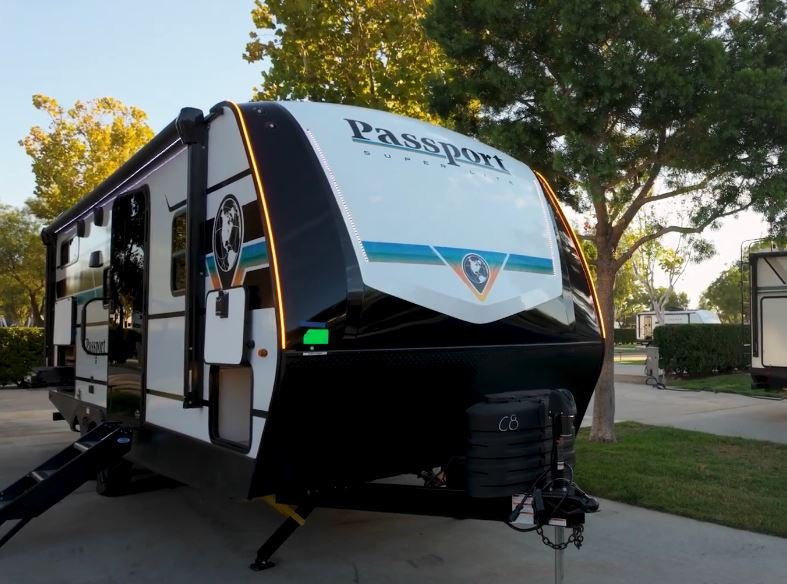
By October 2, 2026, approved claims will be mailed as checks, which class members have ninety days to cash before any money left over is returned to Keystone. The filing deadline is August 28, 2026. These things have a way of slipping past people who think they’ll get to it next week, so anyone who believes they might qualify should act as soon as possible.
Keystone has previously been under legal pressure. The business paid close to $100,000 to resolve an EEOC disability discrimination lawsuit in 2024 involving an employe who was fired rather than provided accommodations. Although the pattern of legal exposure in the areas of consumer protection and employment law doesn’t provide a clear picture of the business, it does indicate that Keystone, like the majority of big manufacturers, operates quickly and occasionally takes shortcuts.
The RV industry probably doesn’t like the larger question this lawsuit raises. What else might subtly change between the brochure and the build if a manufacturer can replace a structural material, like steel for wood, without the buyers’ knowledge for years? It’s still unclear if this was thoroughly examined by any regulatory body or if the matter was only brought to court by one lawsuit and one lead plaintiff. That serves as both a resolution and a reminder to the approximately 541 families who could now receive $2,000 that it’s important to double-check the fine print on a product specification sheet.
