

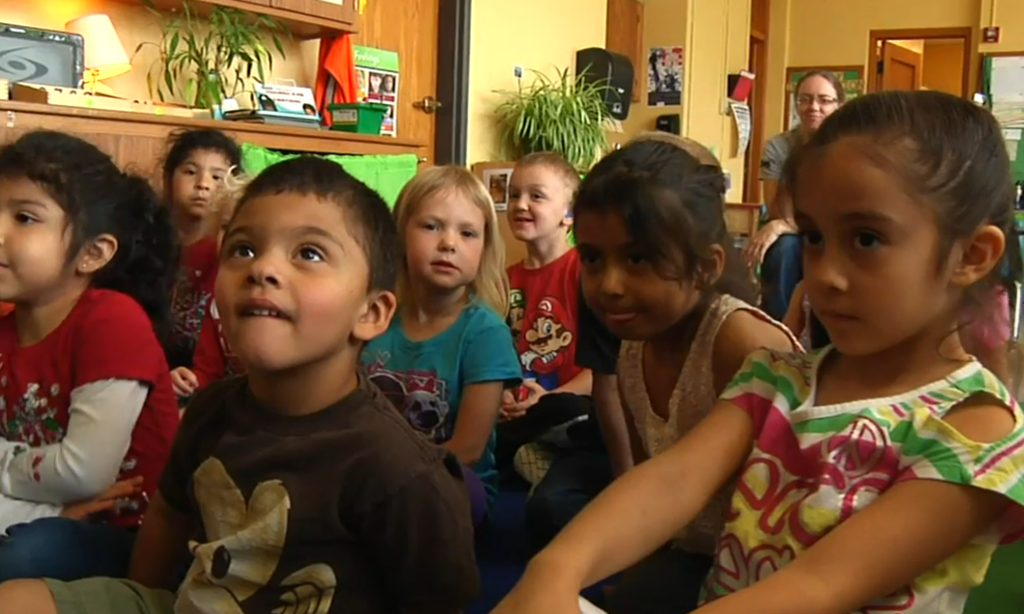
Children who are too young to articulate their desires are learning things in the courtyard of a creche in Montes Claros, a city in the arid interior of Minas Gerais state, that will have a lasting impact on their lives. The structure is modest. There aren’t many resources. However, what sets Brazil’s approach to early childhood apart from the disjointed, patchwork situation in the United States is the fact that these children are here at all—Brazil decided years ago that children this young needed structured, state-funded care and development.
Brazil took it a step further in August 2025. The National Integrated Policy for Early Childhood, or PNIPI, was signed by President Lula da Silva. It is a comprehensive new framework that unifies all ministries that have an impact on a child’s life into a single, well-coordinated national strategy. For children from birth to age six, education, health, social protection, and security must now coordinate services, share a database, and report against the same set of objectives. It includes all 5,570 municipalities in the nation. It is among the most comprehensive early childhood frameworks that any middle-income nation has tried, both in terms of scope and ambition.
| Field | Details |
|---|---|
| Topic | Brazil’s National Integrated Policy for Early Childhood (PNIPI) and lessons for U.S. early childhood policy |
| Policy Name | PNIPI — Política Nacional Integrada Para a Primeira Infância |
| Signed By | President Luiz Inácio Lula da Silva |
| Date Signed | August 2025 |
| Target Age Group | Children 0–3 years (creches) and 4–6 years (preschool) |
| Children Affected | ~10 million Brazilian children (0–6) in low-income families; over half of all children under 6 |
| Key Mechanism | Unified national database; integrated coordination across education, health, social assistance, and security ministries |
| Municipal Scope | All 5,570 municipalities and 27 federal units involved |
| Campaign Behind It | Act For Early Years (Theirworld), 18+ months of advocacy before G20 summit 2024 |
| Partner Organization | Maria Cecilia Souto Vidigal Foundation (CEO: Mariana Luz) |
| U.S. Context | Less than one-third of eligible 4-year-olds attend public preschool; enrollment ranges from 79% (Florida) to 0% (Wyoming) |
| Brazil’s Earlier Milestone | 2009: Brazil became one of only three countries to mandate public education for children under 5 |
| Global Momentum | South Africa, Philippines, Singapore, Canada, Rwanda, UK, Japan, Australia also investing in early years |
| Core U.S. Gap | U.S. debate focuses on age 4; Brazil targets 0–3, when most critical neural development occurs |
The timing is not coincidental. Approximately ten million Brazilian children under the age of six, or more than half of them, come from low-income households. Many of those kids don’t have consistent access to daycare, basic sanitary facilities, or vaccination rates, which have been falling recently. Households are affected by domestic violence at rates that are challenging to quantify. Instead of the fragmented, stop-and-start programs that typified Brazil’s strategy in earlier decades, the new policy is intended to reach into that reality through coordinated intervention.
The underlying idea, rather than the scope of the ambition, is what makes this especially pertinent to the United States. In contrast to the pre-K year prior to kindergarten, where American policy debate has largely stagnated for the previous generation, Brazil’s policy views the period from zero to three as the critical window. The difference is not insignificant. After the first three years of life, there is a significant slowdown in the rate and intensity of neural development. Everything that comes after is shaped by the cognitive architecture being developed during those years, including executive function, language processing, and emotional control. It’s better to step in at age four, when a lot of that architecture is already in place, than to do nothing at all. However, it is not the same as making an investment while the building is still being constructed.
Currently, less than one-third of eligible four-year-olds in the US attend public preschool. States differ greatly in terms of enrollment; for example, Florida enrolls about 79% of its four-year-olds, while Wyoming has no public preschool at all. The public infrastructure is even thinner for children under four: a patchwork of federal programs like Head Start and Early Head Start that collectively serve a small portion of eligible children, coupled with childcare markets that are costly for families and persistently underfunded for providers. In Washington, discussions seldom reach zero-to-three with a persistent sense of urgency.
Instead of just being joyous, Brazil’s history with this is instructive. In 2009, the nation mandated preschool for children under five, but the infrastructure to comply with the mandate was not up to par. More than three-quarters of early education institutions fell short of acceptable quality standards, according to a federal assessment. There were stark regional differences: compared to the relatively impoverished North, the Southeast region spent almost seven times more per student on early education. There was an unequal distribution of good teachers. Facilities in rural areas lacked running water. The system to uphold the constitutional right was far behind.
Watching the 2025 policy announcement gives the impression that Brazil is attempting to close that gap more systemically than symbolically. The integrated database is specifically made to show where children aren’t receiving services, not just where they ought to be. Coordination between ministries acknowledges that a child’s needs transcend bureaucratic boundaries; for example, a family experiencing food insecurity may also be dealing with healthcare gaps and issues related to early education access, and that focusing on one issue while ignoring the others will not yield significant results.
It is still genuinely unclear whether the policy will succeed at the implementation level. Coordinating with several federal ministries and 5,570 municipalities is a very difficult administrative task. However, the framework being developed is coherent in a way that American early childhood policy seldom is, and the level of political commitment behind it—supported by G20 momentum, eighteen months of civil society advocacy, and a presidential signing ceremony—suggests something more long-lasting than a pilot program.
The American parallel is not that the United States should adopt Brazil’s model in its entirety. The reason for this is that the U.S. policy discourse consistently places the urgency at the incorrect point in time. The kids who stand to gain the most from intervention are not yet requesting it. They are in the years before school, before language, and before anyone considers looking at test results. The gap opens at that point. And despite all of its difficulties and injustices, Brazil has chosen to fly its flag there.
