

It began with a screen and a long period of empty afternoons, just like so many bizarre educational journeys these days. Vivan Mirchandani was 11, locked inside his home in India during the worst weeks of the Covid-19 pandemic, scrolling through physics videos when most kids his age were burning hours on mobile games.
The image, which shows a boy in a quiet room with the nation shut down outside and a professor from halfway around the world giving a lecture, has an almost cinematic quality. He was going to stray from the path his classmates were taking, even though he was unaware of it at the time.
| Field | Detail |
|---|---|
| Initiative | MIT Open Learning |
| Parent Institution | Massachusetts Institute of Technology, Cambridge, MA |
| Year Founded | 2001 (as OpenCourseWare) |
| Core Platforms | OpenCourseWare, MIT Learn, MITx |
| Cost to Learners | Free (most resources) |
| Reach | Over 500 million learners worldwide |
| Course Library | 2,500+ undergraduate and graduate courses |
| Notable Learner | Vivan Mirchandani, 16, India |
| Courses Completed by Mirchandani | 27+ |
| First Course Taken | 8.01 Classical Mechanics |
Five years later, at sixteen, Mirchandani is penning papers on cosmology. One of them—the kind of sentence you wouldn’t typically write about a high school student—offers a novel framework for comprehending Einstein’s general theory of relativity. In addition, he created a digital twin of himself, trained an AI model designed to mimic his late grandmother’s consciousness, and extended fluid dynamics laws to cats. In between are regional science fairs, a TEDEd Talk, and a Model UN delegation. It’s quite a bit. One teenager might find it too much. But it doesn’t seem to be slowing him down.
What sits underneath all of this is MIT Open Learning, the Institute’s sprawling free-resource ecosystem that includes OpenCourseWare and the newly launched MIT Learn. Mirchandani found it during lockdown and never really left. His first course was 8.01, Classical Mechanics, the same one MIT freshmen sweat through in person. “Physics sounded like elegance,” he says, which is not a sentence most students walk away from intro mechanics holding onto. He refers to OpenCourseWare as a sort of “holy grail,” and you can tell he means it.
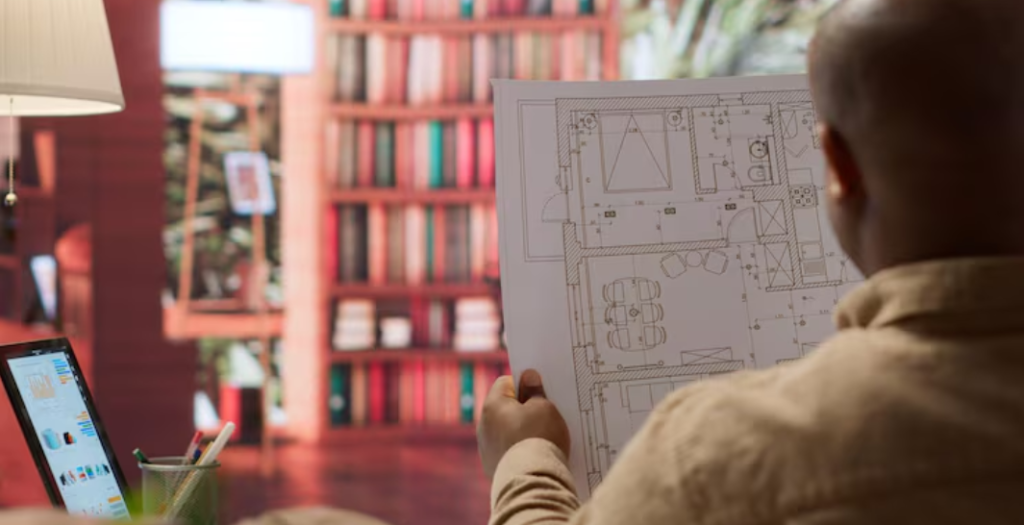
However, his story conceals a more subdued argument. He feels that the traditional system prepares students for tests rather than for real scientific work, and it’s difficult to ignore how frequently this criticism comes up these days from parents, teachers, and even the children themselves. At the age of twelve, Mirchandani consciously traded his grade point average for practical experience of how real research truly feels. It’s arguable if that’s the best trade for everyone. It appears to have worked for him.
He assembled his own curriculum from MIT’s archives, progressing from classical mechanics to computer science to quantum physics, under the direction of his physics instructor. I’ve completed twenty-seven courses. Along the way, he began putting what he had learned to use at his family’s machinery company, Dynamech Engineers, which manufactures commercial snack production equipment. He contributed to the development of a gas-based heat exchange system, a combined machine that replaces two older ones without sacrificing efficiency, and a zero-oil frying technology that eliminates about 300 calories per kilogram. The modeling methods were taken directly from fluid dynamics slides and a Python course.
However, neither a paper nor a prototype is the accomplishment he most easily cites. He was chosen for the first RSI-India cohort, which is based on the MIT and Center for Excellence in Education co-sponsored program. Out of a pool of students who passed the board exam with perfect scores, 35 were accepted. Mirchandani had doubts about his survival. His real-world research experience was given more weight by the program than his polished test scores, which may indicate where credentials are headed.
As you watch this happen, you get the impression that something bigger is moving beneath the surface of traditional education. Once upon a time, open courseware was written off as supplemental material that was useful for the inquisitive but unimportant to those with credentials. It now seems more difficult to defend that framing. Adaptive platforms, free institutional content from institutions like MIT, and AI tutors are subtly changing who gets to learn what and when. It’s still unclear if colleges will adjust quickly enough or if students creating their own curricula will just avoid them. Mirchandani put it more simply. “It’s basically letting curiosity get the better of us.”
