

One of the upSTART participants’ testimonials has a particularly memorable moment. “I realized that I wasn’t being the best model for her,” a mother says, summarizing the lessons she learned about controlling her own emotions around her older daughter. She frequently uses me as a trigger. The phrase “modest, honest, arrived at through months of support” probably sums up upSTART’s true goals more accurately than any program brochure could.
The Division of Public Health Pediatrics at Baylor College of Medicine and Texas Children’s Hospital launched the upSTART Community Programs in 2022. Based in Houston, the program serves families in 238 zip codes and 45 Texas counties. Since the program started, more than 3,300 families have benefited. It’s all free. In a state where access to early childhood services has historically been strongly influenced by geography and income, and where too many families in underserved communities have simply slipped through the cracks between government programs and hospital systems, that final point is crucial.
The range of services provided by upSTART addresses topics that the majority of pediatric programs don’t even try to cover collectively. UpLIFT is a program that uses home-based or virtual sessions with licensed social workers to address maternal mental health during pregnancy and the postpartum period. For caregivers of children between the ages of 0 and 36 months, upWORDS is a four-month group program with sixteen sessions that focuses on early language and brain development. Community health workers, or CHWs, are in charge of the less clinical but no less important tasks, such as assisting families with Medicaid, WIC, and SNAP applications, putting them in touch with speech therapy services, and providing diapers and car seats when a family truly needs them.
Key Information: upSTART Community Programs
| Program Name | upSTART Community Programs |
| Founded | 2022 |
| Parent Organizations | Texas Children’s Hospital & Baylor College of Medicine |
| Division | Division of Public Health Pediatrics |
| Location | Houston, Texas (serving statewide) |
| Reach | 3,300+ families across 45 Texas counties and 238 zip codes |
| Cost to Families | Free |
| Core Programs | upLIFT (Maternal Mental Health), upWORDS (Early Language Development), Community Health Workers (CHWs) |
| upLIFT | Virtual or home-based sessions with licensed social workers for prenatal/postpartum depression and anxiety |
| upWORDS | 16-session, four-month group program for caregivers of children aged 0–36 months |
| Funding | Philanthropic support including Blue Cross and Blue Shield of Texas |
| Contact | upSTARTHouston@bcm.edu |
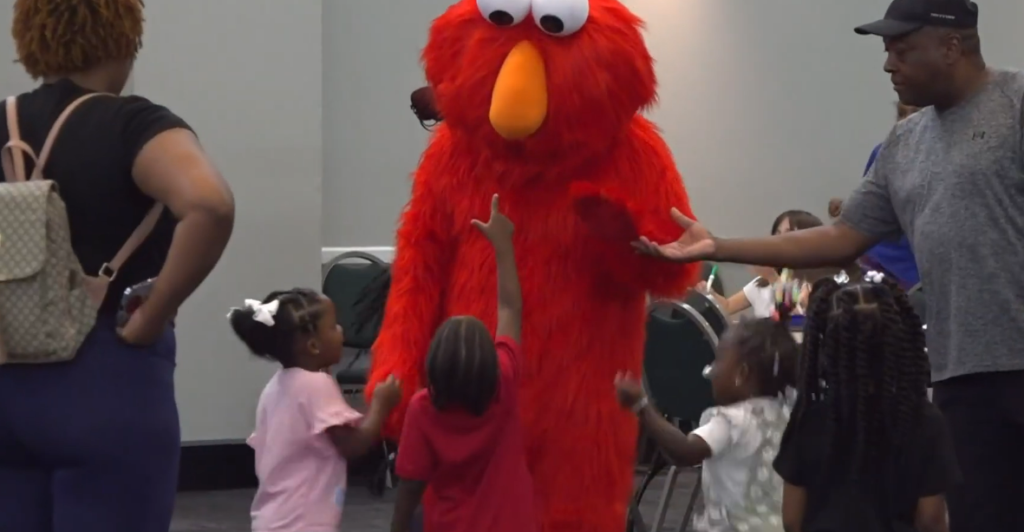
It’s difficult to ignore how purposefully this program is built around the realities of a family’s life rather than the administrative ease of a healthcare system. One participant talked about managing diabetes during a challenging first pregnancy and said the education made her feel more prepared, both medically and emotionally, as a first-time mother navigating a huge task with little support. Another said that without her CHW, she would not have known how to obtain speech therapy services for her child, who was currently awaiting acceptance. In the context of clinical trials, these results are not particularly noteworthy. They are the quiet architecture of a child’s formative years constructed with greater care than it otherwise would have been.
The program is part of a larger national discussion about the potential of community health workers in pediatric settings. A growing body of research has demonstrated that CHWs, also known as promotores or peer navigators, lower ER visits, increase attendance at well-child appointments, and assist families in navigating the social needs that influence children’s health long before a doctor is involved. Compared to most institutions of its size, upSTART appears to have a better understanding of the fact that issues like housing instability, food insecurity, and financial stress don’t stay outside the exam room door.
The combination of clinical rigor and authentic community presence is what makes upSTART’s model intriguing and possibly worthwhile to observe. Pediatric health educators and speech-language pathologists support the program. It is based on research on maternal mental health and early brain development. However, it also sends people straight to homes, saving families from having to go through a number of administrative obstacles before they can get assistance. The program seems to have been created by individuals who have spent enough time with the families it serves to know what truly stands in the way.
Of course, there are unanswered questions. It’s always difficult to maintain this kind of work without steady public funding; upSTART is heavily dependent on charitable contributions, such as those from Blue Cross and Blue Shield of Texas, and it’s still unclear how the model will scale or withstand changes in that support. 238 zip codes are covered by the program, which seems significant until you consider how big Texas is and how many rural areas are still far outside of any service area. It is still unclear if the model will be able to assist the families who are most remote from healthcare facilities, not only in the counties that surround Houston but also throughout the vast regions of West Texas and the Rio Grande Valley.
However, the foundation is genuine. The work focuses on early language exposure, secure attachment, a mother’s mental health, and a caregiver who has been trained to take a breath before speaking—all of which developmental science says are important. These are not ancillary issues. These are the circumstances that determine whether a child’s brain develops normally or not. It appears that upSTART, which operates covertly out of a Houston hospital system, has recognized that from the start. That is not insignificant. In fact, it could be crucial in Texas’s early childhood health landscape.
