

Depending on the length of the layover, the flight into Bangkok takes 20 to 22 hours. By the time the conference center—a sizable, climate-controlled structure in the sweltering July heat—comes into view, the majority of American attendees have already spent several hours wondering if the trip was worthwhile. Yes, it was. People who travel to an OMEP World Assembly for the first time seem to consistently report feeling a little sorry about the jet lag, which is quickly followed by the realization that nothing in their domestic professional lives had adequately prepared them for what a truly global conversation about children’s education actually sounds like.
With the theme “Right from the Start for ECCE: Step Beyond All Together,” the 76th World Assembly in Bangkok in July 2024 attracted close to 400 participants from over 60 nations. Over 400 presentations and 700 attendees from 61 countries attended the 77th in Bologna in 2025. These aren’t little get-togethers of like-minded professionals who support one another’s presumptions. OMEP purposefully refers to these gatherings as “working conferences,” where the agenda alternates between poster sessions, workshops, plenary keynote addresses, and thematic symposia in a way that leaves little time for passive observation. The experience can be disorienting in a constructive way for an American educator used to conferences where the conversations in the hallways are frequently more substantive than the sessions. Here, the sessions are usually the main focus.
For the majority of American attendees, the breadth of the issue under discussion is what strikes first. The discussion of equity at an early childhood conference in the United States typically focuses on domestic disparities, such as the Head Start funding debate, racial and income disparities within states, and urban versus rural access. That’s all important. However, when you sit in a room in Bangkok and hear an educator from Nigeria discuss the structural lack of pre-primary education in her area, a researcher from Japan present data on how gender stereotypes start to appear in classrooms at age three, and a practitioner from Cyprus discuss migrant children and their right to safety, the American frame suddenly seems particular rather than universal. It is uncomfortable to recalibrate. Months later, it’s usually the thing that people can still clearly recall.
OMEP World Assembly & Conference — Key Facts & History
World Organisation for Early Childhood Education | Annual World Assembly Profile | 2015–2026
| Organization | World Organisation for Early Childhood Education (OMEP) — founded 1948; operates in 80+ countries through 66 national committees and 17 preparatory committees |
| World Assembly purpose | OMEP’s highest decision-making body; reviews reports, sets strategic directions, governance decisions, partnerships, and future work — held annually in a different host country |
| 77th Assembly — Bologna, Italy (2025) | Theme: “Arts and Cultures in Early Childhood Education: Play, Expression, Participation”; 61 countries represented; 400+ presentations; 700 participants from all continents |
| 76th Assembly — Bangkok, Thailand (2024) | Theme: “Right from the Start for ECCE: Step Beyond All Together”; nearly 400 participants from 60+ countries; keynotes from Dublin City University, UNICEF East Asia, UNESCO HQ |
| 78th Assembly — Poznań, Poland (2026) | Theme: “When a Child Speaks… Korczak’s Inspirations for Education and Children’s Rights”; July 13–18, 2026; hosted by Adam Mickiewicz University; includes pre-Assembly event at Treblinka memorial and Korczak Forest planting |
| 67th Assembly — Washington D.C. (2015) | 500+ delegates from nearly 50 countries; Whittier College students presented research; featured speakers included Marian Wright Edelman; OMEP’s UN status upgraded from Roster to Special Consultative Status |
| Format | Combines World Assembly (members only) + World Conference (open); plenary lectures, thematic sessions, symposia, poster sessions, workshops, study visits to early childhood centers, and cultural events including a Gala Dinner |
| Outgoing World President | Mercedes Mayol Lassalle — served 2020–2025; concluded term at end of 2025; author of opinion piece “What education do we want for the country we dream of?” |
| Key partners | UNESCO, UNICEF, Right to Education Initiative (RTE), Global Campaign for Education, ARNEC, ECDAN, and 80+ national OMEP committees |
| Whittier College involvement | Established collegiate OMEP chapter since 2011; raised over $10,000/year for children’s charities; students have presented research at World Assemblies; Professor Judith Wagner served as Deputy President of OMEP World |
| Next Generation initiative | Social media-based group co-founded by UN OMEP Youth Representative Amber Eriksson and Whittier College graduate Rebecca Robinson — bridges gap between younger OMEP members and senior professionals |
| 2026 special element | Honors legacy of Janusz Korczak — Polish-Jewish pediatrician and pioneering child rights advocate who died at Treblinka in 1942 alongside his orphaned students; forerunner of the UN Convention on the Rights of the Child |
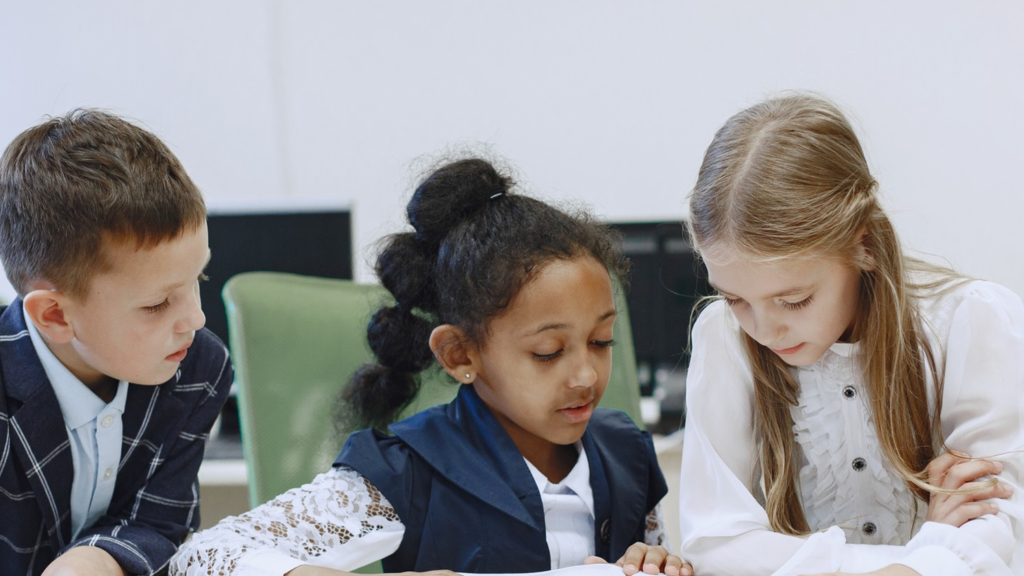
It is more difficult to characterize the atmosphere than the content. These events have a seriousness that isn’t overtly theatrical. Five students from Whittier College in California presented research on college advocacy and language immersion in early childhood classrooms at the 67th Assembly in Washington, D.C. in 2015. Presenting alongside senior researchers and policymakers, these undergraduate students received the same level of attention from the assembly as Marian Wright Edelman’s keynote address. One of the things that sets the OMEP World Assembly apart from the majority of other professional gatherings in the field is its ethos, which states that everyone who shows up with something important to say will be heard. The organization’s tagline, “a pedagogy of listening,” encompasses more than just its stance on assessment procedures. It seems to explain how the conference functions.
The 78th Assembly will be one of the most historically significant in recent memory when it convenes in Poznań, Poland, in July 2026. The theme, “When a Child Speaks…” Korczak’s Inspirations for Education and Children’s Rights, is based on the life and legacy of Janusz Korczak, a Polish-Jewish educator and pediatrician who chose to die with his orphaned students in Treblinka in 1942 rather than accept the exemption that was offered to him. Each OMEP national committee will be represented by a tree planted in a Korczak forest at the Treblinka memorial during a pre-Assembly event. It is the type of programmatic decision that doesn’t occur at education conferences that haven’t given careful thought to what it means to protect children’s rights when doing so comes at a real cost.
Speaking with American educators who have attended these assemblies, it seems that the experience is difficult to replicate back home. The urgency doesn’t translate well to curriculum meetings, grant applications, or the particular annoyances of dealing with district bureaucracy. Apparently, what transfers is a change in the frame’s size, a perception that the discussion taking place in Bologna, Bangkok, or Poznań is the greater conversation and that the American debates, significant as they are, are occurring within it rather than defining it. Knowing that is helpful. To properly learn it, 400 presentations from 61 countries and 22 hours of travel are required.
