

Imagine a toddler in a living room somewhere, not in a particular city, but in the kind of setting that has become commonplace on every continent. The youngster is silent. The parent is appreciative of the silence. The tablet is operating as intended. There is no cruelty. No one is being careless. The screen is a workable solution for this specific afternoon because the parent is worn out, likely working, and possibly juggling three other tasks at once. The World Organization for Early Childhood Education (OMEP), which operates in over 70 countries and carries over 70 years of institutional memory, is currently characterizing this situation as a slow-moving crisis.
The figures are impressive enough to justify the term. Two-thirds of kids under two use screens on a regular basis. Some people stand in front of them for up to eight hours every day. Children under two should not spend any time on screens, according to the World Health Organization. Preschoolers currently log about two hours per day on average, which is twice the WHO’s recommended maximum for children ages three to five. Researchers and pediatricians have begun to use the term “crisis point,” which was previously only used in more dire circumstances, because of the widening gap between what the research supports and what is actually occurring in homes around the world.
Performative caution is not OMEP’s concern. It is based on the findings of developmental science regarding the first thousand days of a child’s life, from conception to about age two, during which time the brain develops at a rate that will never be matched. Neurologically, a child’s experiences during that window are greatly influenced by the quality of their interactions. Make eye contact. Make contact. Talking. Real-time language and emotional regulation are developed through a caregiver’s back-and-forth responses to a baby’s sounds and expressions. That interaction is not replicated by screens, not even with excellent educational content. They take up the space where it would normally occur, and research on the effects—delayed speech, impaired attention regulation, irregular sleep patterns, and decreased motor coordination—is mounting with unsettling regularity.
| Field | Details |
|---|---|
| Organization | OMEP — World Organisation for Early Childhood Education |
| Founded | Over 70 years ago |
| Headquarters | Buenos Aires, Argentina |
| World President | Mercedes Mayol Lassalle |
| UN/UNESCO Status | Special consultative status |
| Active In | 70+ countries |
| 2025 World Declaration | “Foundational Learning, Creativity, and Culture in Early Childhood” |
| 77th World Assembly Location | Bologna, Italy |
| WHO Screen Time Guideline | Zero screen time for children under 2; max 1 hour/day for ages 2–5 |
| Current Reality | Average preschooler: ~2 hours/day on screens (World Bank data) |
| Most Alarming Statistic | Two-thirds of children under 2 use screens; some up to 8 hours daily |
| Key Developmental Concerns | Language delay, disrupted sleep, weakened attention regulation, poor social competence, reduced motor coordination |
| Core OMEP Argument | Screens replace essential human interaction — eye contact, touch, conversation — critical in the first 1,000 days |
| OMEP Position on Prohibition | Against total bans; advocates balance, screen-free zones, family plans |
| Related Organization (Pakistan) | Pakistan Alliance for Early Childhood (PAFEC) |
| PAFEC CEO | Khadija Khan |
| Clinical Expert Referenced | Dr. Samra Salik, clinical psychologist |
| Key Research (PMC) | Veldman et al., 2023 — correlates of screen time in children aged 0–5 |
| UK Report Referenced | Study by the 1001 Critical Days Foundation on screen use among babies and toddlers |
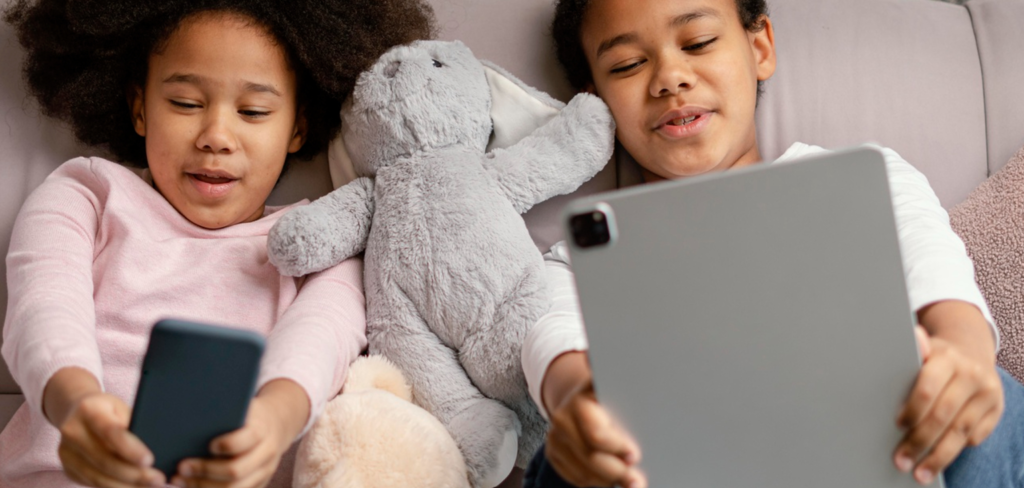
Adopted at its 77th World Assembly in Bologna and formally ratified on November 29, 2025, the organization’s 2025 World Declaration uses purposefully straightforward language to frame the larger context. According to the declaration, children have rights and are able to imagine, create, transform, and engage in social interactions. A period of creativity, play, language, identity, and ties that foster citizenship from birth, early childhood is a time of living culture. In light of this, the issue of screen time becomes more than just a parenting advice. It turns into a question of rights. What is being lost is more than just developmental milestones if a child’s early years are when they acquire the basic skills that influence everything that comes after, and if those years are increasingly being spent in passive digital consumption. A complete childhood is made possible by these circumstances.
OMEP takes care to avoid portraying this as an assault on technology or on parents who are making the most of their time and resources. The same conflict has been examined by the Pakistan Alliance for Early Childhood. In their Screen Trap series, clinical psychologist Dr. Samra Salik and PAFEC CEO Khadija Khan acknowledge that screens can be helpful teaching tools while being open about the risks of over-reliance. Prohibition is not the point of contention. It’s balance, intentionality, and the establishment of screen-free areas and times when interpersonal relationships can occur without rivalry. The language of the public health approach, as opposed to the language of blame, is family plans, workable alternatives, and sustainable habits.
The structural dimension is more difficult to handle. Due to their lack of support, time constraints, and stress, parents are turning to digital babysitters. If the underlying issues—insufficient parental leave, costly childcare, and worn-out caregivers—remain unchanged, then no amount of advice regarding cutting screen time will completely solve the issue. OMEP is aware of this. For seventy years, it has been making similar claims about early childhood conditions. The screen time alarm is the latest manifestation of a much older worry: that the world continues to find ways to undervalue its youngest children, and that the consequences of doing so come later, covertly, and disproportionately affect those who can least afford them.
