

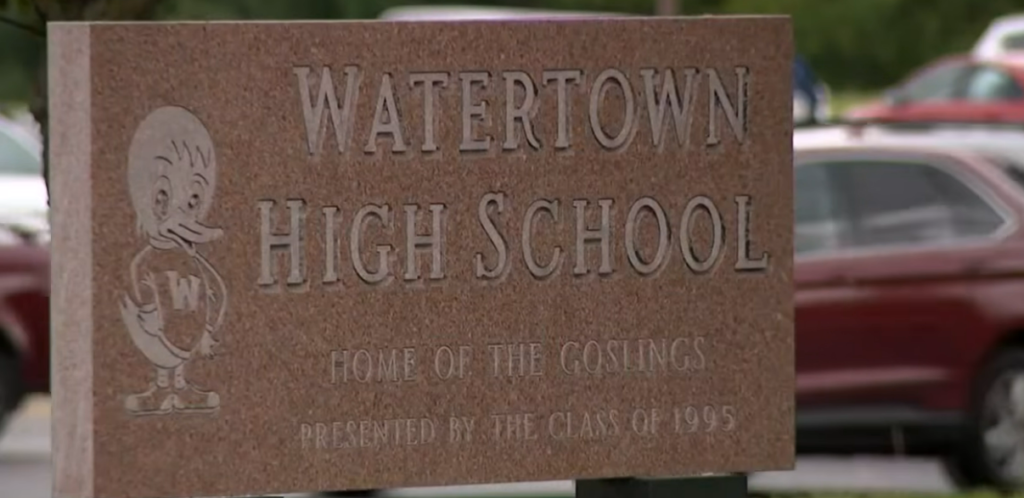
At Watertown High School in Wisconsin, students were leaving classrooms one by one by four o’clock on Wednesday. They were carrying signs as they made their way to the sidewalk outside, where they joined a crowd that had grown to an estimated two hundred people. “Let them play” was the straightforward chant, and the scene was typical of student protests: sincere, a little disorganized, and more impactful than adults in positions of authority tend to recognize. The Watertown School Board had voted 7-1 the previous evening to forbid the Wind Symphony from playing an instrumental piece at their spring concert. It took roughly a day for the vote to result in a walkout.
“A Mother of A Revolution!” is the title of the composition. It is instrumental; there are no speeches, lyrics, or explicit political statements in the notes. It has context because it was written in memory of Marsha P. Johnson, a transgender activist who rose to prominence during the Stonewall Uprising in 1969. The board reportedly determined that this history was sufficient justification for removing the piece from the performance. The date of the spring concert is set for Monday, May 17. The Wind Symphony’s students had spent months rehearsing the composition.
Sophia Anderson talked about how she felt standing outside with her classmates after speaking with local news prior to the vote when the controversy first came to light. “I’m just so unbelievably proud of all of these people,” she replied. “It’s incredible to see all of them out here, maybe 200 people, even though many of them don’t even fully understand the circumstances behind their presence. Like, it’s the best thing I could have asked for to have their support for just a band class.” She was furious, too. That’s exactly what she said. “I’m so utterly angry, and I don’t even know how to express it.”
The variety of students who participated in the walkout was what made it noteworthy outside of the immediate cause. Colton Stai gave an explanation for his decision to leave despite not being a band member, characterizing himself as an athlete. “As an athlete, I simply felt that if we practiced all summer long, we wouldn’t be able to play, so I feel bad for the band team. After months and months of practice—more than half of the academic year—they are unable to perform the piece in public. I simply think that would break me. In contrast, senior Cooper Wood stated, “I can guarantee you not everyone here is a liberal, but they all can see what the school board is doing is wrong and it sends a terrible precedent.” When these stories are framed solely as cultural war flashpoints, that specific detail—the walkout that cuts across political lines—tends to be overlooked.
The community is genuinely split. Watertown resident and former high school student John Markl expressed support for the board’s ruling. He called the article “radical curriculum” and stated that, in his opinion, students shouldn’t be taught about LGBTQ+ history at this age. A 7-1 vote indicates that some members of the community clearly agree with that viewpoint. However, it’s important to note the particular form the objection took: a composer’s instrumental piece was pulled due to its historical significance rather than anything that might occur in a concert hall. The music is not a lecture in and of itself. It’s notes.
For its part, the board has remained almost completely silent. Several members responded “no comment” when questioned following the meeting on Tuesday. By Wednesday afternoon, neither the superintendent nor the board had replied to emails from the media. The school board voting to limit what the school’s Wind Symphony can perform at a concert and then refusing to publicly explain why, while the students who practice that instrument crowd the sidewalk outside chanting to be heard, has a certain quality to that silence. Four days remain until the spring concert.
