

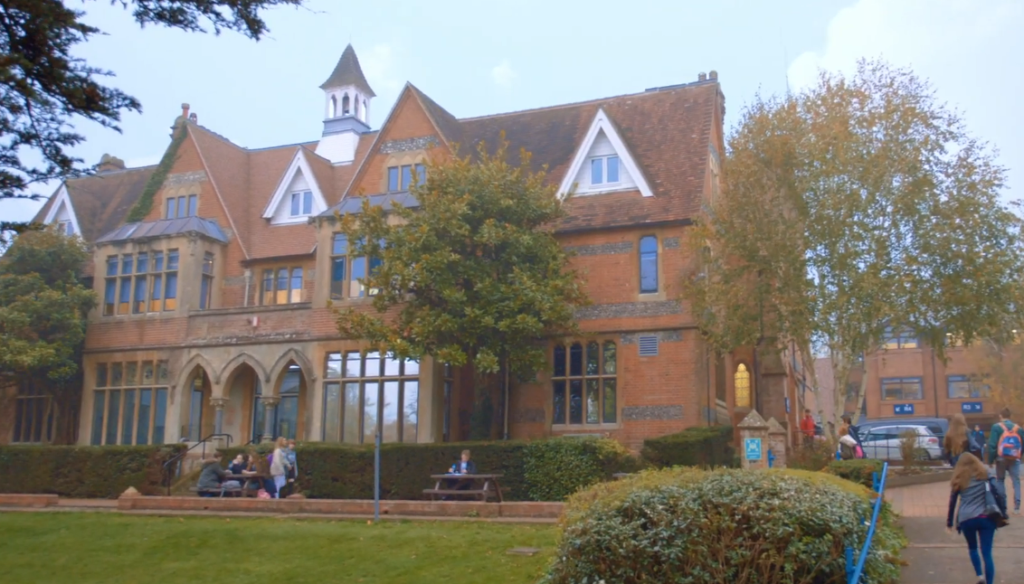
Lewis Waters was his name. He was a sixth-form student at The Henley College in Henley-on-Thames, Oxfordshire. The college is located in one of the more subdued, affluent market towns in England, just a short distance from the river, where people still live at a leisurely pace. Lewis passed away last week from meningitis. He was a young man. Additionally, his death, which came as a surprise to a community that had no reason to anticipate it, has left behind the unique kind of grief that small institutions experience—the kind where everyone is familiar with the name.
The situation grew worse in a matter of days. It was confirmed that two additional young people, students at Reading Blue Coat School and Highdown Secondary School and Sixth Form Centre, both located approximately nine miles away from Henley, were receiving treatment for the same illness. Lewis was linked to the other two cases via a social network that the UK Health Security Agency discovered, though the specifics of that connection have not been made public. As a precaution, all three of their close contacts were given antibiotics. The best anyone can say is that health officials acted swiftly.
This series of events is becoming so familiar that it’s difficult to ignore. An outbreak in Kent earlier this year claimed the lives of a Year 13 student and a University of Kent student. A few weeks later, three more young people in Dorset became ill. Oxfordshire comes next. The pattern of young people in close social networks getting sick has a rhythm that begins to feel less like coincidence and more like a gap in the system, even though each cluster is technically distinct (the UKHSA confirmed that the current strain is not the same MenB variant seen in the Kent cases).
The MenB vaccine is the name of that gap. Babies born after that date received it because it was added to the NHS childhood immunization schedule in 2015. That rollout never included teens and young adults, the age group that is most socially active and most likely to share drinks, vape pens, or make close contact in college hallways. Health authorities cite concerns about the vaccine’s partial coverage of bacterial strains, limited long-term protection, and cost-effectiveness. That could all be supported by science. However, whether any of it fully explains why Lewis Waters and thousands of other young people went through adolescence without this protection is still up for debate.
Following Lewis’s passing, Meningitis Now CEO Dr. Tom Nutt has advocated for a broader vaccination campaign. The Joint Committee on Vaccination and Immunization is reviewing eligibility, according to the Department of Health and Social Care. Reviews are time-consuming. The luxury of waiting for committee timelines is not available to families in Henley-on-Thames who are grieving a teenager. It’s uncomfortable to sit with the tension there, and it probably should be.
Meningitis spreads quickly. That’s the other thing that needs to be stated clearly. Symptoms — high fever, severe headache, stiff neck, a rash that doesn’t fade when pressed — can arrive suddenly and deteriorate within hours. The disease is most common in teenagers and young adults, with roughly 300 to 400 cases of invasive meningococcal disease in England each year. It spreads through intimate contact, such as kissing, coughing, and sharing saliva. The kind of interaction that characterizes being seventeen and attending college. The kind that occurs in every sixth form across the nation on a daily basis without anyone giving it a second thought.
In a measured and cautious statement of condolences, Henley College said it was supporting those impacted in its community and adhering to UKHSA guidelines. It is more difficult to describe in a press release what that support looks like on the ground—in the Deanfield Avenue hallways, among students who knew Lewis, sat close to him, or perhaps shared a table at lunch. A loss is not quietly absorbed by a college this size. It is carried by it. The welfare team, the tutoring program, and the entire care infrastructure that Henley has developed over the years are all likely under exceptional stress at the moment, performing the kind of work that never shows up in test scores or university advancement rates.
This situation doesn’t have a tidy conclusion. Lewis Waters is no longer with us. There are two others receiving treatment. According to authorities, there is still little risk to the general public, and based on the information at hand, they are likely correct. But low risk is not zero risk, and for the parents of every teenager who attends a sixth form within reach of this social network, the distinction feels thinner than officials might prefer. The least the system can do, at this point, is genuinely revisit whether Britain’s approach to meningitis vaccination for adolescents is still the right one — or whether it simply hasn’t caught up with the cost of getting it wrong.
