

Imagine a Tuesday morning in late May in a classroom in Wayne, New Jersey. The windows are as far open as they will go. Warm air is pushed from one side of the room to the other by a box fan that hums in the corner. As the outside temperature rises into the upper 90s, children sit at their desks in shorts and t-shirts, clearly uncomfortable as they attempt to concentrate on a lesson. The district has called it by midmorning. The school day ends early. Once more.
At least a dozen districts in New Jersey sent students home early this week due to temperatures that reached 99 degrees on Tuesday and Wednesday, which were among the state’s hottest May days ever. Due to the heat, several districts announced early dismissals or schedule modifications, including Wayne, Hamilton Township, Garfield, Cranford, Scotch Plains-Fanwood, Plainfield, Union, North Bergen, Winslow Township, and Prospect Park. Union Public Schools went so far as to completely cancel Tuesday’s events, sports, and after-school programs. The administrators’ message was essentially the same everywhere: the buildings are unable to adapt to the changing weather.
It’s worth taking a moment to consider that. These are not underfunded one-room schools or remote outposts. These are well-established school districts in one of the nation’s wealthiest and most populous states. They also don’t have working air conditioning. The majority of New Jersey’s 21 counties were under heat advisories, and humidity made the actual feel temperatures even higher. This is the kind of oppressive, sticky heat that makes it hard to focus even in the best of situations, let alone in a brick building constructed decades before climate-controlled classrooms became commonplace everywhere. The disruptions extended over several days, with the advisories lasting through Tuesday night in some counties and Wednesday night in others.
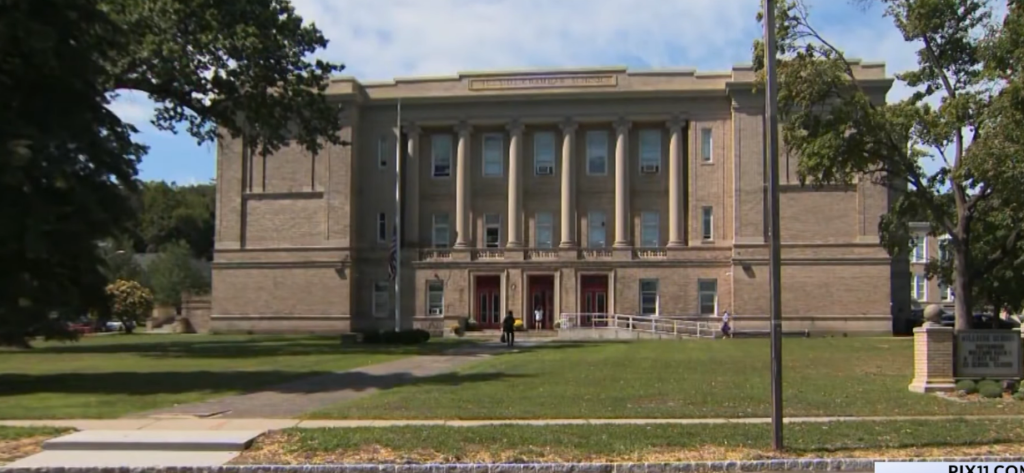
This math is uncomfortable for working parents. When an early dismissal is announced on a Tuesday morning, families—often with both parents working full-time—have a few hours to make other childcare arrangements. That is manageable for some households. It isn’t for many. The official announcements, which frequently use terms like “student health and safety” and “monitoring conditions,” never fully capture the subtle tension that permeates these circumstances. The parent who has to leave a meeting or who has no backup plan at all is what those phrases fail to convey.
The fact that this keeps happening could be the deeper source of annoyance. Like in most states, school infrastructure has been neglected for a generation in New Jersey. Up until the second week of a heat wave, air conditioning in schools seems like a luxury; after that, it becomes a necessity. School systems throughout the Northeast deal with the structural reality of aging buildings built for a different era with different temperatures and expectations, so New Jersey is not alone in this. However, the fact that this occurs in the same manner each year, with the same parents checking their phones in the middle of the workday and the same scramble of last-minute dismissal notices, points to a more persistent issue than anyone seems willing to address.
Seldom discussed are the downstream effects of heat advisories on school calendars. The news alerts don’t mention lost instructional hours, interrupted testing schedules, or students being sent home early during critical exam preparation windows. The districts impacted are listed in the announcements. When buildings bake students out of their seats for a week or two every May and June, they don’t calculate the costs over a school year or over a decade. Accounting usually doesn’t take place until something worse does.
