

When you drive through Port Gibson, Mississippi on a calm weekday morning, you’ll notice that the town moves slowly and deliberately, just like small Southern towns that have learned to slow down. At the heart of everything is the courthouse. Old trees are covered in Spanish moss. The Blue Waves’ home school, Port Gibson High School, was founded in 1924 and is still standing. It is located on Old Highway 18 in unincorporated Claiborne County and is the only high school that most children in this area will ever know.
At first glance, the numbers are depressing. At Port Gibson High School, every single student meets the criteria for being economically disadvantaged. One hundred percent. That is the actual number, not a rounding error. Claiborne County’s median household income is approximately $31,897, which is less than half of the national median. Depending on the data set, reading proficiency ranges from 20 to 24 percent. The school is ranked between 160th and 230th in Mississippi, one of the nation’s lower-performing states. This school appears to be on the periphery of American educational opportunities.
And yet. Ninety-one to ninety-two percent of students graduate. A closer look at that number is warranted. It is difficult for schools with much more resources, wealthier zip codes, and institutional support to match it. The building on Old Highway 18 is experiencing something that the conventional metrics are not intended to quantify. It’s possible that the unique kind of community accountability that develops when a school is the only one of its kind for miles in any direction is what keeps Port Gibson together rather than test scores.
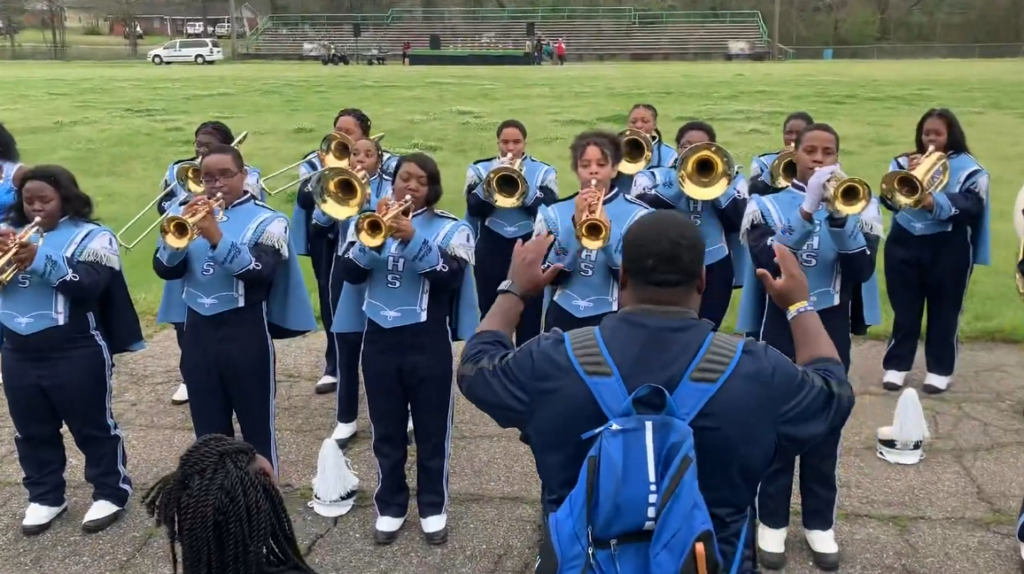
With 374 students enrolled in grades nine through twelve, the student-to-teacher ratio is 15 to 1. Every instructor at the school holds a certification. The average teacher’s salary is slightly less than $60,000, which is by no means a fortune, but it is a significant commitment to a community where the cost of staying frequently exceeds the financial gain. Teachers who “genuinely care,” according to students who have reviewed the school, push students forward despite the building’s apparent underfunding, outdated technology, and outdated textbooks. It’s a well-known tale in rural Mississippi, and it’s important to acknowledge how draining that setting must be for everyone residing there.
The history of Port Gibson High School extends beyond the current student body. It was a white-only school prior to integration. Alcorn College High School and the Claiborne County Training School, which didn’t even offer classes beyond the tenth grade until 1942, were the schools attended by black students in Claiborne County. Nearly all of the white students left after integration. What has persisted since then is a school that is now 99 percent African American and serves a county that has never been wealthy in a state that has seldom given priority to the schools that most need it.
The names on the alumni list are noteworthy. Joseph Dunbar went on to become a physician and researcher on diabetes. Adairius Barnes was a professional football player. Yolanda Moore was a professional basketball player. For a school with 374 pupils in a far-off rural county, these are significant issues. They contend that Port Gibson quietly produces individuals who go on to accomplish significant things in the world.
Seeing a school like this absorb every disadvantage the system can create and still send the majority of its students through the graduation stage makes it difficult not to feel something. The school isn’t flawless. Students claim that the administration sometimes seems disjointed. There aren’t many resources. However, the Blue Waves continue to appear. That’s worth writing down on its own.
