

The way York University has presented its plan to move Glendon College to the Keele campus is subtly unsettling. “Just the start of a conversation,” the administration repeatedly claims. However, the discussion feels less like an open question and more like a predetermined conclusion when your interim provost informs faculty council that the university lacks the $70 to $80 million required to maintain the current campus.
In the world of expansive commuter universities, Glendon is located in midtown Toronto on a property that, to be honest, feels a little out of place. It’s a small, intimate campus with well-kept grounds, buildings that hold significance and memories, and a culture shaped by the collision of French and English in ways that are uncommon in this area. As you stroll through it, you get the impression that someone once gave it a lot of thought as to what kind of place it would become.
Here, history is important. Before the Keele campus ever opened, York University was actually founded at Glendon in 1959. Glendon was reimagined as a bilingual liberal arts college when Keele opened in 1965; this was a conscious decision, a distinct identity. It’s difficult to ignore the tension in the air as that identity is now up for renegotiation, some sixty years later.
This proposal is supported by sufficient numbers. Over the last ten years, enrollment has decreased by almost 50%, from about 2,645 undergraduates in 2016 to just over 1,300 today. Revenue has declined in tandem with enrollment. In 2024, the university reduced the number of departments at Glendon from 14 to four, and last year, admissions to four programs were suspended. It’s possible that restructuring of some kind was always going to be required. However, the scope of what is currently being suggested seems like a completely different discussion.
The proposed plan calls for Glendon College to move to the Continuing Studies building on Pond Road at Keele, where faculty and programs would be integrated into already-existing departments on the larger campus. On the surface, this makes some logistical sense because about 70% of York’s Francophone students are already enrolled at Keele, according to supporters. Additionally, the administration is citing course duplication across campuses as a structural issue that the proposal may be able to address. These are not irrational arguments. The problem is that Glendon is fundamentally different from what it is now when it is reduced to a “university-wide college” on a large campus.
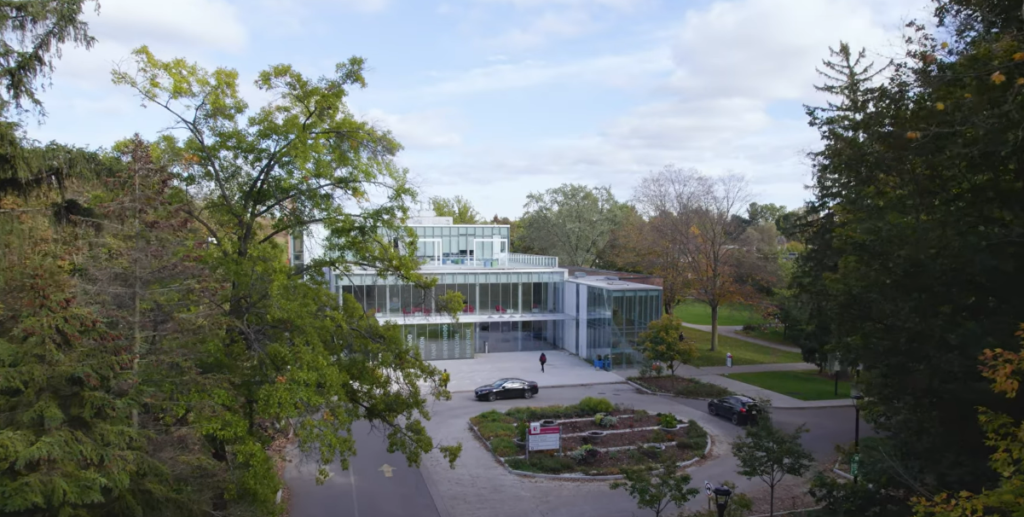
Teachers don’t think the distinction will endure the change. In the words of L’Amicale Francophone de York, a network of Francophone faculty, such actions would undermine the bilingual mission and reduce the institutional presence of French in Ontario. The president of the York University Faculty Association has gone so far as to characterize the proposal as a “top-down decision disguised as the beginning of a collegial process.” That is a direct charge. It implies that for many Glendon locals, this feels more like an announcement with additional steps than an investigation.
The issue of the land is another. According to a York University Development Corporation study, 40% of Glendon’s space is underutilized. At the council meeting on Wednesday, the interim provost declined to address those unpublished findings. Notably, the Wood family initially left the Glendon property for educational uses. Officially, “a distinct matter” from the academic proposal is what happens to that land if academic operations relocate to Keele. It’s another matter entirely whether faculty members think that separation is real.
The skepticism that permeates YUFA president Ellie Perkins’ remarks is difficult to ignore. Her argument hits home: what exactly is anyone applying to once Glendon is no longer the little, verdant, bilingual campus in midtown Toronto with the reputation it has spent decades establishing? Spreadsheets are not the home of the Glendon brand. Small classes, a particular kind of intellectual intimacy, and the sense that you made a unique and worthwhile decision are all part of the experience of being there. It’s still unclear if the mission or just the name is being preserved when you move that to a converted continuing studies building next to the Bennett Center.
The York administration maintains that no choice has been made. The proposal, they say, was shared at Glendon Faculty Council’s own request and remains preliminary. That may be technically accurate. But proposals don’t usually arrive with $80 million price tags attached unless someone has already done the math on what they can’t afford to spend. The community conversations happening right now will matter. Whether they’ll actually change the outcome — that’s the part nobody seems certain about yet.
