

Sitting with a partially completed crossword grid, pencil hovering, and knowing the clue should be easy can lead to a certain kind of frustration. Romania‘s capital. Three phrases. The kind of thing that should require a moment. However, if you speak with enough solvers, you’ll hear the same tacit confession: they hesitated. Some people even looked it up on Google. On paper, the clue appears simple, but for some reason, it slows people down.
In most cases, Bucharest is the answer. Nine letters, a little difficult to spell, and simple to forget if you haven’t visited or thoroughly studied the geography of Eastern Europe. Regular solvers feel that Romanian place names fall somewhere in the awkward middle, familiar enough to feel approachable but foreign enough to be confusing. Belgrade, Bucharest, and Budapest. They become hazy. It’s likely that anyone who has completed several hundred crosswords has at least once substituted one for another.
However, Bucharest isn’t always the solution constructors seek, which is what makes the clue intriguing. When the grid requires three letters, LEU—the Romanian currency, which isn’t actually a capital city—appears. Crossword editors use this wordplay when they’re short on space. It’s a tiny gesture that resembles a wink. The kind of deception that distinguishes a novice puzzle solver from someone who has been solving the puzzle every morning for twenty years.
When you stroll around Bucharest, the city defies the stereotype that people have of it. Concrete-heavy blocks from the communist era are next to grand Belle Époque facades. In the afternoon, older men continue to play chess at outdoor tables along Calea Victoriei, a boulevard lined with cafes. The massive, contentious Palace of the Parliament, the world’s second-largest administrative structure, dominates a section of the city that seems excessively expansive, deserted, and almost ceremonial. It’s difficult to ignore the place’s inherent contradictions. A city that has been destroyed by fire, taken over, rebuilt, censored, and rebuilt once more.
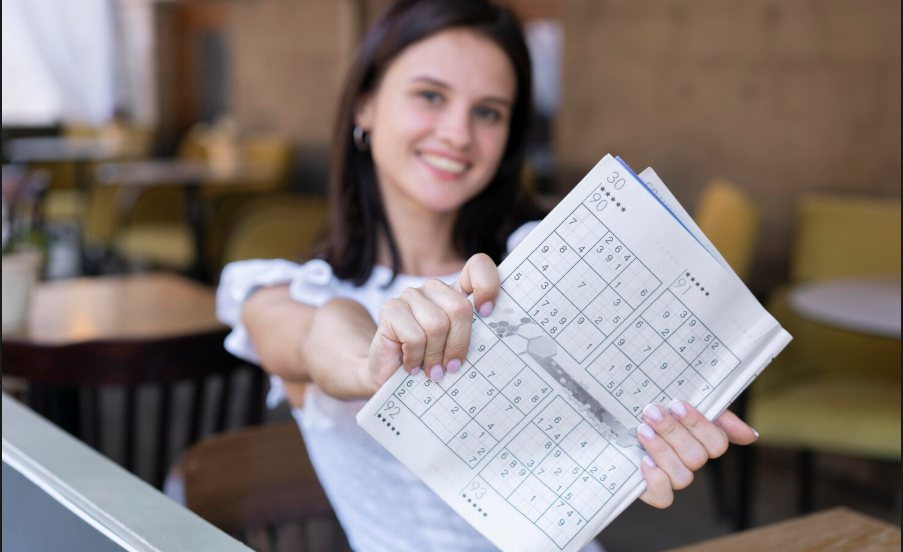
Because Bucharest is at the intersection of recognition, crossword puzzle creators seem to be drawn to the city. It’s a real place with weight, but it’s also a useful word; it has a lot of consonants, ends in a neat T, and is the type of letter that works well in grid corners. Most solvers never consider the craft logic involved. These kinds of city names are chosen for a reason by editors at major newspapers, including those who create the everyday puzzles that people are fixated on. They are not insignificant, but they can be solved.
The odd thing is how frustrating a clue this brief can be. Similar to how some people complain about traffic, Romanian capital clues are a common source of complaints from solvers on online forums. A morning is never ruined by hard clues. These are the ones that ought to have been simple but weren’t. There’s something subtly humorous about seeing this develop in crossword communities; it serves as a reminder that geography knowledge deteriorates more quickly than people realize.
The clue keeps coming up because it works, regardless of whether the answer is Bucharest or Leu. Sometimes it sends someone down a Wikipedia rabbit hole about Wallachia, Vlad the Impaler, or the fall of Ceaușescu, but it also rewards the prepared and humbles the rusty. For nine letters, not too bad.
