

In Gqeberha, there is a campus on Russell Road that doesn’t get the same level of attention as the city’s universities. No postgraduate research headlines, no well-groomed quadriceps. Just lecture halls, workshops, and a few thousand students attempting to turn their education into something useful. For many years, Port Elizabeth TVET College, or PE TVET College as most people know it, has been performing this kind of unglamorous but essential work. However, there have been some recent developments that point to the institution starting a new phase.
The Retail Motor Industry Organization and Germany’s HWK partnered to launch South Africa’s first electromobility skills development program in February of this year, and PE TVET College was chosen as one of just three institutions nationwide. Tshwane South and the College of Cape Town were the other two institutions selected. That company is noteworthy. The program’s goal is to prepare the nation’s TVET system for electric and hybrid vehicles by developing a curriculum that is in line with real occupational standards, training instructors, and outfitting workshops. There is currently no nationally recognized EV qualification in South Africa. PE TVET College is at the table where this project is being designed in an effort to change that.
It’s difficult not to interpret that choice in some way. Gqeberha is a port city with a long history of industry, including logistics, automobile manufacturing, and the kind of skilled-trades culture that made technical education a perfect fit. For many years, the college has been expanding on that foundation by offering engineering and business studies programs at its campuses in Russell Road, Dower, Iqhayiya, and Kemsley Park. The EV partnership is perceived as a recognition of previously established groundwork rather than a surprise.
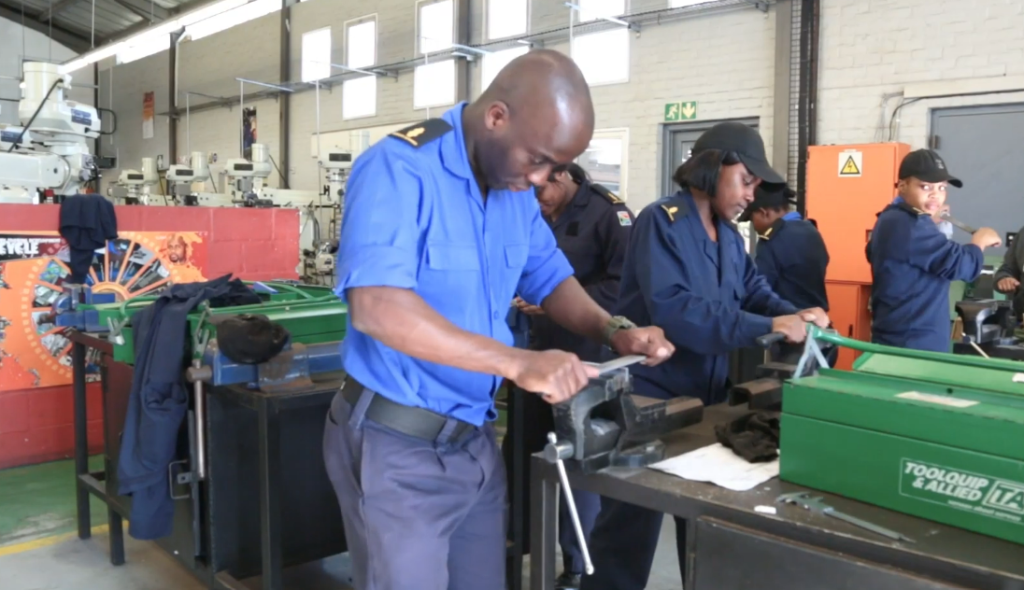
The Eastern Cape’s annual ICT student competition, which focused on digital skills for a changing economy, was held at the Russell Road Campus in October of last year. Businesses like ABSA, MacMillan, and Forge Academy attended, not only as sponsors but also as active participants, observing students’ technical proficiency and ability to solve problems under duress. It’s not always a given that the private sector will be present at a TVET event. Those businesses might have noticed something worthwhile. Or perhaps they were just acting rationally by searching for talent in an area that isn’t frequently examined.
In addition to a Second Chance Matric pathway for students who require an alternative path to formal credentials, the college offers National Certificate Vocational programs in business studies, engineering, and hospitality and tourism. The last one is more important than it is sometimes acknowledged because it recognizes that not everyone has the same path to qualification and that a TVET college serving a city like Gqeberha needs to be open about this fact.
When we consider everything together, it seems like PE TVET College is dealing with something real. The EV program requests that it advance beyond the national curriculum, train instructors in technology that hasn’t yet been fully implemented on South African roads, and set up workshops for vehicles that the majority of its graduates won’t encounter right away but will undoubtedly encounter within ten years. That’s not the same kind of institutional confidence as just managing well-established programs. It’s still unclear if the resources match the ambition. Across the industry, there is a common discrepancy between what TVET colleges are asked to do and what they are actually funded to do.
But for the time being, something is happening on Russell Road in a city that has experienced its fair share of economic hardship. Almost silently, without much fanfare. It is, in a sense, precisely what the task calls for.
