

The appearance of a chess board on a school playground in 2026, when the majority of ten-year-olds are more adept at swiping than strategy, seems almost counterintuitive. However, that is precisely what is taking place at Lincoln’s St. Faith and St. Martin Church of England Junior School. While her opponent, eight-year-old Toby, sets traps he is obviously proud of, ten-year-old Evie moves her pieces with the quiet confidence of someone who has obviously thought two steps ahead. It feels almost out of place to watch kids play a slow, silent game like this, but that’s exactly what makes it fascinating.
The International Chess Federation, or FIDE, recently released a document that has garnered more attention than anyone anticipated. It reads less like a policy paper and more like a subdued critique of the notion that AI should take over in classrooms after the “Chess & AI in Education” Congress in Menorca. There, educators and researchers convened to talk about something that seems almost archaic today: how children develop their ability to think and whether or not machines are assisting or merely filling the void left by thinking.
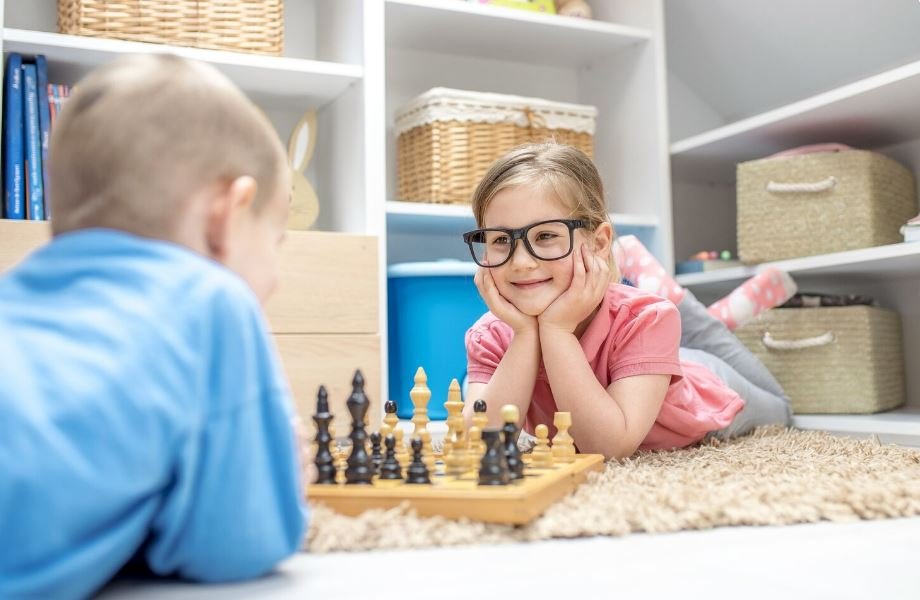
It’s surprising that chess fosters critical thinking in children. For decades, people have held that belief. Surprisingly, despite embracing AI as a tool, the report takes direct aim at overuse of AI. During the congress, one speaker, Rita Atkins, bluntly warned that teachers are relying on AI because they feel compelled to by the hype rather than because it works better. This is the kind of candor that seldom makes it through the editing process in institutional documents, and it’s a rather awkward admission to include in an official report.
The same report also contains a more subdued and peculiar tale. Dr. Cristóbal Blanco, a neurosurgeon, described a patient who played chess by memory and called out moves aloud while undergoing brain surgery, allowing medical professionals to track cognitive function in real time. In writing, it sounds almost theatrical, but it wasn’t theater. It demonstrated how deeply the game is ingrained in memory, concentration, and decision-making by using chess as a literal diagnostic tool for the brain.
The children playing on real playgrounds don’t care about any of this neuroscience. Toby simply enjoys trapping his father. The true lesson, according to Andrew Maffessanti, who is in charge of a chess club at a technical college in Lincoln, isn’t tactics at all, but rather how to lose gracefully and then shake hands with your opponent. AI tutoring software has never claimed to provide that skill, which is more difficult to teach than any opening sequence.
All of this could be interpreted as nostalgia disguised as policy, a yearning for more leisurely thought in an increasingly fast-paced world. Perhaps it is in part. However, a genuine argument is also emerging here that views AI as something that should be gradually introduced alongside human instruction rather than in place of it, as Atkins suggested. The more significant issues AI is posing regarding employment, originality, and creativity cannot be resolved by chess. It never made such a claim.
Instead, it provides a shorter but potentially more beneficial window of forty minutes most evenings during which a child must sit, reflect, and take responsibility for every outcome of a single choice. That may be the rarest skill of all in a time when help is always available.
