

Baseball is practically a religion in a small town in Iwate Prefecture, which is tucked away in northern Japan and has long winters. Shohei Ohtani attended high school there. Instead of attending one of the glitzy baseball powerhouses in Osaka or Yokohama, where scouts congregate and attention naturally pours in, he chose Hanamaki Higashi High School, a decision that, in retrospect, reveals nearly everything about the man he would grow up to be.
Ohtani never went to college. Not a single campus tour, not a semester. That sounds like a gap, almost like a missing chapter, in the American sports imagination. However, the Japanese professional baseball system operates differently, and for the right player—the exceptional one—high school marks the true end of education and the start of a career. Ohtani was already a professional by March 2013 after being selected first overall by the Hokkaido Nippon-Ham Fighters in the 2012 draft at the age of 18.
But it’s easy to forget how peculiar his high school years were. Hanamaki Higashi functioned more like a baseball-focused residential academy than a conventional school. The athletes resided on campus. Only six days a year did they go back home. The intentional removal of everyday adolescent life in favor of something more difficult and ultimately far more valuable has an almost monastic quality. Hiroshi Sasaki, his coach, gave Ohtani the task of cleaning the toilet in order to foster humility. It’s a memorable detail. While cleaning floors, the top high school pitching prospect in Japan discovered that skill without self-control is just noise.
Ohtani set a long-lasting Japanese high school record by throwing a fastball at 99 mph by the time he was a senior. Red Sox, Yankees, Dodgers, and Rangers MLB scouts were already observing. In fact, he wanted to travel directly to America. That was his initial strategy. However, the Nippon-Ham Fighters made him an offer he couldn’t turn down: they would allow him to both hit and pitch. Ironically, his favorite team, the Dodgers, wouldn’t agree to that. He remained in Japan as a result. After attending the Fighters and learning both sides of the professional game, he entered Major League Baseball five years later with a resume that no school could have produced.
It’s possible that the reason his education was successful was because it wasn’t traditional. Ohtani’s background does not include any advanced degrees, sports science seminars, or university coaching staff. He had discipline, repetition, and a coach who thought humility was just as important as speed. He received early coaching from his father, who encouraged him to play baseball starting in elementary school. His mother played badminton at the national level. No institution created the competitive thread that runs through that family.
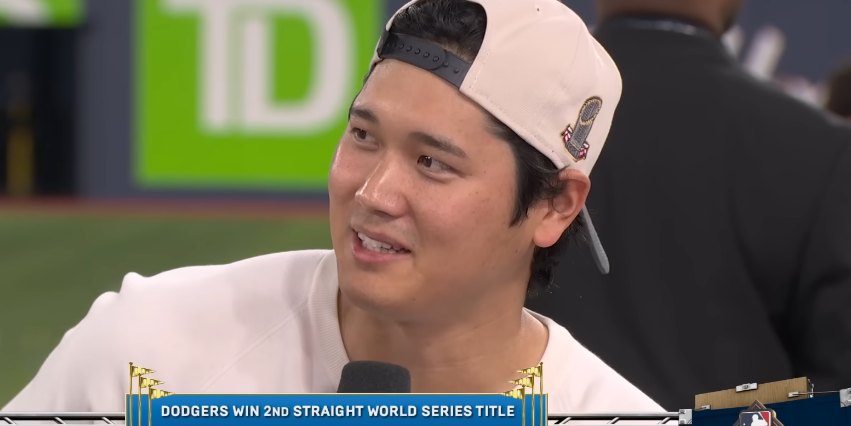
Seeing how his career developed—four MVP honors, a $700 million contract, 50 home runs and 50 stolen bases in a single season, and back-to-back World Series rings—it’s difficult not to believe that something crucial would have been disrupted by the traditional educational route. Baseball in college is good. It consistently generates professionals. However, the system is also based on averages, development schedules, and the needs of the majority of players. Ohtani was never like other players.
Since 2023, he has sold more jerseys than any other baseball player in the world, making him the most well-known baseball player on the planet. At the age of 18, his formal education came to an end in an Iwate dormitory where he threw fastballs, cleaned toilets, and quietly got ready to become someone no one had ever seen before.
