

A certain type of classroom has a distinct atmosphere as soon as you enter. It’s conversation, not chaos. Pupils bend forward. They don’t raise their hands when they ask questions because they feel comfortable enough to do so, not because they are being impolite. The instructor walks around the room as someone who actually knows the people seated in those chairs rather than as an authority figure carrying out a lesson plan. It’s difficult to ignore the difference. Despite all the discussions surrounding curriculum reform, standardized testing, and digital learning tools, this aspect—the real connection between a teacher and a student—rarely receives the critical attention it merits.
On this point, the research is largely consistent. Stronger social-emotional skills, improved academic performance, and a quantifiably healthier sense of self-worth are all characteristics of students who have positive relationships with their teachers. People seem surprised by the last part, even though they probably shouldn’t. Teachers are the people that children spend the most waking hours with. We may have underestimated how profoundly that continuous presence shapes them.
However, developing that relationship isn’t a method that can be found in a training manual. Experienced educators characterize it as something more akin to sustained attention: discovering how a specific student handles frustration, what motivates them, and what completely stops them. In the words of a seasoned teacher who worked with students in several grade levels, “get to know your students, talk to them, and learn what motivates them and what closes them off.” Don’t base your decision on a teacher’s challenging past with a student. In that context, each student receives a new read.
The fact that teachers are expected to work with twenty or even thirty students at once, each of whom has a unique family background, learning style, emotional history, and set of priorities, makes matters more difficult. A disengaged student may be experiencing invisible difficulties. It’s possible that someone who acts out is just waiting, possibly for years, for someone to recognize their true potential. The teacher’s treatment of the classroom as a unit rather than a group of individuals is frequently the root cause of poor teacher-student relationships. That isn’t always carelessness. Sometimes it’s just the arithmetic of underfunded schools.
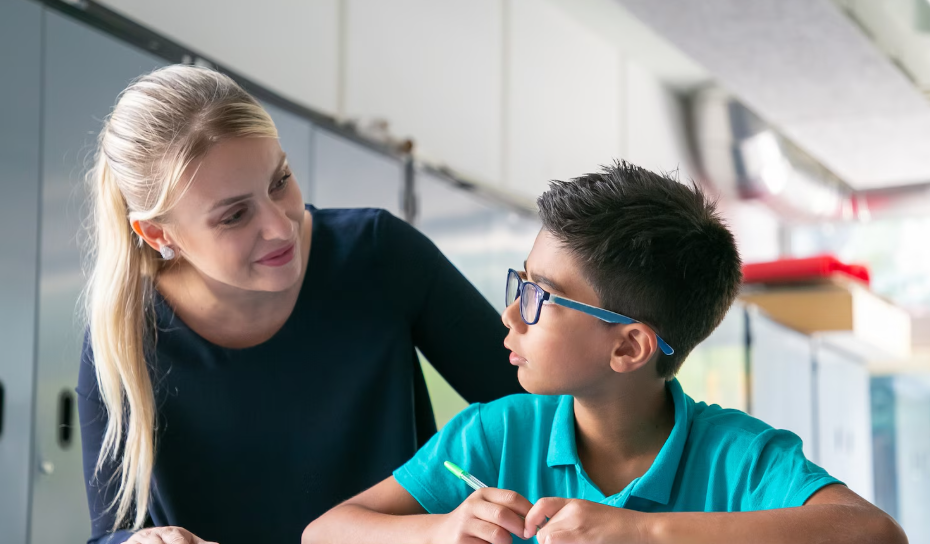
This also has a longer arc that is seldom talked about. Strong relationships between teachers and students continue long after the academic year is over. Pupils who receive sincere support from a reliable adult are more likely to maintain their confidence. They discover that errors are a necessary part of learning rather than a sign of inadequacy in a way that cannot be fully taught. This framework follows an individual throughout their time in college, their careers, and ultimately how they raise their own children. Short-term improvements in test scores and classroom conduct are important, but there’s a feeling that something more long-lasting is being developed.
Although that aspect of the narrative is virtually ignored, teachers themselves also undergo change as a result of this process. Developing genuine relationships with students helps teachers become more patient, sharpen their interpersonal skills, and manage stress better. These abilities translate to interactions with parents, coworkers, and administrators. It’s still unclear if enough schools acknowledge this as a valid way for teachers to advance their careers rather than just a characteristic of certain teachers.
One thing is certain, though: the classroom that feels different when you walk in wasn’t created by coincidence. Someone made the decision, most likely early on, that the people in the room were just as important as the information written on the board. Even though it is a quiet and unglamorous choice, it ends up being one of the most important ones a teacher can make.
