

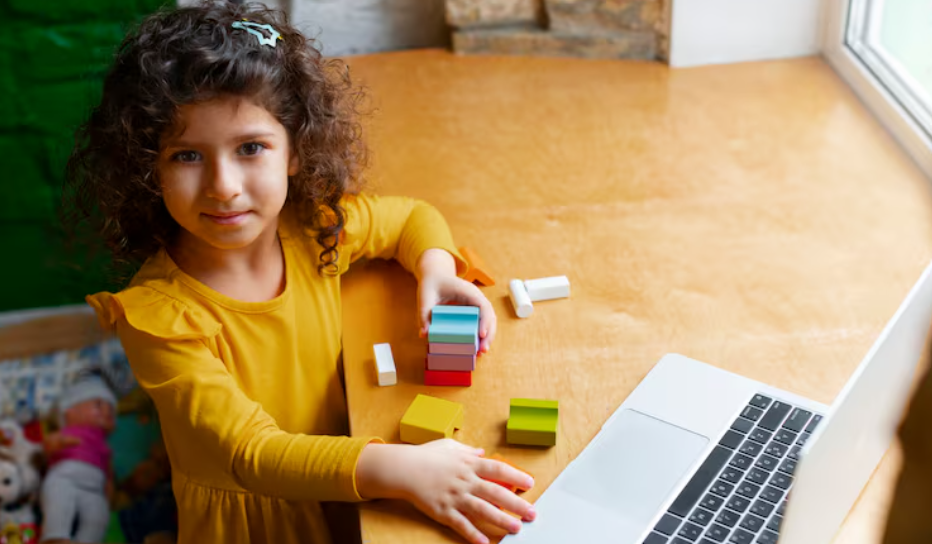
A four-year-old is sitting through her first structured lesson in a classroom somewhere on the outskirts of Marrakech. The classroom is small, likely underfunded by Western standards, and the walls have just been painted in the upbeat colors that teachers always seem to choose. In 2018, she would not have been present. She most likely wouldn’t have been, according to statistics. Less than half of Morocco’s four to six-year-old children attended preschool at the time. You can learn everything about the origins of the nation from that number. It was chosen for OMEP‘s 2027 World Conference on Early Childhood Education because of its progress since then.
Morocco’s preschool enrollment rate increased to 72.5 percent by 2021. That is a real, verified increase from 49 percent in just three years, not a measurement error or rounding error. That kind of movement doesn’t occur quietly or by accident in a nation navigating rural-urban divides, disjointed educational infrastructure, and constrained budgets. It occurs as a result of someone at the top deciding it was important, and that institutional weight suddenly began to push down through ministries, local government, and civil society. In this case, the Royal support was crucial. There is a feeling that the subsequent convergence of public policies, including the coordination between the Ministry of National Education, the Interior Ministry’s INDH program, and local actors, might not have been as cohesive without that signal from the palace.
OMEP was established in 1948 in Prague following a war that had devastated Europe both physically and mentally. Looking at the ruins, Lady Allen of Hurtwood and Alva Myrdal—who would go on to become the first World President of OMEP—saw children who were most in need of protection and education. Morocco appears to have internalized this fundamental belief—that early childhood is the real center of a society’s future rather than merely a policy footnote—in a way that nations with far more resources haven’t always been able to.
The emphasis on rural inclusion is what makes Morocco’s strategy intriguing and perhaps worth a critical examination. Expanding urban preschools is the simpler route. Infrastructure, qualified teachers, and parents who are already connected to official systems are all present in cities. Morocco’s program explicitly designated peri-urban and rural areas as priority zones, engaging in what policy documents refer to as positive discrimination against communities that other nations typically overlook. Although it is more difficult to confirm whether that commitment has been fully realized on the ground, the enrollment figures indicate that something significant is taking place outside of the cities.
However, it’s difficult to ignore the tensions in this narrative. The program’s own documentation is candid about the gaps: training standards differ greatly between public, private, and civil society providers; career pathways are unclear; and educator retention is precarious. Preschool managers at the regional and provincial levels are overworked. These are serious issues. Building on shaky foundations is a preschool system that grows while finding it difficult to retain the teachers. At least Morocco appears to be aware of this.
International organizations typically react to the 2018–2028 national strategy because of its clear vision. The three pillars—sustainable financing, inclusive access, and quality standards—are sufficiently detailed to allow for comparison. Conference hosts are not chosen at random by OMEP, which has consultative status with the UN and UNESCO and operates in more than 80 countries. Morocco’s selection for 2027 is, in a sense, an endorsement of the path rather than the destination—a sign that a nation is moving with conviction rather than merely ambition.
Most likely, the girl in that Marrakech classroom is unaware of all of this. She is still learning to read. However, the systems that are being constructed around her will determine what she can anticipate from the outside world. Beneath the policy language, early childhood education is essentially a choice about which children a society deems worthy of preparation. Morocco seems to have made that choice quite clearly. The world has begun to take notice.
