

On a Saturday morning, you can occasionally spot a child sitting cross-legged on the floor of a small bookstore in Brussels, mouthing the words of a picture book about a dragon that won’t flex his muscles for an election.
One of those things you come across and assume must already exist everywhere is the book, which is a part of a quiet, almost obstinate project called Sustainable Stories. It doesn’t.
| Information | Details |
|---|---|
| Initiative | Sustainable Stories |
| Founders | A father-and-daughter team based in Belgium |
| Headquarters | Belgium |
| Focus Age Group | Children aged 5 to 10 years |
| Core Themes | The 17 Sustainable Development Goals adopted by the UN |
| Approach | Storytelling, illustration, classroom engagement, entrepreneurial mindset |
| Featured Title | Dragon’s Might Brings Delight (SDG 12) |
| Related Research | SUSTE Project, funded by the Swedish Cultural Foundation in Finland |
| Partner Researchers | Stockholm University, University of Gothenburg, NTNU |
| Reference Report | UNICEF’s The State of the World’s Children 2024 |
| Contact | info@sustainablestories.be |
A father and his daughter came up with the concept during what seems to be the type of evening conversation that most families never get past. They were looking for something straightforward. A method for any child, in any classroom, to begin thinking about the world in the same way that founders and legislators are eventually compensated. Since then, the organization has expanded, hiring freelancers, psychologists, illustrators, and a partnerships team that now spends a surprising amount of time persuading businesses that a children’s book can accomplish what an HR seminar typically can’t.
It turns out that books are still useful. A printed story read aloud endures despite tablets, YouTube, and the peculiarly longer attention spans of kids born after 2018. Every children’s book that airs is examined by a psychologist employed by one of Belgium’s major public broadcasters, and Sustainable Stories is shaped by the same meticulous screening process.
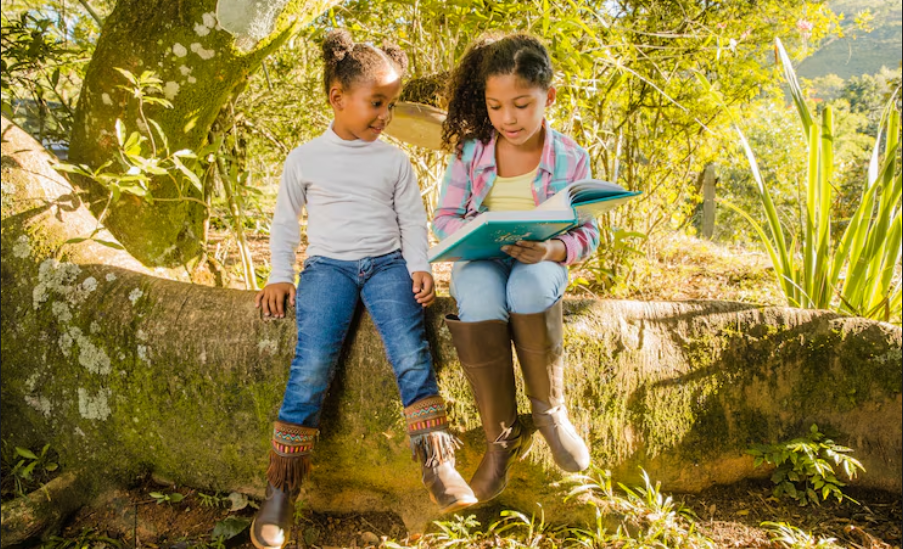
It’s not informal. The team frequently discusses three loose connections that form the foundation of each book: the hands, the head, and the heart. One for feeling, one for curiosity, and one for what a kid might really do on a Tuesday afternoon.
The approach lands, as you can see. Dragon’s Might Brings Delight uses a Little Dragon who can’t outshine his competitors to teach kids about SDG 12, responsible consumption and production. Children are unaware of the policy framework. The dragon catches their attention. From Aesop to the writers of Sesame Street, it’s an ancient trick.
It’s difficult to overlook the bigger picture here. The three factors that are most likely to shape the childhood of the next generation are emerging technologies, demographic changes, and climate change, according to UNICEF’s most recent flagship report. Already, almost a billion children are growing up in nations that are directly at risk from climate change. It’s important to invest in adult retraining, but waiting until adulthood to begin developing an entrepreneurial, problem-solving mindset feels more and more like arriving late. Teachers believe that this work really needs to start in early childhood.
The same question is being approached from a different perspective by researchers at the SUSTE Project in Finland. SUSTE, which is funded by the Swedish Cultural Foundation in Finland, brings together practitioners, student teachers, and researchers from Stockholm, Gothenburg, and Trondheim to examine how sustainability is currently taught—or not taught—in early childhood education and care. In the seminar room, the work’s references to relational ontology, critical phenomenology, and arts-based practice sound more substantial than they actually are. The majority of the time, people are attempting to determine what young children truly understand when adults attempt to discuss the environment with them.
Whether any of this becomes curriculum at scale is still up in the air. The goal of Sustainable Stories, which is actively seeking pilot nations, is straightforward: incorporate this content into national curricula, give it to non-governmental organizations, and place it on bookshelves in classrooms that do not currently have one. Another question is whether governments act swiftly. Seldom do they. However, you begin to believe that the case has already been made when you see a six-year-old figure out why the dragon was correct on her own.
