

Not too long ago, child poverty in Britain was actually declining. The number of children living in poverty decreased from approximately three million to 1.6 million between 1998 and 2010. Announcements about the budget carried weight. Every decimal point was monitored by charities. Even in its imperfect form, reducing child poverty seemed to be a priority for the political elite. It’s difficult to ignore the absence now that that time has passed.
In the UK, four million children are currently living in poverty. Almost one in three. That’s nine children in every thirty-person classroom who don’t have enough, and whose parents have to decide between putting food on the table and heating a flat. Since 2010, the number has increased steadily, and Save the Children’s estimates indicate that if nothing significant changes, it may reach 4.3 million by the end of the decade. You can sometimes sense it without statistics when you pass certain elementary schools in Manchester, Glasgow, or parts of east London: the teachers purchasing winter coats out of pocket, the worn uniforms, and the breakfast clubs that have subtly become lifelines.
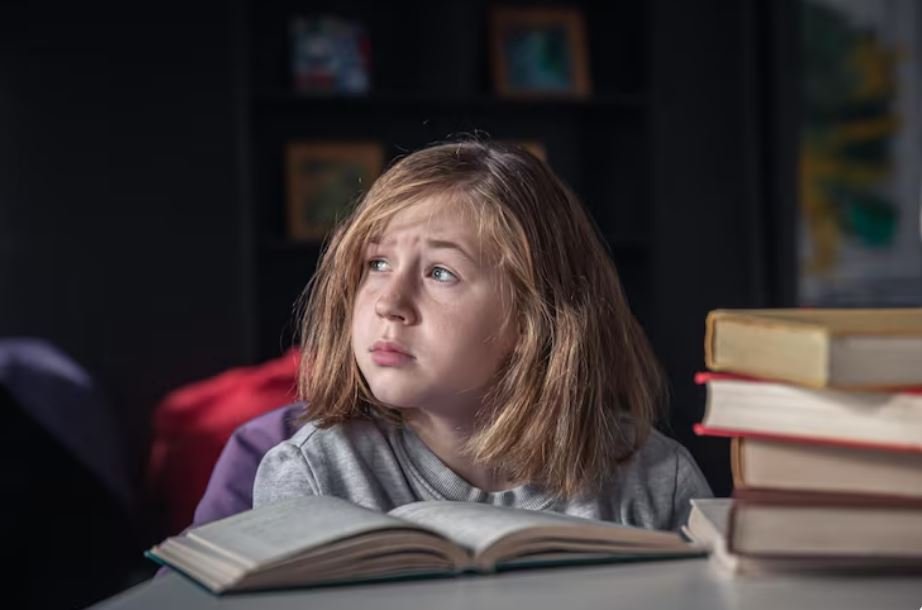
For organizations like OMEP UK, the British branch of the World Organization for Early Childhood Education, the current situation is particularly frustrating because early education is still virtually completely absent from meaningful conversations about poverty in Westminster. Benefits reform is a topic that politicians discuss. They discuss housing. Every now and then they bring up skill development. However, the early years—from birth to age five, when brain development is most malleable and interventions are most economical—are viewed as a soft policy afterthought. Not for Treasury papers, but for parenting magazines.
For years, OMEP UK has worked to alter that framing. Their claim that children who start school behind typically stay behind and that poverty exacerbates the disadvantage at every level is neither novel nor particularly complex. Good early childhood education does more than just teach children how to read and do math. It fosters emotional control, social confidence, and the kind of cognitive flexibility that influences results decades later. This is supported by an increasing amount of international evidence, ranging from Scandinavian models that simply assume universal early education to longitudinal studies conducted in the United States. Even though Britain is among the richest countries in the world, access to high-quality early childhood education is still treated like a postcode lottery.
It’s important to observe the political dynamics at play here. Addressing child poverty had real cross-party moral weight during the New Labour era. Gordon Brown realized—possibly astutely—that providing targeted assistance and tax credits to low-income families was an effective way to put money in their hands. It wasn’t flawless. Right-wing critics referred to it as a “sticking plaster,” claiming it provided incentives to push families just over the poverty line without addressing underlying issues. That was partially true. However, since 2010, austerity politics have virtually eliminated the discussion. Child poverty was not a top priority for either the Conservative or coalition governments, and even Labour, led by Jeremy Corbyn, provided surprisingly little in its 2017 manifesto for those at the bottom.
The current situation is that the political will has diminished while the body of evidence has grown. Charities that used to engage in vigorous lobbying have acknowledged, sometimes in private, that it seemed futile to use scarce resources to pressure a government that was unlikely to react. OMEP UK is a symbol of a different kind of annoyance: not only does poverty exist, but a whole class of effective interventions is being ignored. Early education is not a panacea. No one genuinely believes it can end child poverty on its own. However, neglecting it as poverty rises above four million seems more like carelessness than a policy decision.
Early childhood advocates believe that there is less time to take significant action. Forecasts continue to get worse. Nearly 44% of families with three or more children live in poverty. Even so, the early years section seems like an afterthought tacked on at the end when budgets are discussed and manifestos are written. Britain is skilled at lowering child poverty. It had previously done so. Now, the question is whether those in positions of authority think it’s worthwhile to do it once more and whether they will at last pay attention to those who have long argued that it begins with the youngest children.
