

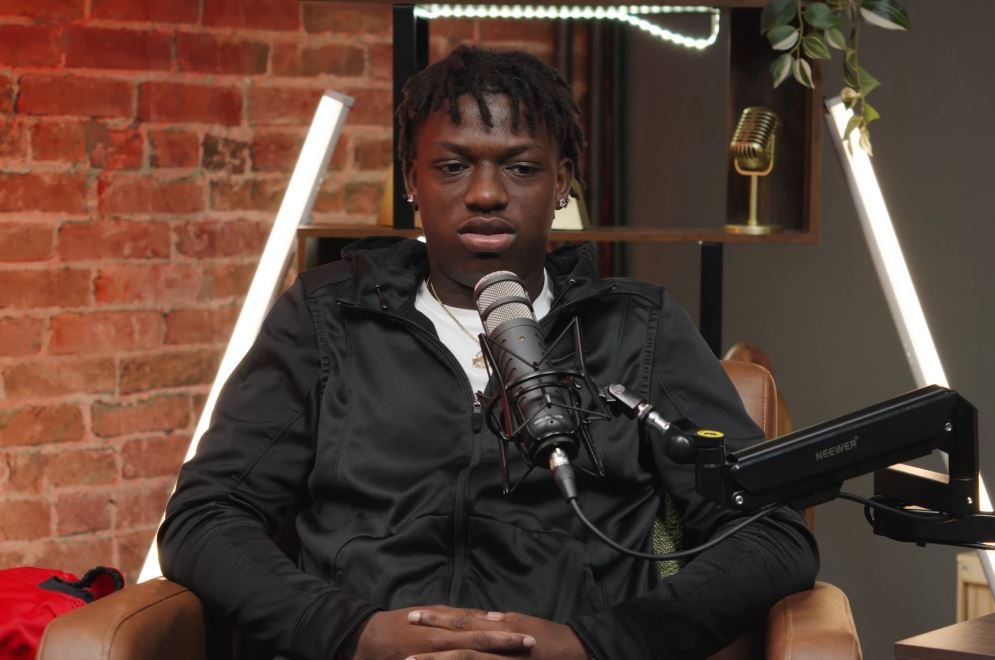
Located in Sunbury, Ohio, a sleepy town 25 minutes north of Columbus, Big Walnut High School is the kind of place where Friday night lights still have significance. It’s a strange setting for a controversy that has revealed one of college football’s least talked-about recruiting strategies in less than a week. The five-star wide receiver and Ohio State commit Jamier Brown had no intention of starting anything. He was simply responding to an interview circuit question at the OT7 Finals, where seventeen-year-olds are asked what the most bizarre thing a school has offered them.
“A couple schools have offered a couple females out for me to commit to that school,” Brown said in the interview with Endzone Exposure. His response, which was given almost casually, has been repeated, analyzed, and debated ever since. He didn’t give names. He appeared unsure of how the remark would be received after it left the room. It’s possible that he wasn’t fully aware of the repercussions of being honest, just as teenagers occasionally are.
But it’s not just Brown’s remark that keeps the story compelling. It’s that he was almost immediately supported by other recruits, as though they were verifying something that everyone in that world already knew but hardly ever spoke into a microphone. Ace Alston, a cornerback commit to Notre Dame, stated that girls call and FaceTime him almost every week. When considered collectively, the remarks seem less like a singular incident and more like a window into a hiring culture that has functioned in this manner for decades, albeit infrequently.
Observing the online response gives the impression that no one in college football is genuinely shocked. Within 48 hours, a Reddit thread about the accusations received over 1,000 upvotes and almost 200 comments; the tone was more one of recognition than outrage. Commenters shared their personal tales: a friend who was recruited for Idaho State tennis, of all sports, claims to have had the same experience; sorority row tours, which seem to have been a regular feature of campus visits since at least the 1980s. It’s the kind of pattern that makes you question how much has truly changed as opposed to just adopting a new vocabulary and entering the NIL era.
The deeper tension in this situation is that. No one pretended otherwise; schools were already using nightlife and attractive student hosts as unofficial recruiting tools prior to the existence of NIL deals. The money, the transparency that athletes themselves demand, and the ability for an eighteen-year-old to say something on a podcast and have it analyzed by sports media in a matter of hours are what have changed. Brown’s personal background adds another layer. Due to NIL restrictions that prevented him from making more than $100,000 in deals, his mother filed a lawsuit against the Ohio High School Athletic Association last year. According to reports, this lawsuit helped Ohio become the 45th state to legalize high school NIL payments. He is more than just a recruit caught in an odd situation; he has already demonstrated a readiness to question the regulations controlling his pay.
It’s unclear if any of this has real repercussions. It’s difficult to imagine the NCAA or any conference initiating a formal investigation in the absence of specifics, and no school has been explicitly named. Ohio State, on the other hand, has remained silent, possibly wagering that it is safer to remain silent in a situation where no specific person is implicated. There is a claim that the deniability inherent in the system, whether deliberate or not, is what allows these things to happen in the first place because there are no named schools.
The discomfort that lies beneath all the jokes on the internet is difficult to ignore. The discourse surrounding the recruitment of targets courted with female companionship as an incentive by teenagers, some of whom are not yet legally permitted to consume alcohol, has largely settled into shrugs. Perhaps the most telling detail of all is not that it happened, but rather how unsurprised everyone seems to be that it did. Brown, on the other hand, seems unfazed by the controversy his casual remark caused. He is still committed to Ohio State, running track, and catching passes at Big Walnut.
