

Approximately five miles north of Saginaw‘s downtown, on 748 acres in Kochville Township, Michigan, there is a campus that receives far less attention than it merits. It doesn’t have the century-old brand recognition of the University of Michigan. It doesn’t carry the football mythology of Michigan State. But Saginaw Valley State University has been quietly building something worth paying attention to — and for the roughly 8,500 students enrolled there right now, it already feels like the right choice.
SVSU is the newest public university in Michigan, which is either a disadvantage or a point of pride depending on how you look at it. Founded in 1963 as a private institution operating, almost unbelievably, out of the basement of Delta College, the school has traveled a long road. Its first commencement ceremony was held in 1966 at a church in Midland, Michigan. Ten students graduated. In the context of a campus with more than 100 academic programs spread across five colleges, that figure now seems almost insignificant.
The university’s character still seems to retain some of the scrappy, figure-it-out nature of the early years. After two coaches saw a kitchen decoration at a golf tournament in Kentucky, the athletic teams were dubbed the Cardinals. This is either the most Michigan tale imaginable or a reminder that sometimes the smallest, most human moments shape institutions. The name stuck. Sports are still an integral part of campus life today, and the Cardinals went on to become a charter member of the Great Lakes Intercollegiate Athletic Conference in 1972.
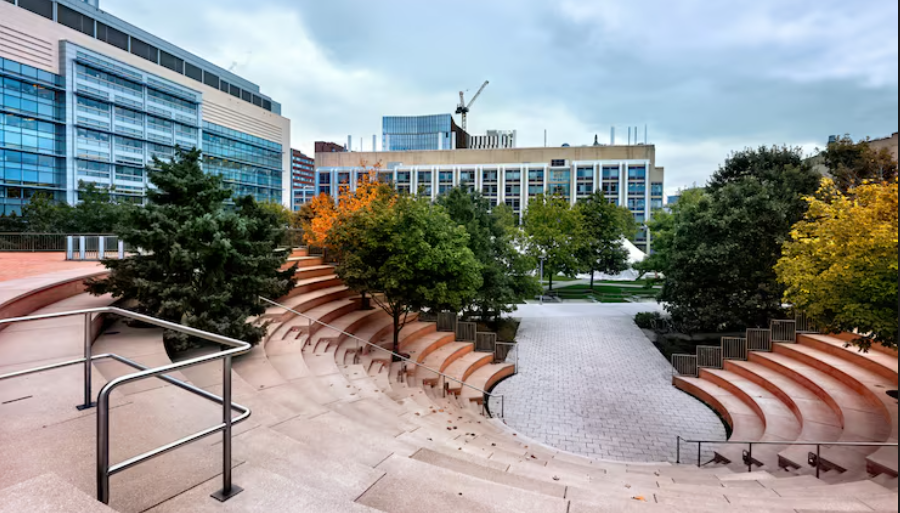
However, scale has undergone the most significant change. The university’s endowment increased twentyfold, enrollment nearly doubled, and the physical campus tripled during the lengthy tenure of former president Eric Gilbertson, who held office from 1989 to 2013, making him the longest-tenured president in SVSU’s history. That kind of institutional growth doesn’t happen through luck. It requires sustained investment, a clear sense of identity, and probably a few board meetings that went better than expected.
There’s also the matter of affordability, which in today’s higher education climate can’t be dismissed as a secondary concern. SVSU claims to be the most reasonably priced public university in Michigan, and the statistics support that assertion. Nearly 98 percent of first-year students receive some form of scholarship or grant. 66% of students have their entire tuition and fees paid. The net price per year sits around $11,500 — a figure that would seem almost impossible at many comparable institutions. It’s still worth doing your own math on what that means for your specific situation, but for a working-class region like the Saginaw Valley, those numbers matter in ways that go beyond a ranking on a website.
Speaking of rankings, SVSU’s student housing has been named the best among public universities in the country. When you take into account that almost 70% of students choose to live on campus voluntarily, that kind of distinction sounds like a press release. When a place doesn’t work for them, students don’t usually stay.
The Hubble Space Telescope is arguably the most peculiar and instructive chapter in the university’s recent history. Tony Ceccacci, a graduate of SVSU, was the lead flight director for STS-125, the Hubble repair shuttle mission, in 2009. The Space Shuttle Atlantis carried an SVSU pennant. It is currently displayed in Pioneer Hall on campus. It’s a minor detail that’s simple to ignore. However, it highlights something genuine about what even a small regional university can achieve when it makes an investment in its students rather than just its reputation.
The goal of Saginaw Valley State University is not to emulate Michigan. It’s not attempting to be someone else. That may be the exact reason it functions.
