

Something changed in Buenos Aires on June 3rd, 2015, for which there are currently no adequate words. Over 300,000 people flocked to the streets outside the Congressional Palace, many of them teenagers with slogan-painted bodies and handmade signs brimming with urgency and glitter. They were marching under the banner of Ni Una Menos, Not One Less, an anti-feminicide demonstration that had erupted with such force that even the women who initiated it were taken aback. The march spread to Mexico, Uruguay, South Korea, and Poland in a matter of weeks. It’s difficult to ignore the fact that something wasn’t created overnight when it moves so quickly.
The fact that this “sudden” explosion had roots dating back decades is something that the majority of international coverage overlooked and continues to overlook. The women who assisted in the planning of Ni Una Menos had not just shown up. They originated from neighborhood associations, academic circles, labor networks, and journalism collectives—spaces that Argentine feminist activists had quietly tended for generations. In actuality, the movement that appeared completely new in 2015 had been developing for sixty years.
The movement’s structure, according to one of Ni Una Menos’ founders, was “amoeba-like”—that is, it was not a single organism with a headquarters but rather something that mounted across spaces, overlapping and multiplying. It wasn’t a weakness to be shapeless. It was the layout. Decades of disappointment and adaptation had taught seasoned activists that inflexible structures turn off young people. They are drawn in by fluid ones.
Interviews with seasoned Argentine feminist organizers frequently use the phrase “rowing against the tide.” Many of these women felt precisely that for years, creating networks that mainstream politics disregarded and bringing ideas about gender violence into rooms that didn’t want to hear them. Then the wind abruptly changed. Not just at marches, but also in the networks, reading groups, WhatsApp threads, and conversations, younger women and teenagers started to show up. Experienced activists describe this moment with a mixture of relief and something akin to disbelief.
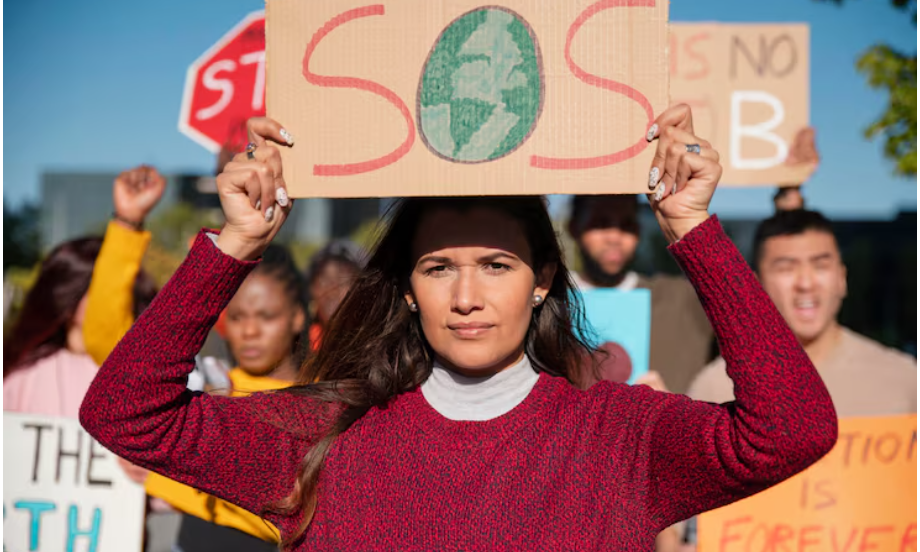
Researchers who looked into the movement discovered that this generational transfer wasn’t coincidental. In both intentional and natural ways, older activists had established the framework that allowed younger women to form political identities without being lectured or treated with contempt. They substituted more liberating language that allowed for anger, performance, and the kind of fearlessness that only arises when you haven’t yet learned to be afraid for inflexible adult-centered frameworks. Mothers were not displaced by the so-called Daughters’ Revolution. It rested on their shoulders.
The ease of exporting this model is still unknown. Argentina’s unique history—mass disappearances, military dictatorship, and a deeply ingrained public protest culture—created circumstances that aren’t found anywhere else. However, the Argentine experience offers something truly worthwhile to study at a time when Generation Z is organizing everywhere from Tehran to Santiago to Lagos. The mobilization of young people is often regarded as spontaneous combustion. Argentina says it can be grown as well.
When Javier Milei’s administration started cutting university funding in 2024, Argentina’s youngest activists organized once more, but this time they used Instagram and TikTok instead of union halls. Through hashtags, the Marcha Federal Universitaria spread across the country nearly as quickly as news organizations could monitor it. The faces were unfamiliar. Beneath it all, the instinct, the infrastructure, and the intergenerational solidarity belonged to activists in Buenos Aires who worked for sixty years to make sure that when young women finally made the decision to march, someone would be there to support them.
