

Making a scientific case for something that kids do instinctively, without guidance, from the moment they can reach for an object seems almost counterintuitive. However, that is precisely what researchers affiliated with OMEP—the World Organization for Early Childhood Education—have been working on for years, building a patient, methodical, and subtly convincing body of evidence.
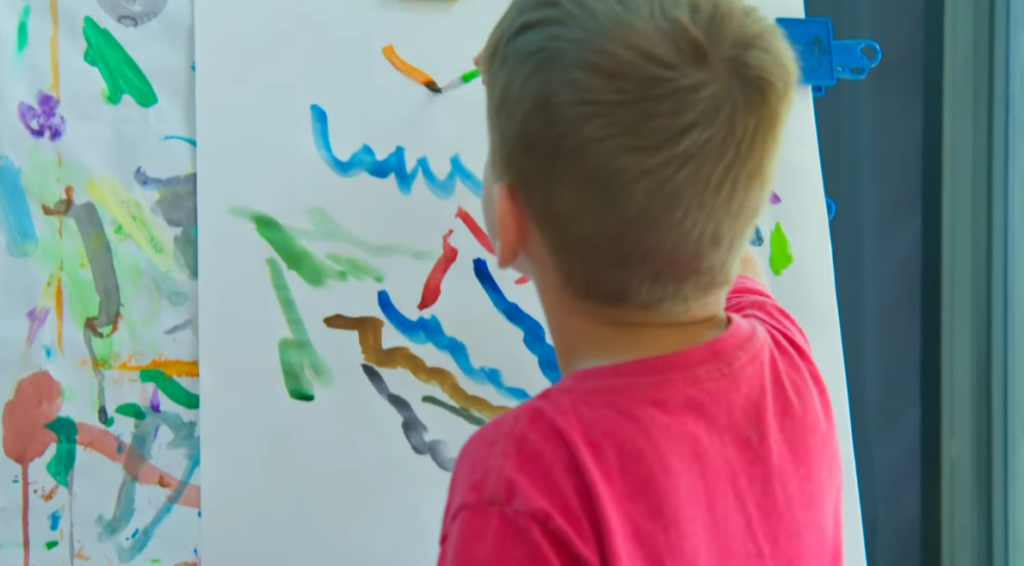
When you walk into a preschool classroom that uses OMEP-informed practices, you might not realize right away that you are witnessing research in action. Kids arrange stones according to color. They transfer water between variously shaped containers. When a child fails at carefully balancing a block on top of another, they try again from a different angle. It doesn’t appear to be science class. However, that is, in a sense, the whole point.
The organization, which operates in more than 60 nations, has long promoted the somewhat radical notion that play is the main way that young children learn rather than a diversion from it. It seems natural. The results of early childhood experiences take years to fully materialize, and the academic community spent decades treating play as a soft subject that wasn’t really worthy of serious empirical scrutiny, so it is actually more difficult to prove than anyone anticipated.
In order to produce mixed-methods data that is more difficult to discount than any single study from any one nation, OMEP has combined classroom observations, teacher interviews, and child assessments across radically different cultural contexts—Kenya, Indonesia, Ireland, and Brazil. For example, the Kenya Toy Library Project looked at the benefits of play environments for kids as well as the effects of providing teachers and parents with specialized training on how to help them. The results confirmed what researchers had suspected but found difficult to measure: adult facilitation is crucial. Play-based learning does not include a toy that is left unused in a corner. The real development occurs when an adult is able to follow a child’s curiosity without taking control.
In a world where literacy and numeracy benchmarks are still used to measure early childhood success, the cognitive findings are arguably the most commercially readable. Without the need for a single worksheet, OMEP-affiliated research has shown that guided play fosters children’s development of early hypothesis testing, classification abilities, and cause-and-effect reasoning—the cornerstones of STEM thinking. When science themes were incorporated into everyday play activities, children showed emerging evidence-based reasoning that most traditional curricula wouldn’t anticipate until years later, according to a 2025 Indonesian study based on observations from three early childhood centers. We may have been drastically underestimating what young children can comprehend in the correct setting.
An equally captivating narrative is presented by the social and emotional data. Research consistently demonstrates that unstructured, child-directed play fosters empathy, emotional control, and the ability to cooperate under pressure. Despite the terminology frequently used to characterize them, these are not soft skills. In contrast to early academic drilling, there is growing evidence that these are the skills that predict long-term wellbeing and adaptability. Some researchers in this field believe that the field of education policy is just now starting to catch up with what the data has been saying for some time.
OMEP has successfully transformed a philosophical argument about childhood into an empirical one in a methodical and low-key manner. Progressive educators are no longer the only ones who support play-based learning. Researchers are measuring, reproducing, and publishing it, one study at a time, in classrooms that don’t resemble labs but serve as such in their own meticulous manner.
