

A school that outlives the civilization that created it has a subtly remarkable quality. Yali High School is located on Laodong Road in Changsha, Hunan Province, as if it has always been there, and in many respects it has. Established in 1906 by a group of Yale graduates who thought that education could transcend national boundaries, the institution has endured for more than a century despite political unrest, wars, and forced name changes. It is still present. That conveys a message.
The founders, including Warren Seabury, Edward Hume, and Brownell Gage, were neither colonial administrators nor professional diplomats. After graduating from Yale in the 1890s, these twentysomething men brought their mission to Changsha between 1901 and 1905. In addition to being a transliteration of Yale, the name Yali is derived from the Analects of Confucius, which means “refined and proper conduct.” It’s not a coincidence that they have two origins. The school seems to have been juggling two different worlds all along.
Currently, the campus has about 400 faculty members and 3,400 students enrolled in grades ten through twelve. Most parents in the West would find it hard to comprehend how competitive admission is. Exam results for the entire city or province determine a student’s spot, though there is some leeway for proven aptitude in science, the arts, music, or athletics. The accomplishment is getting in. That foundation serves as the basis for everything that comes after.
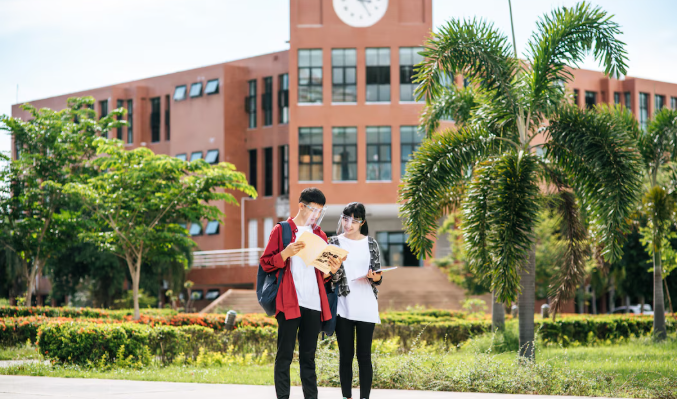
Along with First High School of Changsha, Changjun High School, and the High School Attached to Hunan Normal University, Yali is regarded as one of Changsha’s “Famous Four” esteemed high schools. This distinction is associated with a sense of regional pride that is passed down through families, where a parent who attended Yali secretly hopes their child will have the same opportunity. It’s a different matter entirely whether that pressure is healthy.
From the outside, it’s more difficult to understand how close this school was to closing. Teachers and students moved to Yuanling in western Hunan in 1938 as Japanese forces advanced on Changsha. They continued to instruct. They returned seven years later. Then, in 1951, the school was officially taken over by the municipal government, which renamed it Changsha Number Five Middle School. At a school-wide meeting, the final American representative was brought in to be publicly denounced, and the Yale-China connection was severed. The school remained open. It simply altered its appearance.
The relationship between Yale and China wasn’t quietly reestablished until 1985, and Yale English language instructors returned to campus the following year. The name Yali was reclaimed by the school. It’s possible that the moment felt more symbolic than utilitarian, but symbolism is very important in Chinese educational culture.
Yali has run an international department since 2011 that provides AP electives and A-Level courses through the AQA and Edexcel boards. According to reports, the 2025 graduating class had an admission rate of 81% to US Top 50 universities and 78% to UK Top 40. Although it is challenging to independently confirm those figures, they show how the school has positioned itself as a launching pad for global futures as well as an elite domestic institution. By Chinese school standards, the student-teacher ratio is remarkably close, at about 4 to 1.
Walking through this place’s history gives me the impression that Yali’s most remarkable feature isn’t its acceptance rates or rankings. It’s the fact that it continued to operate despite all of the challenges it faced, including foreign founders, war evacuations, communist takeover, cultural revolution, and ultimately rehabilitation. The majority of institutions don’t make it through one of those incidents. Yali persevered through them all and continues to be listed among the most prestigious schools in the country. It’s not marketing. That’s more akin to institutional stubbornness—the kind you don’t anticipate and find difficult to duplicate.
