

A four-year-old may confidently explain why the soil by the window grows plants more quickly than the soil by the door if you walk into the correct preschool classroom on any given Tuesday morning. For the past two weeks, she has been monitoring it. She created a chart. She has views on sunlight. She was not told to give a damn about this. She simply does.
That is project-based learning operating as it should. Furthermore, despite decades of debate in the education sector over curriculum standards, testing benchmarks, and structured learning frameworks, an increasing amount of data indicates that this messier, quieter, and more child-driven approach may be producing better outcomes than nearly everything else available.
In comparison to traditional instruction, project-based learning dramatically increased academic achievement, thinking skills, and students’ emotional connection to learning, according to a comprehensive meta-analysis published in Frontiers in Psychology that drew from 66 studies carried out over a 20-year period. The impact was particularly noticeable at the elementary school level, when children are still developing their fundamental beliefs about what education entails and whether it is worthwhile.
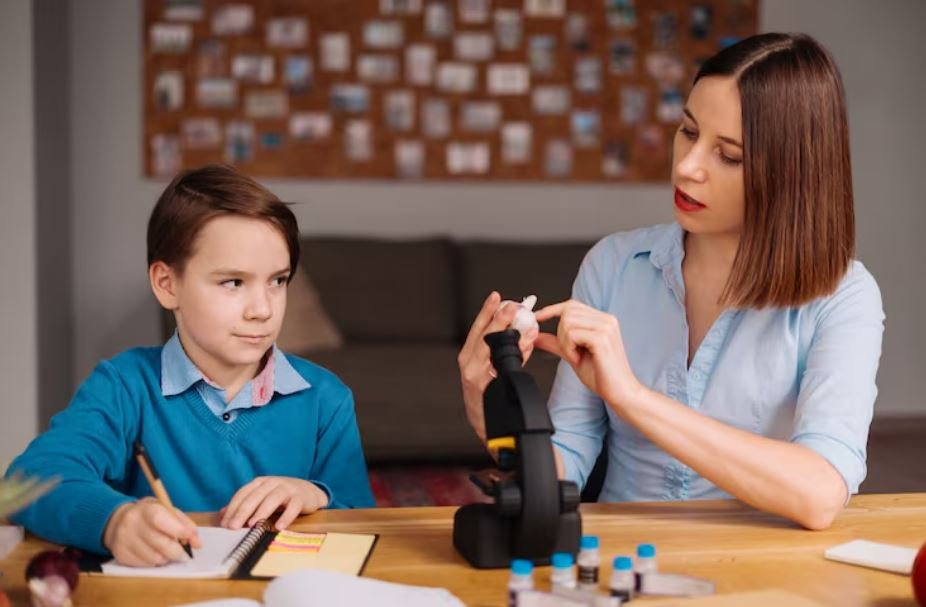
Why this works for young children is almost too obvious. Children between the ages of three and seven are not predisposed to sit still and take in information presented to them in structured chunks. They want to touch, destroy, reconstruct, and quarrel about things. Instead of suppressing that urge, project-based learning makes use of it. Children could track daily temperatures, construct a basic rain gauge using a plastic bottle and a ruler, and create a bar graph of their findings as part of a weather project. Fine motor skills, science, and math all appear, but none of them feel like subjects. They have the impression of resolving an issue that the child genuinely cares about.
It’s difficult to ignore how different this appears from the classrooms that many parents recall. Small groups of four or five kids working together yield measurably better results than larger arrangements, according to research that is becoming more and more clear about how important group size is. A whole-class lesson just cannot match the intimacy of that structure, which enables children to divide tasks, negotiate, disagree, and hold each other accountable. Teachers who have made the change frequently characterize it less as instruction and more as creating conditions for learning, such as setting up the space, keeping a close eye on things, and posing the appropriate question at the appropriate time.
It’s not as easy as it seems. One common misconception about project-based learning is that it is less rigorous or looser than traditional teaching methods. In actuality, it necessitates that educators have a thorough understanding of child development, resist the need to overexplain, and have faith that a child who appears to be playing with blocks is frequently engaging in a cognitively complex activity. According to the data from the meta-analysis, the sweet spot for significant impact is between nine and eighteen weeks; this is long enough for a project to gain true depth while remaining short enough to sustain real investment.
When examining how these programs operate in reality, it’s remarkable how academic skills develop indirectly rather than directly. When a child measures soil, she is unaware that she is doing math. When a child dictates observations about a butterfly, she is not aware that she is developing early literacy. However, the research demonstrates that because those skills are being developed in a setting that the child finds meaningful, they are being developed more robustly than they might be through direct instruction alone. It’s not a weak assertion. The NIH-published study’s effect values indicate that project-based learning has a moderately strong positive impact on academic achievement, not just engagement or attitude, though those also improve.
Early childhood educators who have witnessed this change over the past ten years typically talk about it with a cautious enthusiasm, genuinely convinced that something genuine is happening but aware that any good idea can be badly executed.
Children who graduate from well-run project-based programs appear to be more at ease with uncertainty, more willing to try something and make revisions, and more able to articulate their own ideas. These are not attributes that are readily apparent on a standardized test. However, these are the characteristics that typically indicate the type of person and student a child will grow up to be. To be honest, it’s still unclear if that will be sufficient to persuade the larger educational system to follow suit. However, it is difficult to disagree with the classrooms where it is effective.
