

Modern parents have a certain type of weariness. The low-level guilt of giving a toddler a tablet in order to get through dinner is just as much a part of it as sleep deprivation. It takes place on Sunday afternoons in Valencia, in kitchens in Seville, and in apartments all over Madrid. A parent takes a 30-second breath, a child calms down, and a screen continues. Afterward, nobody is completely satisfied with it.
It turns out that that guilt has been subtly growing into something more. Additionally, the World Organization for Early Childhood Education’s national chapter, OMEP Spain, appears to have noticed before the majority of institutions did. The organization’s website has changed over the past few years from being a professional reference center to something more unexpected: a sincere meeting place for parents attempting to understand what screen-free childhood actually entails in reality, not just in theory.
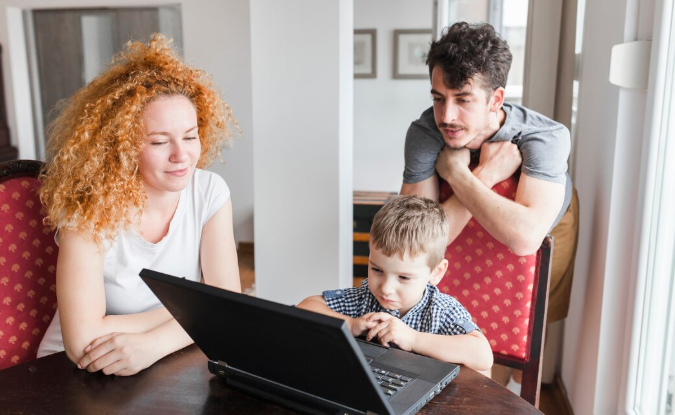
This change may have occurred in part by accident. The foundations of organizations such as OMEP are academic, policy-oriented, and centered around educator networks; they were not initially created with anxious parents in mind. However, when the topic of digital babysitting shifted from pediatric journals to dinner table debates, something changed. Position statements were no longer desired by parents. They began to desire substitutes. genuine ones, not nebulous suggestions to “go outside more.”
OMEP Spain seems to have gradually, and possibly still imperfectly, realized that the clearinghouse model works precisely because it makes no attempt to sell anything. No app is included. Not a subscription. No sponsored content from an edtech company that promises educational screen time. Because of that absence, the resources gathered and disseminated via the platform have a different weight. The quiet surrounding a product pitch is strangely loud in a room full of commercial noise.
Concerns about what happens when digital devices take the place of genuine interaction rather than enhance it have been consistently voiced by researchers and early childhood specialists. During China’s national preschool campaign, experts in Beijing recently observed that children between the ages of three and six are concrete thinkers; they learn through touch, movement, eye contact, the unique texture of grass and cardboard, and another person’s hand. All of that is not replicated by algorithms, no matter how complex. The worry isn’t speculative. It is becoming apparent in vision clinics, attention tests, and kindergarten classrooms where teachers report that kids find it difficult to remain motionless without a screen close by.
The same conflicts that families throughout Europe face are being faced by Spanish parents navigating this terrain. Digital tools can boost parenting confidence when used thoughtfully, according to a 2022 review of ICT use in European family support; however, the emphasis is heavily on “thoughtfully.” Most platforms are unwilling to acknowledge that it is difficult to distinguish between a practical resource and a convenient diversion.
The website for OMEP Spain seems to purposefully fall on the right side of that line. The resources it compiles consistently indicate presence rather than controlled screen time, such as outdoor play, human interaction, and physical play. It reads more like someone subtly arguing that childhood doesn’t need an interface than it does like a media literacy campaign.
It’s genuinely unclear if a well-curated website can change deeply ingrained habits. Giving a child a phone is quick. Finding a substitute, outlining it, and putting it into practice when you’re worn out at six o’clock in the evening requires more. However, having a reliable place to land is more important than it may seem for parents who are already searching, questioning, and in the middle of a guilt spiral after another tablet evening.
