

When a government official stands up at an economic summit and tells the audience that the system she is in charge of is, in her own words, becoming outdated, there is something subtly startling about it. At the 2021 Ehingbeti Economic Summit, Folashade Adefisayo, the Lagos State Commissioner for Education, did just that, and it was difficult to discount his sincerity. The majority of officials in her position would have discussed advancements. She discussed dysfunction.
Nigerian graduates are joining the workforce without the skills that their jobs actually require, according to Adefisayo’s direct argument. She said there is a significant knowledge gap. It’s structural. No amount of exam passing can make up for the gaps in the curriculum that shapes millions of young Nigerians because it was created for a world that has mostly changed. Although the evidence she cited was difficult to refute, it’s possible that she was exaggerating for effect—Lagos officials do have a knack for the dramatic podium moment.
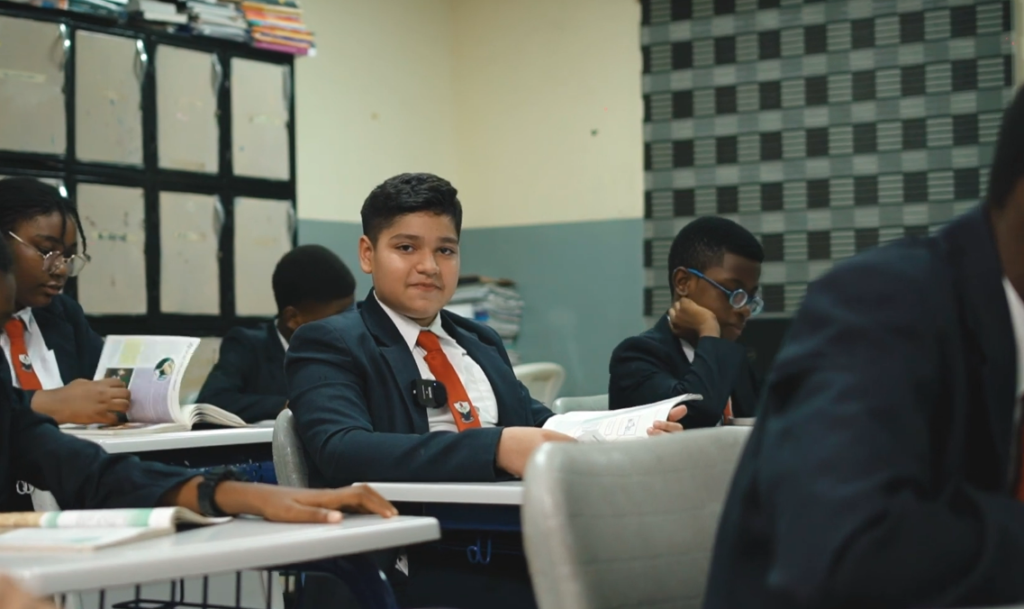
Her insistence that the change must start is what sets her approach apart from the typical policy discourse. Not in an academic setting. Not in senior high school. at the nursery school. Critical thinking, digital literacy, teamwork, and personal leadership are 21st-century skills that must be incorporated into education from the very beginning, according to Adefisayo, who spoke at an OMEP training event in August 2022. “Early Childhood Education in the 21st Century: Inspire, Explore and Create,” the event’s theme, might have been a polished catchphrase that didn’t accomplish anything. She seemed to take it literally.
The abilities she lists are concrete. In one particularly noteworthy aside, she drew a clear distinction between digital literacy and what she called “Yahoo-Yahoo,” the local slang for internet fraud. She has also mentioned creativity, problem-solving, teamwork, and the capacity to use technology purposefully. In Nigeria, where the internet carries complex connotations and where parents and educators occasionally mistake screens for danger, this distinction is crucial. It is more cautious than it may seem to frame digital competence as something distinct and worthy of intentional development.
It should be noted that Lagos is not starting from scratch. According to reports, the state has outlined a plan of action that integrates these abilities across all subject areas, from early childhood education to senior secondary. It is more difficult to confirm whether that scheme is primarily found in documents or in classrooms. With 50,000 teachers employed in Lagos alone, many of whom lack the teaching skills necessary for the new approach, Adefisayo has acknowledged that the infrastructure for teacher training is still lacking. That is a major limitation, and it’s unclear how soon it can be resolved.
There’s a feeling that what Adefisayo is trying to accomplish is actually challenging bureaucratic work disguised in inspirational language. Funding, private sector participation, development partners, retraining initiatives, and a government prepared to view education spending as an investment rather than an expense are all necessary for curriculum reform on a large scale. Speaking at the same summit in 2021, Abubakar Suleiman of Sterling Bank stated unequivocally that the system’s current resources—both public and private—are insufficient to operate it effectively. That still holds true.
It is genuinely unclear if Commissioner Adefisayo’s vision will withstand the typical challenges of Nigerian public administration, such as budget deficits, bureaucratic inertia, and political shifts. However, she has brought up a topic that should have been discussed years ago: what children in Lagos’s early classrooms are truly being prepared for.
