

A small detail on Lindbergh Early Childhood Education’s enrollment page says more than any brochure could. The tuition-based classroom spots are filled by the time the majority of families learn about the program. Only children who qualify through special education services are able to use the application portal. For everyone else, word-of-mouth and timing are crucial.
It is challenging to produce that kind of quiet demand. Usually, it indicates that something is actually working.
Located on South Lindbergh Boulevard in St. Louis, Missouri, Lindbergh Early Childhood Education is nestled on the Lindbergh High School campus. A preschool and a high school sharing a space is an odd arrangement, but there’s something almost appropriate about it. The structure has a history. The community is unbroken. Two and three-year-olds are now being brought through the same doors by families that used to walk those hallways.
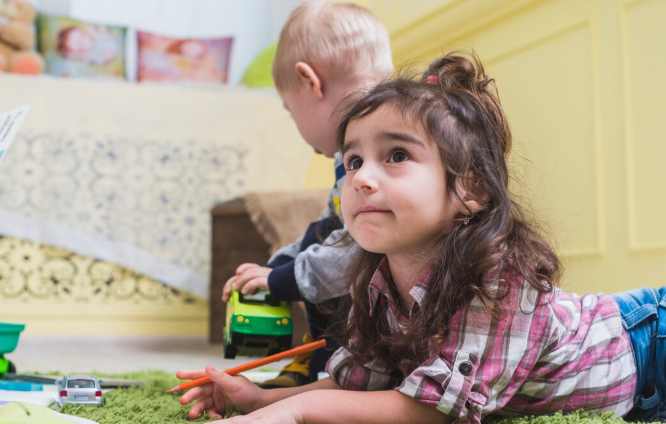
The program’s two primary tracks—Early Learners for children ages two to three and Preschool for children ages three to five—serve kids as young as two to five. Classes follow set weekly schedules, usually lasting two or three days, depending on the option selected. This provides young children with the consistency they require without being too demanding on them or their families. It’s a clever design. Lindbergh appears to recognize that not all families require five days a week at age three.
The curriculum’s alignment with Missouri’s Early Learning Standards is what makes it unique, at least on paper. However, this framing doesn’t fully convey what instructors and parents say about the school. Family reviews reveal something more intimate: a genuinely committed staff, a non-institutional culture, and a daily routine centered on play, language, and math through experience rather than drill. It was a “satisfying and rewarding experience,” according to one parent on Indeed, who attributed it to the cooperative staff and high parental involvement. When it’s genuine, that type of feedback tends to be specific.
It’s important to consider the program’s guiding philosophy. Building nurturing environments where kids feel safe, respected, and inspired is the mission statement of Lindbergh ECE, which is driven by what educators refer to as developmentally appropriate practices. In early education circles, that phrase is used loosely, but in this context, it seems to have real meaning. The instruction is characterized as inclusive and relationship-driven, putting relationships between educators, students, and families ahead of memorization of academic material. It’s difficult to tell from the outside if that applies uniformly in every classroom. However, the program’s reputation implies that it goes beyond marketing jargon.
Full-day preschool families can also take advantage of child care, which is provided both before and after the main program. That detail is crucial for working parents. It transforms a part-time preschool into one that genuinely adheres to a regular schedule.
A useful aspect is also worth mentioning. The framework, accountability, and professional standards of the school are linked to something bigger than a single campus because it is run by Lindbergh Schools, a public school district. A stand-alone private preschool might not always provide parents with the level of assurance that this structure does.
It’s possible that no one aspect of Lindbergh Early Childhood Education—not the curriculum, the schedule, or the location—makes it unique. It could just be the accumulation of little things done well on a regular basis. A teacher who keeps in mind that a kid gets anxious on Mondays. a schedule for programs that families can genuinely schedule. A building where adults appear to actually enjoy being there.
The advice is simple for St. Louis families who are still considering their options: don’t put it off. The spots are typically reserved by the time the school year starts. That might be the most frank assessment the program could get.
