

Growing up in Reno, Nevada, Brandon Aiyuk attended Robert McQueen High School, where his football skills eventually caught the attention of NFL scouts. As a senior, he returned kicks, played wide receiver and defensive back, and was named to the first team of Northern Nevada. The football piece was functioning by most standards. The discussion in the classroom was completely different.
The academic aspect of Aiyuk’s story is often overlooked when discussing his ascent, so it’s worth taking a moment to consider that. His grades simply fell short of Division I eligibility requirements after graduating from McQueen. It’s the kind of thing that quietly ends careers before they begin, so it’s not a minor obstacle. It redirected them for Aiyuk.
He enrolled at Rocklin, California’s Sierra College, a junior college that isn’t typically mentioned when discussing football powerhouses. However, in retrospect, that detour appears less like a setback and more like a turning point that compelled him to develop in ways that a direct route to a major program might not have. He caught 29 passes for 573 yards and five touchdowns as a freshman in 2016. In addition to contributing significantly as a return man, he had 60 receptions, 960 receiving yards, and 14 receiving touchdowns the next season. He received the Junior College All-American designation. Clearly, the football was never the issue.
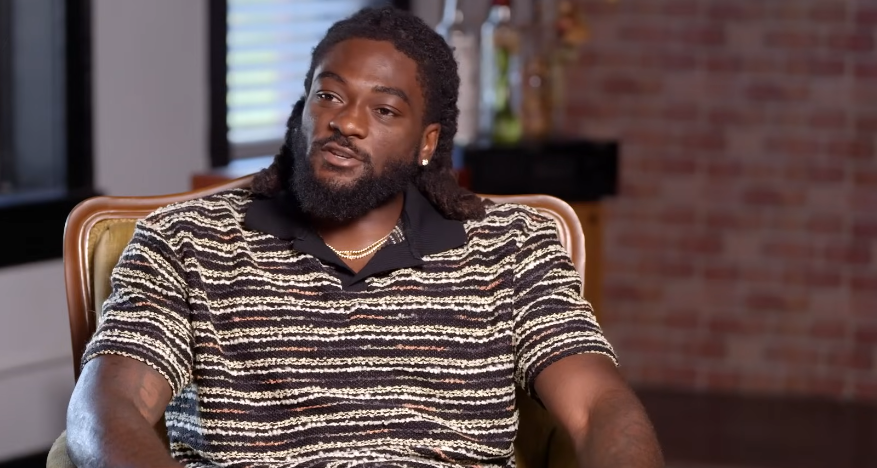
Aiyuk seems to have developed something in junior college that was not possible with just talent. He has discussed it himself. In some ways, the game was easier for me coming from the JUCO level: beat the guy in front of you, make the catch, and move on. He had to learn how to read a defense, spot coverages at the snap, and process information before the ball was in the air when he got to Arizona State. He acknowledged that it wasn’t an instant adjustment. It was labor.
It was important to him that Arizona State gave him the opportunity to play wide receiver. He was being recruited by a few other schools from Sierra who wanted to use him exclusively as a return specialist or transfer him to defense. Aiyuk received something more valuable than a roster spot from Herm Edwards, the head coach of the Sun Devils at the time and a former NFL cornerback: defensive perspective. According to Aiyuk, he asked Edwards directly about the thoughts of the corners during press coverage and what they look for in a receiver’s release. No transcript reflects that type of education.
The proof of concept came during his final year at Arizona State in 2019. First-team All-Pac-12 recognition, 65 receptions, 1,192 yards, eight touchdowns, and some of the most impressive after-catch stats in the entire draft class. In 2020, he was chosen 25th overall by the San Francisco 49ers. Without the two years in Rocklin, the additional time to develop academically and athletically, and the slower build that eventually resulted in something more durable, none of that might have happened.
Aiyuk’s educational path truly demonstrates that a path need not be tidy in order to lead to a significant destination. In recruiting circles, junior college carries a stigma that has always seemed a little unfair. Players come there for a variety of reasons, including grades, finances, geography, and familial circumstances. Those who succeed are typically self-directed in ways that are more difficult to quantify than total numbers. Aiyuk was obviously talented and willing to change direction when things didn’t work out as expected.
He was likely selected in the first round because of his combination of raw skill and adaptability. Football skills were evident as early as high school. One semester and one season at a time, he had to earn the ability to adapt.
