

There are two versions of Collin Morikawa’s story that are frequently told: the one about Royal St George’s and a two-stroke victory at The Open, and the one about the 23-year-old who won the PGA Championship on just his second major start. That version is accurate and truly amazing. However, it ignores something important. Prior to all of that, Morikawa was attending lectures at the University of California, Berkeley, pursuing a business degree that he was determined to complete.
Just that decision reveals something about him. In a time when gifted young golfers become professionals as soon as they hear the word “sponsor,” Morikawa continued his education. He enrolled at Cal in 2015 and stayed until May 2019, when he graduated from one of the nation’s most competitive undergraduate business programs, the Haas School of Business. Around the time he graduated, it was ranked third in the country by U.S. News and World Report. He wasn’t merely killing time in between competitions.
It’s simple to forget how seriously he took both obligations at once. Morikawa broke the NCAA all-time record for a single season with a scoring average of 68.68 during his junior year. He was juggling schoolwork, travel, and the mounting pressure that comes with being the best amateur golfer in the world for three weeks. It takes skill to achieve that kind of balance.
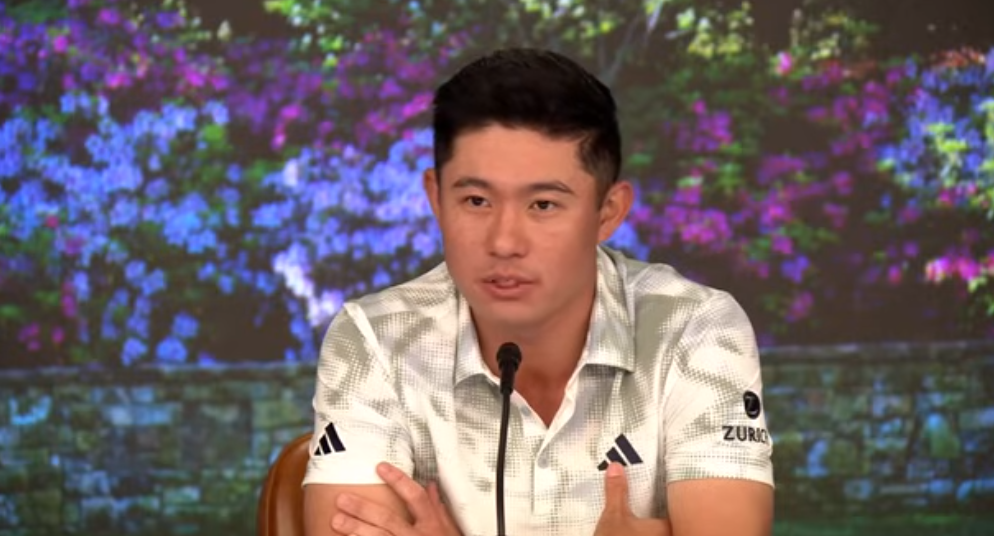
La Cañada Flintridge, a peaceful suburb nestled in Los Angeles County’s hills, is where he was raised. Before traveling the comparatively short distance to Berkeley, he attended La Cañada High School. He might have valued being close to home. It’s also possible that he just picked the school that provided what he desired, which was a demanding academic program and a well-established golf team. Most likely both. Nobody has ever thought of Morikawa as a careless decision-maker.
Five individual victories, a Pac-12 Championship in 2019, and three consecutive All-American selections were the results of his time at Cal. He followed Max Homa as the 2018–19 Pac-12 Player of the Year, a title that would recur multiple times in his career. Both athletes were later awarded endowment scholarships by the university. For his part, Morikawa has made it apparent what Berkeley meant to him. “I owe a lot to Cal golf,” he declared. “It was a huge four years of my life that I would never trade in for anything.”
Professional athletes frequently use language that sounds practiced. There’s a feeling that Morikawa truly means it in this instance. His approach on the course appears to have been influenced by the discipline of juggling business school and competing at an elite amateur level: methodically, quietly, and without much obvious panic. It’s difficult to say for sure if that’s nature or something Berkeley emphasized, but the two don’t seem to be unrelated.
In 2019, a few weeks after graduating, he became a professional. He won his first PGA Tour event in a matter of months. He had a major within a year. In retrospect, it’s difficult to ignore how condensed that achievement was and how long the runway actually took to get there. Five years of amateur competition, four years of college, and a business degree he didn’t use right away. Then all of a sudden.
One day, Collin Morikawa’s education won’t be the focal point of his Hall of Fame plaque. However, there is a strong case to be made that it permeates everything that followed. Golf lessons don’t teach patience, structure, or the capacity for long-term planning. Teaching those is more difficult. In any case, Berkeley appears to have assisted in their education.
