

The part of Tim Kaine’s biography where he leaves Harvard Law School in the middle of his degree to run a vocational school in Honduras is one that is frequently overlooked in political coverage. No backpacking during a gap year. A real school. A Kansas City first-year law student is in charge of a small town called El Progreso, where teenagers are learning welding and carpentry. It’s the type of decision that reveals more about a person than nearly every line on a resume.
The eldest son of a welder who ran a small ironworking business, Kaine was raised in Overland Park, Kansas. Kaine kept a close eye on his father because he did more than just work with metal; every day, he constructed something by hand. He seems to have developed a respect for technical work that most politicians never fully acquire as a result of his early upbringing. His Senate work on career and technical education would bring it up again decades later, but that’s getting ahead of the story.
Kaine completed his economics degree at the University of Missouri in three years, earning Omicron Delta Kappa and summa cum laude honors. For three years. A person in a rush to get somewhere is typically indicated by that type of academic pace. Nevertheless, he also took his time getting accepted to Harvard Law. He took a break after his first year. He traveled to Honduras. Working with Jesuit missionaries for nine months, I recruited local villagers to attend school and taught them skills that could truly put food on the table. He has referred to that time as a “North Star”—the fixed point around which the rest of his career has revolved.
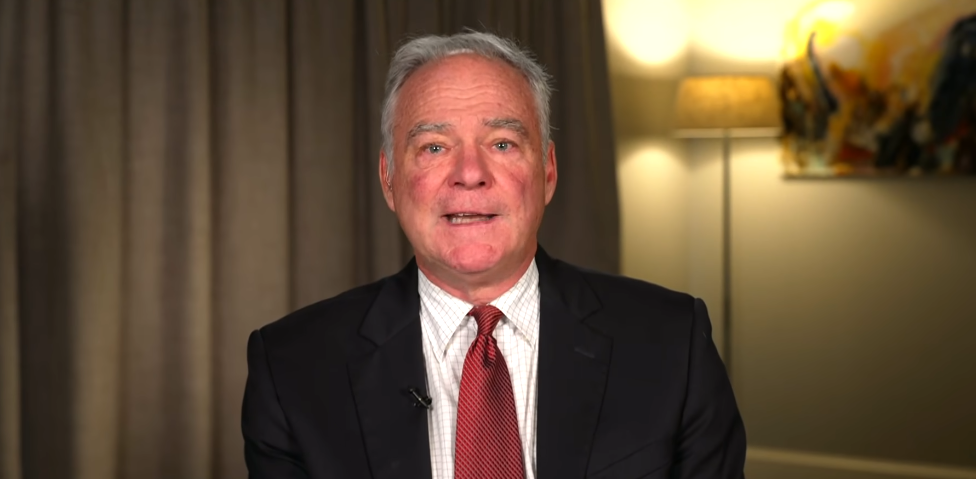
Without Honduras, Kaine might develop into a Harvard-trained standard-issue attorney who is polished and successful but not very unique. Rather, he returned speaking Spanish fluently and possessing a more difficult-to-identify trait: a groundedness and a preference for the practical over the theoretical. He was not the same person who had come to Cambridge in 1979 when he eventually returned and completed his J.D. in 1983.
In certain respects, what came after law school was an extension of the same instincts. He didn’t pursue a prominent firm in Washington or New York. After working as a federal judge’s clerk in Georgia, he moved to Richmond, Virginia, where he focused on fair housing law and represented individuals who had been turned down for housing due to their race or disability. In 1988, he began teaching legal ethics at the University of Richmond. These were not showy maneuvers. These decisions allowed him to stay in touch with those who truly needed assistance.
He seemed to fit into teaching. Mark Herring, the future attorney general of Virginia, was one of his Richmond students. It’s difficult to ignore the pattern when looking at this through the prism of his later career: Kaine has always seemed most at ease in settings where the objective is to clarify something challenging, whether it’s a legislative proposal, a legal concept, or a policy dispute on the Senate floor.
Perhaps the most truthful aspect of Tim Kaine’s educational journey is that it doesn’t end with the Harvard degree. The formal credentials—Harvard law and Missouri economics—are strong, if not outstanding. Between those two degrees, however, he attended a Central American vocational school where he taught teenagers the same skills his own father used on a daily basis in Kansas City. This education seems to have stuck with him the most.
That has a subtle consistency to it. Not overly dramatic. Not, especially, the content of campaign advertisements. But genuine in a way that is occasionally absent from political biographies that focus too much on the institutional credentials and ignore the events that truly shaped the individual.
