

Max Verstappen was rarely seen in the hallways of a secondary school in Maaseik, Belgium. He had somewhere else to be, usually in Europe, sitting in a go-kart and learning things that could never be learned in a classroom. It’s worth pausing to consider that picture. Verstappen was honing his racecraft against drivers who were two and three years older than him, winning, and repeating the next weekend while his peers attended geography classes and football practice.
Max Verstappen had a short and disrupted formal education. Before switching to private tutoring, he first attended a secondary school in Maaseik. By his own admission, he would skip class early in order to travel throughout Europe with his father, Jos, a former Formula One driver who, after his own F1 career ended in 2003, had dedicated his entire life to molding his son’s racing career. This arrangement, which combined a childhood spent at racetracks with private tutoring, was more of a conscious decision than an accident.
Jos took the entire project very seriously, which is what makes the story intriguing. This was not a parent pushing an unwilling child in the direction of their dream. At two and a half, Max was riding a quad bike sideways in the garden without recoiling. He was crying on the phone from a racetrack by the time he was four and a half because he wanted to be competing. In response, Jos bought him a kart. Next, a quicker one. Then one more. It appears that the actual curriculum being created for him always took precedence over his education.
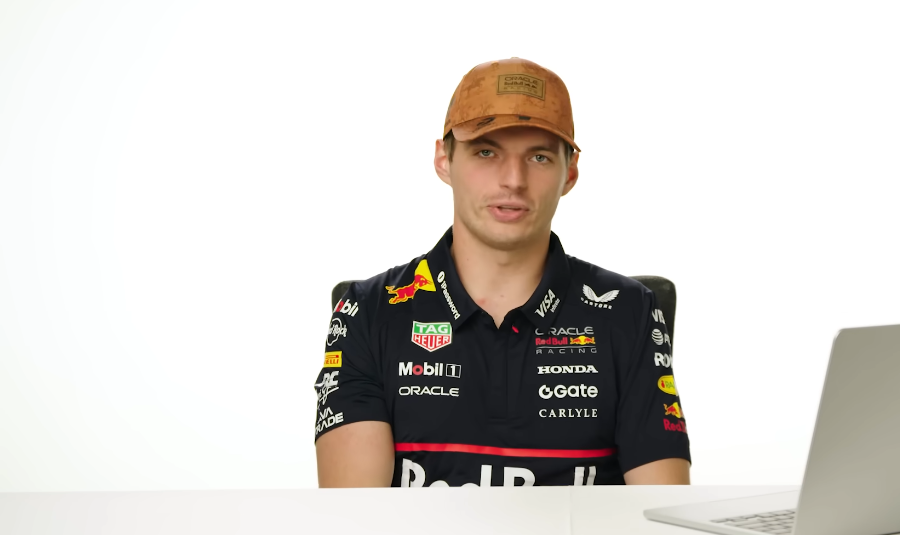
Dutch, English, and German are Verstappen’s three languages; he learned the latter while competing with karting greats. Something about that is subtly impressive. Genuine multilingualism is often difficult to achieve in formal education. Apparently, racing circuits can handle it with minimal effort. Like everything else in Verstappen’s upbringing, language was learned through immersion rather than instruction.
By the time he was fifteen, no driver had ever won three CIK-FIA karting titles in a single season, including a World Championship and two European titles. In between race weekends that year, he was finishing up private tutoring sessions. He was competing in Formula Three at sixteen. He was a Formula One driver at the age of 17. It’s unlikely that he spent much time considering applying to universities because there wasn’t really a time slot available.
This story is sometimes told as a warning about sacrificing education in the name of ambition. However, when you examine what Verstappen actually constructed, that framing falls short. It doesn’t sound like the product of someone with a low level of education to be able to process information at race speed, manage team communication in multiple languages, and absorb technical feedback and turn it into adjustments mid-race. It sounds like someone with a very different educational background.
The Verstappen model might only be effective in cases where the parental commitment is unwavering and the talent is truly extraordinary. Jos abandoned his own career, spent almost ten years traveling throughout Europe in van-loads, and remained closely involved throughout the entire process. Not every child has that specific gift, and not every family is able to accomplish that. However, the outcome speaks for itself. Go-kart tracks, not lecture halls, laid the groundwork for four consecutive world titles, 71 race victories, and a spot in the annals of the greatest drivers in the history of the sport.
By almost all measures, Max Verstappen’s schooling was unusual. Additionally, it was remarkably effective in almost every way.
