

The fact that Khairy Jamaluddin Abu Bakar was born in Kuwait City is subtly suggestive. His father worked as a Malaysian diplomat, a profession that necessitates frequent travel, flexibility, and a certain level of comfort with being the odd man out. Perhaps something was ingrained in Khairy at a young age due to his upbringing in that setting. a desire to see more of the world. a refusal to limit oneself to one location or one way of thinking.
The United World College of South East Asia in Singapore, where he completed his secondary education, speaks volumes about the type of student he was developing into. Subjects are not the only things taught in UWC schools. They bring together young people from dozens of nations and ask them to learn how to challenge, debate, and coexist. It’s a different kind of education than the typical secondary school, and in retrospect, it seems almost ideal for someone who would later spend years in the turbulent world of Malaysian parliamentary politics.
Khairy studied Philosophy, Politics, and Economics (PPE) at St Hugh’s College in Oxford after moving there from Singapore. It’s worth taking a moment to consider that. Oxford’s PPE program has produced economists, journalists, chancellors, prime ministers, and more throughout the Commonwealth. It’s not a specific technical requirement. It teaches you how to debate, challenge presumptions, and comprehend the true flow of power through institutions. The individual receiving the training will ultimately determine whether or not it is beneficial to the public. In Khairy’s case, it appears to have given him a unique range—someone who is equally at ease talking about economic policy or making a potent rhetorical point during a public debate.
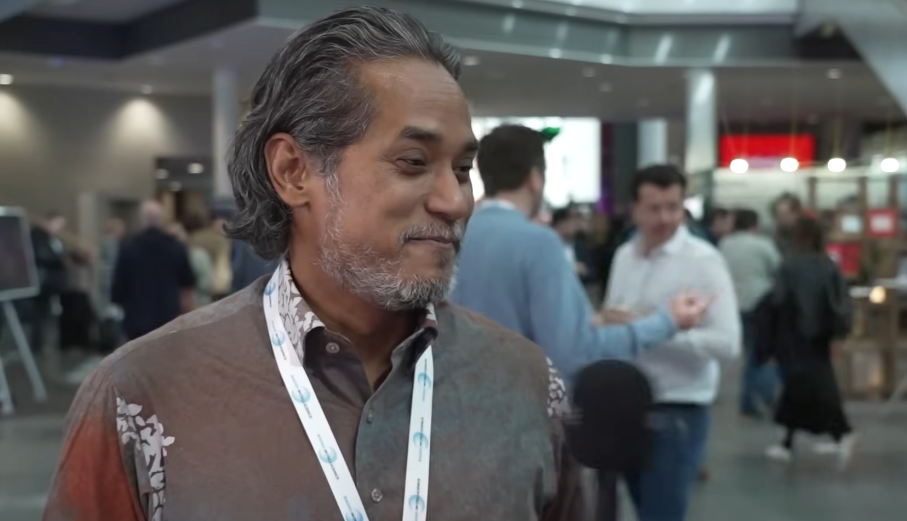
In 1997, he received his bachelor’s degree, but he wasn’t done. He finished his master’s degree in Legal and Political Theory at University College London a year later. He wasn’t merely gathering credentials, as evidenced by his selection of UCL and that particular postgraduate program. At the nexus of philosophy and law, legal and political theory poses challenging queries regarding justice, legitimacy, and the relationship between the state and its citizens. That kind of fundamental thinking wasn’t coincidental for a young man who would go on to serve as both Youth and Sports Minister and later as Health Minister during one of the most challenging public health crises Malaysia had ever faced. It was a formative experience.
Following his time in London, Khairy went back to Malaysia and worked as a journalist for a while, most notably in 1999 at The Economist. Although it is often disregarded, that detail is crucial. Finding the essential thread in a complex story, communicating under pressure, and translating complexity into clarity are all skills that journalism teaches you that no university course can match. Whatever had been developed during the Oxford and UCL years seemed to be sharpened during this time.
Looking back over the entire trajectory, it’s remarkable how differently things could have turned out. Many Oxford graduates with PPE degrees have vanished into lucrative jobs in the civil service or finance. Instead, Khairy pursued careers in journalism, politics, leading a national vaccination campaign during COVID-19, and then reinventing himself as one of the most popular podcasters in Malaysia. It’s still unclear if that path was the result of meticulous planning or just someone who continued to pursue whatever at any given time truly piqued his interest. In any case, the architecture came from the education. It appears that he built the remainder mostly on instinct.
At a UNIRAZAK speech in July 2025, he used a phrase that sums up something genuine about his experience. The initials remained the same, but the contexts drastically changed from PPE student to PPE-suited minister to top Spotify podcaster in Malaysia. Degrees are not the only source of that level of adaptability. However, it’s difficult to ignore the fact that practically every reinvention appears to have been made possible by the foundation those years in Singapore, Oxford, and London laid.
