

One version of Josh Allen’s story—the arm, the size, the improbable ascent from obscurity to NFL MVP—is frequently shared. However, the educational component—the actual sitting in classrooms, changing schools, and earning a degree—tends to be overlooked. That’s unfortunate because it could be the story’s most illuminating thread.
Growing up, Allen lived on a 3,000-acre cotton farm outside of Firebaugh, California, a small, unnoticed rural town west of Fresno. He went to Firebaugh High School, which was actually constructed on property that his grandfather had donated. He led the basketball team in scoring, pitched for the baseball team, and played quarterback. He was outstanding by most small-town standards. He was virtually invisible by the standards used by college recruiters.
When he graduated from high school, not a single Division I program offered him a scholarship. Not one. He was told he could walk on by San Diego State, but they couldn’t promise him any playing time. The school he had grown up supporting and attending camps at, Fresno State, failed miserably. It’s the kind of rejection that would silently put an end to most children’s football aspirations before they really got started.
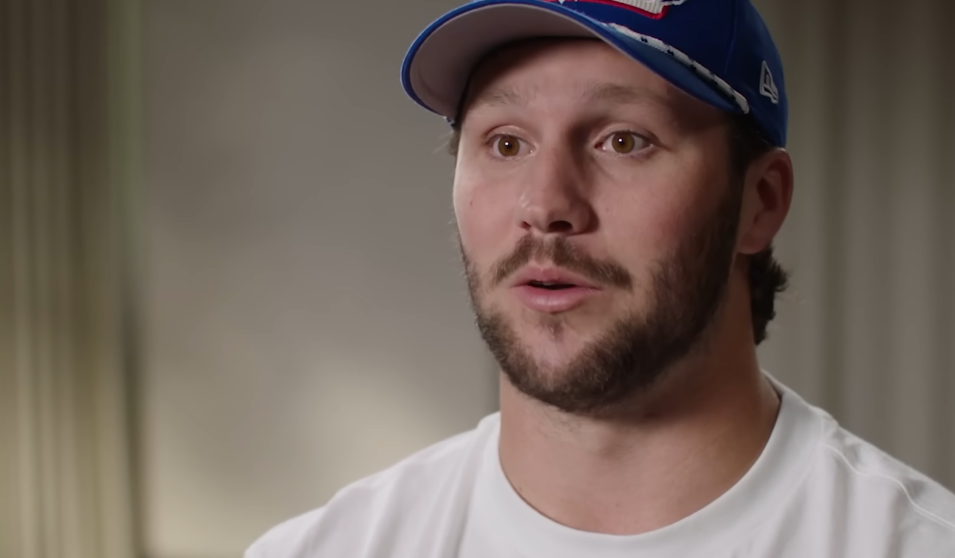
Allen chose to attend Reedley College, a junior college located in a small town in California. It was still a long way from where he had hoped to be, but it wasn’t a fallback in the dramatic sense—many players use the junior college route as a valid stepping stone. He ran a potent offense at Reedley that averaged over 450 yards per game, threw 26 touchdown passes, and literally developed into a 6-foot-5, 210-pound quarterback that was difficult to ignore. He continued to be disregarded. He emailed almost every FBS coach, coordinator, and quarterback coach he could locate towards the end of that season. The University of Wyoming and Eastern Michigan both made offers in response.
It was Wyoming.
Allen also received nothing at Laramie. Early in his rookie campaign, he broke his collarbone, which resulted in a medical redshirt. After just one healthy season, he returned, led the Cowboys to a bowl game in 2016, threw for over 3,200 yards, and began to seriously consider leaving for the NFL. Eventually, he continued, throwing for an additional 1,812 yards in 2017 before earning a bachelor’s degree in social science in December of that same year.
History, sociology, political science, and some aspects of economics are all included in the broad field of social science, and it is worthwhile to take a moment to consider that decision. Allen might have just needed a degree that could accommodate a demanding athletic schedule, and that’s perfectly acceptable. However, there’s also something appropriate about a quarterback who has always seemed to be incredibly interested in people—what drives them, how communities come together, why some stories are told and others aren’t—choosing a field that focuses on precisely that. It’s difficult to ignore that trait in the way he discusses loyalty, his hometown, and teammates.
The majority of the football community was still debating whether he was a real prospect when he graduated. Scouts were concerned about the amount of competition he had encountered in Wyoming’s schedule. Some questioned whether his mechanics were sufficiently clean. The rest of it, including the MVP award, the Super Bowl, and the jersey retirement in Laramie, came after the Buffalo Bills traded up to select him seventh overall in the 2018 NFL Draft.
Looking back, it’s easy to overlook how much of Allen’s personality was formed prior to all of that. None of it was glamorous: the years of being ignored, the junior college season, the small university in a frigid mountain state, the degree he completed in secret while getting ready for the draft. It was merely work. The kind that is typically taught more effectively in classrooms, farms, and second-chance schools than anywhere else.
