

There are, confusingly, two men named Nick Reiner whose lives have been documented in very different kinds of rooms. One sits in courtrooms. The other is a classroom teacher. One grew up in a $13.5 million compound in Brentwood surrounded by roses planted by Henry Fonda. The other published poetry, pursued a quiet career in advocacy journalism, and graduated from Stanford and UC Irvine. Though it’s difficult to pinpoint exactly what, the contrast illustrates how the same name can be associated with quite different outcomes.
The version of this story that most people are unaware of comes from Nicholas Reiner, Associate Director of Media and Storytelling at the ACLU of Southern California. He graduated from Stanford University with a bachelor’s degree in English and the University of California, Irvine with an M.F.A. in poetry. He worked for the Anti-Recidivism Coalition for five years as Director of Communications, editing a quarterly newsletter that reached tens of thousands of inmates throughout California’s prison system before joining the ACLU’s Southern California affiliate in 2023. He has taught writing in juvenile halls, middle schools, elementary schools, and high schools. He won a prize for his first poetry chapbook. By all standards, he is a person who valued his education and used it to create something.
The other Nick Reiner, the son of Hollywood director Rob Reiner, is a kind of warning about what happens when opportunity and instability collide without resolution, so it’s worth taking a moment to consider that. Rob Reiner’s son had ridden through at least eighteen rehabilitation centers by the time he was twenty-five. He had lived, off and on, in the guesthouse of his parents’ Brentwood estate. He had no job. Whatever formal education he may have received, there’s little public record of it shaping his path in any visible way. Reading what has come to light about his life gives the impression that he never really grasped the structure, rhythm, and accountability that education offers.
The biographical contrast here isn’t meant as cruelty. The stories that have come to light about Rob Reiner’s son point to a person who was truly ill for a considerable amount of time, and mental illness is not a moral failing. Reports of a schizophrenia diagnosis, stories of severe outbursts dating back to age eleven, years of addiction — these are not the markings of someone who simply chose chaos. More generally, psychologists have observed that substance abuse frequently causes delays in the diagnosis and treatment of underlying mental health conditions. For someone in his situation, formal education might have always been operating against serious neurological obstacles.
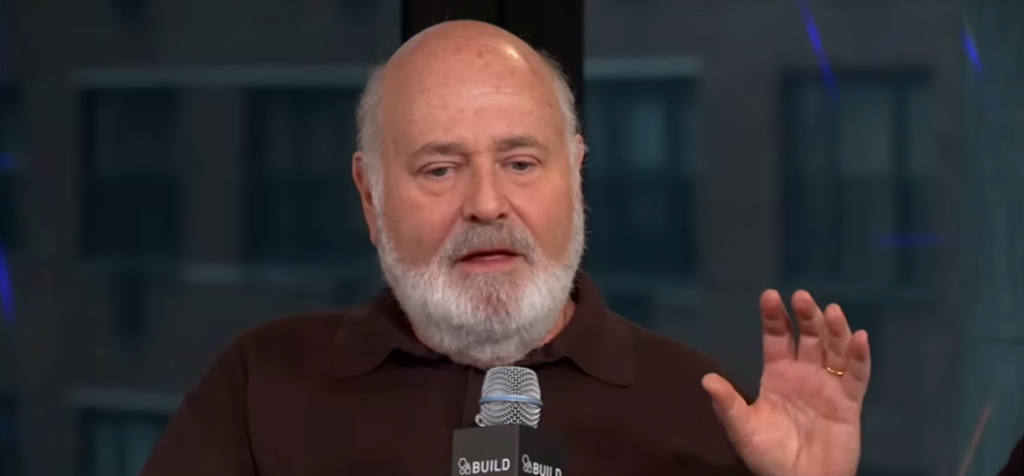
What makes the education dimension of this story interesting — and a little sad — is how clearly the world of Rob Reiner intersects with its possibilities. Growing up in that Brentwood compound meant growing up adjacent to wealth, culture, creative accomplishment, and professional access that most people never see. The difference between that setting and what Nick Reiner seems to have absorbed from it is difficult to ignore. Sometimes being close to success isn’t the same as having a route to it, particularly if the person living there is struggling with issues that no amount of private education or celebrity parents can resolve.
The other Nicholas Reiner—the chess expert, the poet, and the advocate—offers an alternative. A reminder that education pursued with genuine intention tends to leave a mark, but it’s not exactly a redemption arc. Literary journals publish his poems. ESPN has published his work. He has devoted years to giving voice to those the system ignores. It is a quiet kind of life, built brick by brick.
One name, two men. It’s still unclear whether their paths will ever find any broader meaning in how the public understands either of them. However, there is still a gap between their stories—one based on education and purpose, the other unraveling in spite of all material advantages.
