

A room with a narrow cot lined with paper, a cabinet of basic supplies, a sink, and a chair next to a desk piled high with paperwork and folders can be found in almost every American school. The fluorescent light is humming. No one has noticed the little handwashing poster that has been on the wall for so long. And a school nurse is sitting at that desk, or more likely standing in the doorway and observing a child enter with a stomachache that could be anxiety or something else entirely. National School Nurse Day is on Wednesday, May 6, 2026. It has been observed annually since 1972 to recognize the work that these professionals do in silence every day.
The word “quietly” is worth pausing on. The evening news doesn’t feature school nurses. They don’t show up in district press releases or school board meetings discussing curriculum initiatives and test results. In many schools, a single person is in charge of several hundred students’ health at once, handling everything from the child who forgot his inhaler to the adolescent exhibiting symptoms that the guidance counselor hasn’t yet identified. The scope includes leadership, care coordination, chronic disease management, community health, and emergency response, according to the National Association of School Nurses, which has served as this community’s professional home for decades and has its headquarters in Silver Spring, Maryland. That isn’t a job description. Five jobs, that is.
For the DoWEA community, which honored Michelle Ewing as the 2026 OSHNA School Nurse Administrator of the Year, this year’s celebration held special significance. As the DoWEA Pacific Region’s School Nursing Instructional Systems Specialist, Ewing works with nurses who provide care for students with military ties. This population faces unique challenges, such as frequent moves, parental deployment, and the general instability that comes with a life structured around service. By all accounts, listening is the first step in her approach. Relationships with the nurses working under her have been the foundation of her leadership; she has tracked their difficulties, acknowledged their accomplishments, and fought for the systems and equipment they genuinely require rather than just those that look good in a budget presentation. That type of leadership may seem unremarkable until you take into account how infrequently it occurs.
| Detail | Information |
|---|---|
| Observance | National School Nurse Day 2026 |
| Date | Wednesday, May 6, 2026 |
| Part of | National Nurses Week (May 6–12 annually) |
| Established | 1972 |
| Governing Body | National Association of School Nurses (NASN) |
| NASN Address | 1100 Wayne Ave, Suite #925, Silver Spring, MD 20910 |
| NASN Contact | info@nasn.org / 240-821-1130 |
| 2026 Award Winner | Michelle Ewing — OSHNA School Nurse Administrator of the Year |
| Ms. Ewing’s Role | School Nursing Instructional Systems Specialist, DoWEA Pacific Region |
| Key Responsibilities of School Nurses | Health screenings, chronic disease management, emergency care, mental health support, community coordination |
| Purpose of the Day | Foster understanding of school nurses’ role; celebrate their contribution to student health and academic success |
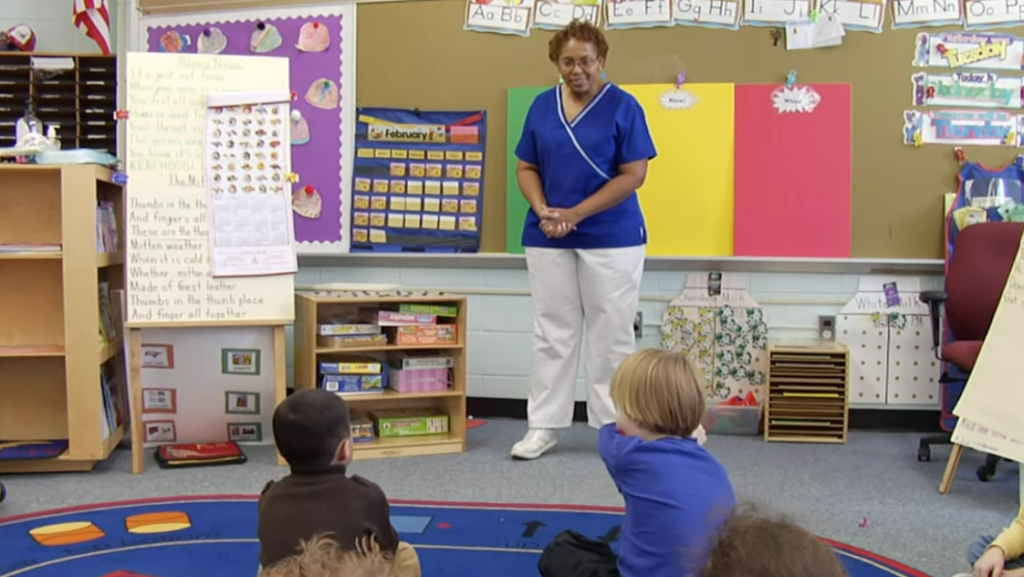
Here, the larger context is important. Compared to a generation ago, schools now have to deal with a student body that has far more complicated medical needs. Every school has children with Type 1 diabetes, seizure disorders, severe allergies that require epinephrine protocols, and the nurse is their main point of contact during the seven hours they spend away from home every day. The picture becomes clearer when you include the mental health component, which has grown significantly and continues to strain all of the building’s support systems. It seems like society keeps giving school nurses more responsibilities without always providing the necessary resources. Most healthcare administrators would be uncomfortable with the ratio of nurses to students in many districts.
The child who comes in three times a week with nebulous complaints and the nurse who gradually deduces that something is wrong at home are two examples of the particular texture of that work that is difficult to ignore. The parent of a student with a chronic illness is worn out and appreciative of someone else who is familiar with the procedure. The freshman who needs five minutes and a steady presence before returning to class after having a panic attack in the hallway. A test score doesn’t reflect any of that. Very little of it can be found anywhere other than in the silent record of one individual carrying out their duties with greater caution than the job description calls for.
The funding gaps and staffing ratios won’t be resolved by National School Nurse Day. It won’t address the more difficult issues of what states owe schools or what schools owe students in terms of healthcare access. However, it accomplishes a smaller but equally important task: it publicly identifies the contribution that is often overlooked the other 364 days of the year. That is not insignificant. It probably means more to the nurse seated at the desk with the humming fluorescent light than the proclamation writers fully understand.
