

Lamar University seems to be more than a little stubborn. They are in Beaumont, Texas, not Austin, Houston, or Dallas. They started out by taking over the floor of a high school in 1923 and have been building up from there. That beginning story tells us a lot. Louis Pietzsch didn’t begin with a school or a fund. He started with an empty third floor, permission from the school district, and what seemed like a lot of nerve.
Lamar University has been around for more than 100 years and now has about 18,000 students. It is accredited by the Southern Association of Colleges and Schools and is one of only two doctoral research universities in the Texas State University System. That’s not nothing. That’s a pretty amazing path for an institution that spent its first few decades arguing just to stay alive.
This place’s history is very important. The large number of new students after World War II that made Lamar a four-year school came with a bad side effect that most schools would rather not talk about. Laws said that African American veterans, who were men who had served their country, could not enroll. A group calling itself the Negro Goodwill Council fought back, protested, and talked to the governor. It didn’t open its own doors; instead, the institution made a separate Black branch. Before twenty-six Black students could finally get in, there were violent protests at the campus gates and a decision by a federal court in 1956. The Texas Rangers had to be called out before things got better. A new student center doesn’t erase that part of history. It’s what the place is.
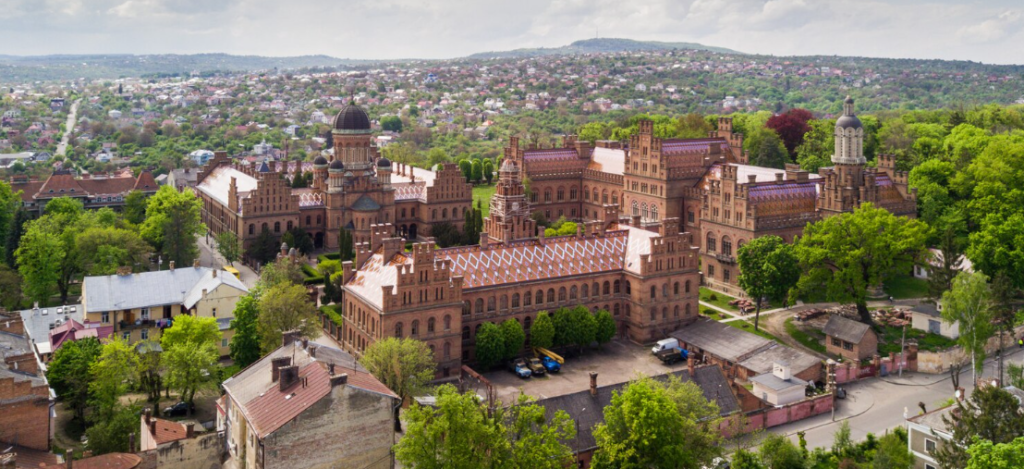
Of course, Lamar doesn’t look anything like he did back then. The Beaumont campus is about 300 acres big. It has a College of Engineering with ABET-accredited programs, a College of Business with AACSB International accreditation, and a College of Fine Arts and Communication with its own NPR station, KVLU at 91.3 FM. A medium-sized university in Texas that runs a National Public Radio station and a doctoral program in audiology is surprisingly cute. Lamar is one of only five schools in Texas that gives a clinical doctorate in audiology. National rankings don’t always show that kind of niche excellence, but the students and professionals who go through those programs care.
The Reaud Honors College, which opened in 2014 but has an honors program that dates back to 1963, seems like a deliberate message that Lamar doesn’t want to be seen as a regional fallback. There are engineering programs in Texas that are in areas where the petrochemical industry has always needed skilled workers. These areas have a lot of chemical and biomolecular engineering programs. If that closeness changes the curriculum in useful and limiting ways, that is a good question to think about.
Lamar also has a cool exchange program with Kunming University of Science and Technology in China. And, years ago, they teamed up with the University of Texas at Arlington to give high school students in Texas free online courses that count for two credits. The fact that the university has both global partnerships and deeply local access programs shows that it is aware of having two identities.
People can’t help but notice that Lamar keeps growing while hardly ever coming up in national conversations about higher education in Texas. The $28 million renovation of the Setzer Student Center, the addition of more housing in Cardinal Village, and the construction of a new administration building are all signs that the school is confident in its future. Who you ask in Beaumont will probably tell you if that confidence is fully justified or still being earned.
Lamar University has never really been able to relax, that much is certain. From a borrowed room above a high school, it grew little by little, sometimes painfully, into something with doctoral programs and a good name in engineering. Groups like that usually know how much it costs to stay alive. Being sure of something gives you a sense of stability.
