

When those in charge of schools, which are meant to serve as models of accountability, fairness, and order, consistently fail at all three, a certain kind of frustration develops. One of the biggest public school systems in Louisiana, Lafayette Parish School System, is currently experiencing that kind of frustration. Almost thirty thousand pupils. over 4,000 workers. Additionally, the organization that supports them both appears to have lost focus at some point.
Comeaux High School has been the most obvious flashpoint. When the Lafayette Parish School Board decided to close the school in March, students protested by pouring out into the parking lot with signs, some of them clearly shaken. A policy disagreement became a full-fledged legal battle because of the way the board handled the vote, despite the fact that declining enrollment is a legitimate concern. Parents filed a lawsuit, claiming the board had broken both its internal policies and the state’s open meetings law. They weren’t incorrect either. A court gave its approval to completely postpone the closure plan.
What came next reads more like improvisation than governance. The board convened once more, revoked its own vote, and then witnessed a court rule that the lawsuit was moot as a result of the rescission. Approximately $45,000 in attorneys’ fees were awarded to the parents who filed the lawsuit; this amount now sits uneasily on the district’s books. Navigating the chaos, Superintendent Francis Touchet opened a hardship waiver process in early May by sending letters to Comeaux families, enabling current students in grades nine through eleven to apply for transfers to other high schools. It’s a useful, perhaps even compassionate gesture. However, it also silently removes Comeaux’s student body without ever holding another official vote.
It’s still unclear how many families will choose to transfer or if there will be enough students left to make Comeaux’s fall semester feel like a typical school year. According to reports, an administrator at the school received a call confirming that it would reopen the following year. This information was shared via email, which was shared among staff members with a cautious sense of relief. For a community that has witnessed decisions change in a matter of weeks, that is a tenuous assurance.
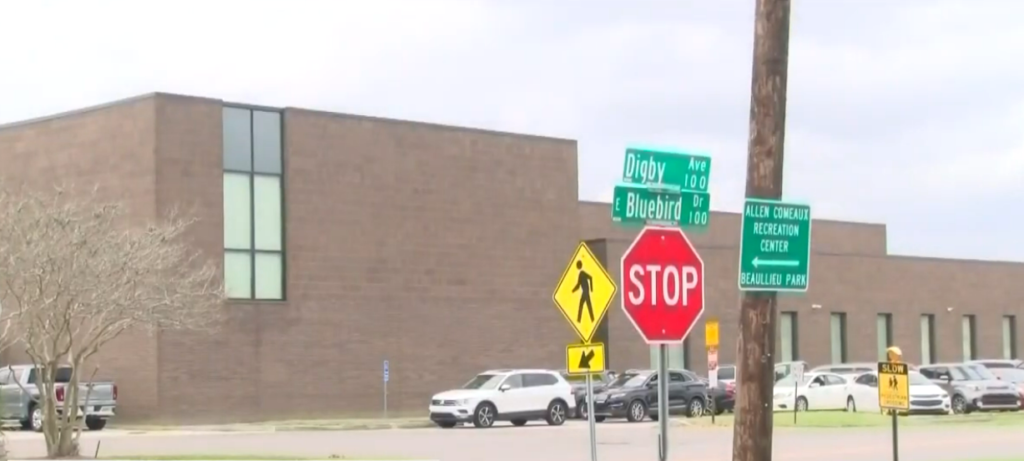
Even though the Comeaux situation is complicated, it may not be the district’s most problematic phase at the moment. The current controversy involving Robert Gautreaux, the former director of construction, maintenance, and facilities, may be the source of that distinction. He was charged with several felonies by a grand jury, including filing false public records, damaging public records, and obstructing justice. He is accused of creating fake quotes for building projects, allegedly using local businesses’ letterheads to make phony bids look authentic. He entered a not guilty plea. The difficult part is that, in spite of the indictment, Gautreaux was demoted rather than fired and is still employed by the district as a teacher.
Over 75 problems with LPSS finances were identified by a different audit carried out by Kolder Slaven and Company. Among the conclusions were that 127 projects worth $5.3 million lacked written contracts, and auditors expressed concern that larger projects were purposefully divided into smaller parts in order to avoid the requirements of competitive bidding. The district has the right to contest almost all of the findings, but 77 contested findings is a significant disagreement. It’s a systemic issue.
Pamela-Rae Hovey has been appointed by the district as the new director of construction, maintenance, and facilities in this setting. She has twenty years of experience in education, most recently as Judice Middle School’s principal. Although Hovey’s move from school leadership to facilities management is uncommon, she has managed construction projects throughout her administrative career, and her statement about accepting the position was clear: she wants schools that are secure, operational, and prepared to assist students. It’s another matter entirely whether that is feasible in the present environment.
Observing all of this from the outside gives the impression that the Lafayette Parish School System is an organization that can do truly good work, and has been for many Acadiana families for a long time. Excellence in education is mentioned in the district’s vision statement. One of its goals is to prepare students for international competition. For the teachers who show up every morning or the parents who attend school board meetings in the hopes that someone will finally pay attention, those aren’t meaningless words. What hurts the most in Lafayette right now is the discrepancy between a school district’s stated values and what its leadership actually accomplishes.
Before the next school year starts, time is of the essence. Students and families need definitive answers, not rolling revisions, regardless of the decisions that are yet to be made.
