

In the bottom of the seventh inning, when the bases are loaded, the score is tied, and no one in the stadium is sure what will happen next, a certain kind of tension develops. Most people anticipate a swing. Perhaps a strikeout. A ground ball that quietly ends the inning and forces extra innings. They don’t anticipate a suicide squeeze, which is now practically unheard of. However, the Florida high school baseball community hasn’t fully recovered from what South Walton High School called on May 15, 2026, at Hammond Stadium in Fort Myers.
For a championship game, the setup was almost too tidy. Before the final frame, South Walton and North Broward Prep had played themselves into a 5-5 tie, with both teams searching for any advantage. The Seahawks stood at the edge of something after loading the bases. One batter, one play, one choice made by a coaching staff prepared to put their faith in a teenager to carry out one of baseball’s most technically challenging plays. The batter dropped the bunt. Fowler, the runner on third, committed completely and without hesitation as soon as the ball left the pitcher’s hand. He received a standing-up score. South Walton won its first state title in program history with a final score of 6-5.
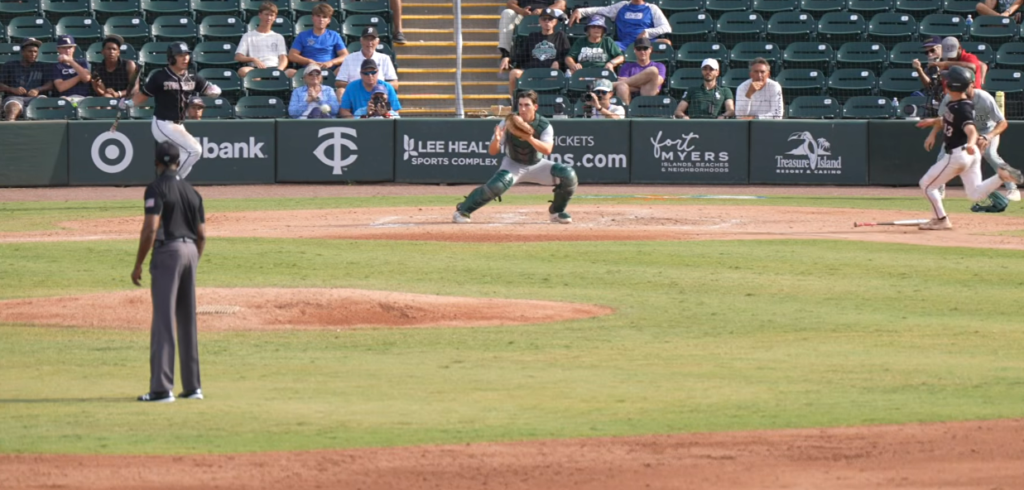
Online, the response was instantaneous and, to be honest, quite refreshing. The kind of sincere enthusiasm that rarely appears for high school sports began to pour into comment sections from fans who hadn’t considered a suicide squeeze since watching old highlight reels. One person commented, “Small ball is a lost art these days,” and it’s difficult to disagree. Professional baseball in the modern era has spent years eschewing these kinds of plays in favor of power, launch angle, and exit velocity. It felt like a tiny act of defiance against that entire ideology to watch a high school team win a state championship with a perfectly timed bunt.
However, it’s important to note that not everyone was applauding. Alongside the celebration, accusations of irregularities circulated, with some using the word “cheating” loosely, which seems like a stretch. Since the play was flawless and well-executed from every angle, it’s still not entirely clear what those criticisms were based on. The degree to which North Broward Prep’s supporters continue to voice their opinions will likely determine how long that controversy lasts.
A different kind of story was taking place up in Gainesville in the Class 6A bracket. In the 6A State Championship game, Buchholz High School lost to St. Thomas Aquinas, 5-1. This is the third year in a row that Buchholz has come this close and failed to win the championship. Repeated near-misses like that have a subtle, painful quality. Even though the program is obviously strong enough to win the championship, something keeps going wrong when it counts most. It’s possible that 2026 will be remembered as the year that ultimately forced them to identify what was lacking.
All things considered, Florida baseball performs at a level that merits far more national attention than it typically receives. The FHSAA currently operates eight different classifications, ranging from 1A to 7A, along with a Rural division, encompassing hundreds of programs throughout a state that generates more professional baseball talent per capita than nearly every other state in the nation. The Minnesota Twins’ spring training facility, Hammond Stadium, is a good location to settle disputes. Even if it’s just for a week, there’s something appropriate about high school students playing on a professional facility, the field is spotless, and the sight lines are good.
There’s a sense that Florida prep baseball is in a truly fascinating phase as the championships play out this year. For years to come, coaching clinics will likely repeat the South Walton squeeze play. Not because it was showy, but rather because it was intentional—a player who trusted his legs, a coach who trusted his player, and a moment that served as a reminder to everyone that sometimes the best plays in the game are the oldest ones.
