

On the outskirts of Villavicencio, past the Caracolí condominium, a school sits on a piece of land that gradually opens up as you approach it, a few hundred meters down a road that doesn’t announce anything noteworthy. There are sports courts. There are green areas on both sides. Children move freely between the classroom and the outdoors, which makes it seem more like a planned part of the day than recess. The first thing you should know about Stanford School is that it has nothing to do with the California university, aside from the fact that they both have aspirations for what education can be like for those who choose not to settle down.
In 1998, the school was founded under a completely different name. The storybook title Liceo Infantil Hansel y Grettel was appropriate for a classroom of twelve students and a single founding teacher who thought academic rigor and warmth didn’t have to clash. Although the name seems modest now, the conviction behind it was not. The school grew steadily throughout the late 1990s and early 2000s, receiving official approval from the Secretção de Educación as it progressed through primary, secondary, and full K–11 authorization. By 2014, the organization had expanded to the point where it required a new name, and it became Stanford School. This school now had a complete pedagogical vision, a campestre campus in a natural setting, and a plan for its future, so the name change felt less like branding and more like acknowledgment.
What distinguishes it most clearly from the urban private schools vying for the same families in Villavicencio is the campestre model. Wide green areas, a cultural kiosk for neighborhood gatherings, and classrooms that are described as open and ventilated in a way that truly means something when you see them are all features of the Finca San Bartolo, Vereda La Zuria campus, along with appropriate sports facilities like football, basketball, and volleyball. The physical design is based on the idea that children learn differently—possibly better—when they are not confined inside buildings all day. It may seem apparent, but when you visit the majority of private schools in Colombia, you’ll see how infrequently the architecture reflects this belief.
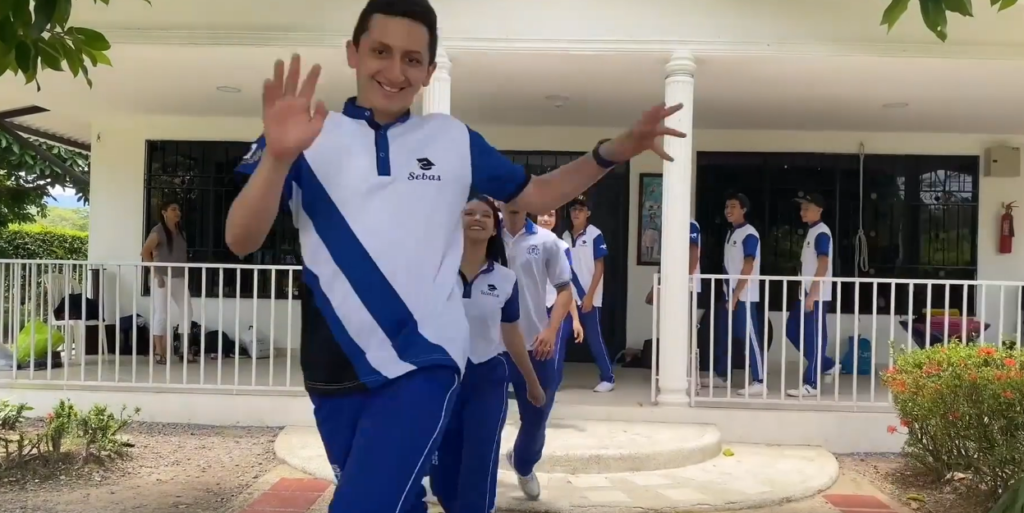
The other pillar is immersion in English. The curriculum at Stanford School views English as a constant that permeates many subjects and everyday school life from preschool onward, rather than treating it as a subject to be taught in discrete hourly blocks. For students who start at age three and continue through grade 11, this is a twelve-year continuous exposure arc that, if given consistently, results in true bilingual competency instead of the approximate conversational English that many graduates of private schools leave with. Although it’s still challenging to confirm from the outside how consistently that vision is carried out across grade levels, the school’s enrollment of more than 300 students and 25 years of operation suggest that the families who have witnessed it firsthand think it works.
The most unexpected feature for a school this size in this area is probably the international program. Stanford School, which offers immersion experiences in Spanish, English, and German for participants between the ages of 17 and 21, links young Colombians with students and programs in Canada and Europe through a partnership with Educultura STF. It is not an easy task to run a rural campus in the Meta department while maintaining successful international exchange partnerships across two continents. It conveys a level of institutional seriousness that is far higher than what a school would need to maintain its position in the local market.
Reading about what Stanford School has developed over the course of almost thirty years gives me the impression that the original teacher who founded it in a classroom with twelve students had a very clear idea of what she was trying to create. The school has been methodical in becoming that thing, one approved grade level and one new program at a time. It remains to be seen if the school can handle the actual challenges that lie ahead, such as hiring teachers in a cutthroat local market, maintaining infrastructure throughout a rural area, and maintaining enrollment stability as Villavicencio itself changes. However, a school that started out with a name straight out of a fairy tale and has since developed an international exchange program, a fully bilingual curriculum, and a campus that kids seem to enjoy visiting has already addressed the most significant question regarding its own existence.
