

The fact that Tiger Woods, one of the most famous athletes in modern history, attended an economics lecture at Stanford in the fall of 1994 after winning three straight U.S. Junior Amateur titles is somewhat amazing. He was eighteen. At the age of two, he had already made an appearance on national television. Nevertheless, he was being called “Urkel” by his college teammates as a freshman on a golf scholarship.
Notah Begay III, who would later become the first Native American to win on the PGA Tour, inspired that moniker. It’s the kind of minute, humanizing detail that gets lost in the mythology. Woods wasn’t flawless and untouchable from birth. He was raised in Cypress, California, and picked Stanford in part because it was nearby, in part because it was the current NCAA champion program, and, one suspects, in part because his father Earl had always encouraged him to value education in addition to competition. Tiger may have known at the age of 18 that Stanford would only be a temporary stop. Nevertheless, he showed up, and what transpired over the course of two seasons is the type of college career that other programs continue to compare themselves to.
The pace was set early in his freshman year. In September 1994, he won his first collegiate competition, the William Tucker Invitational. Before his first season was even a memory, he was named First Team All-American and Pac-10 Player of the Year. The next year was more of the same: he won the U.S. Amateur for a second and then a third time in a row, won another Pac-10 Player of the Year award, and continued to dominate tournament play. The final section is often overlooked. In addition to breaking amateur golf records while playing at Stanford, Woods became the first player in history to win three straight U.S. Amateur titles. It’s worth taking a moment to consider that.
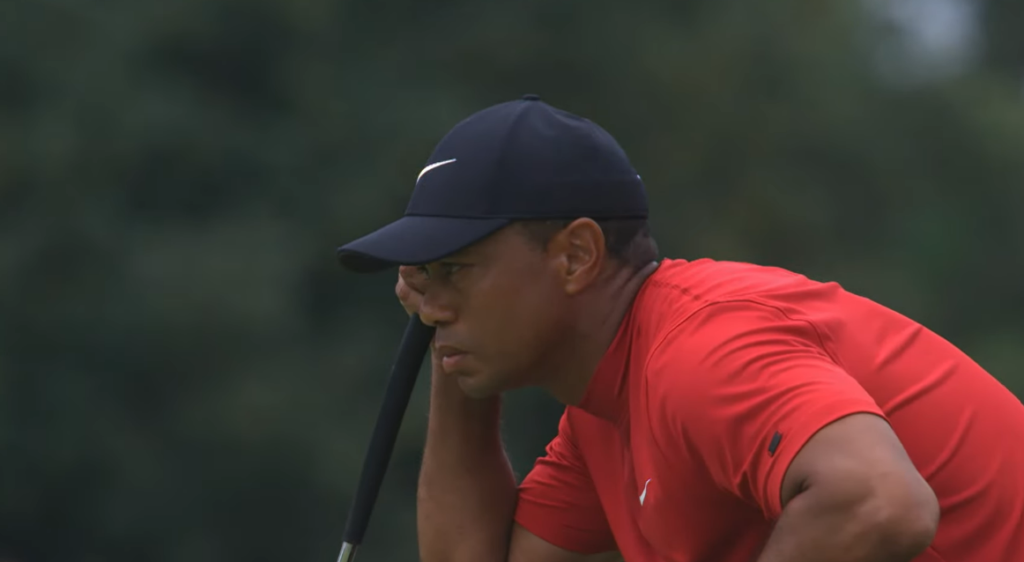
Anyone who follows college golf closely still remembers his 1995–96 sophomore season. Out of the thirteen competitions he entered, he won eight. Eight. At the Pac-10 Championships, he shot a round of 61, setting a record for the Stanford program. In 27 of his 41 rounds that season, he finished at par or higher. He went on to win the NCAA Individual Championship in June 1996 at the Honors Course in Ooltewah, Tennessee, shooting a 3-under total and being the only player in the field to finish below par. The first individual NCAA champion from Stanford since Frank Tatum in 1942. That week, the Cardinal finished fourth as a team, which is one of those odd numbers that implies even a program with a long history of dominance couldn’t quite match what one player was doing on his own.
When you consider everything at once, it’s difficult to ignore how little attention these accomplishments received at the time in comparison to what followed. With 11 tournament victories from 26 starts at the end of his two collegiate seasons, Woods’ win percentage was close to 42%. For a considerable amount of time, his stroke average of 70.96 over 76 rounds was among the best in program history. He won the Haskins Award, given to the nation’s most outstanding collegiate golfer, and the Ben Hogan Award the same year. These were not consolation prizes. These were signals, arriving in rapid succession, of something the sport had genuinely not seen before.
He became a professional in August 1996. With the most lucrative endorsement deals in golf history at the time, Nike and Titleist were waiting. By December, he was named Sportsman of the Year by Sports Illustrated. He won the Masters by 12 strokes by April of 1997. It took less than nine months to go from a Stanford classroom to an Augusta champion.
When you reflect on it all, what sticks in your mind is how the two years at Stanford were neither a formality nor a diversion. On a Navy golf course in Los Alamitos, with a father who had studied Jack Nicklaus’s records and set them as goals for a toddler, they marked the conclusion of an education that had started before Tiger could walk properly. Woods was already the nation’s most decorated junior amateur golfer when he enrolled at Stanford. What was already exceptional was refined during the college years. There’s probably no practical answer to the question of whether it needed to be sharpened. He went, won nearly everything there was to win, and then departed. From what followed, the sport has never fully recovered.
