

Nearly 400 educators, researchers, and policy advocates from all over the world convened for the 76th World Assembly of OMEP—the World Organization for Early Childhood Education, an NGO founded in 1948 that currently operates in more than 60 countries—in a conference hall at Chulalongkorn University in Bangkok during the sweltering Thai summer of July 2024. In the US, the incident did not make the front pages. It most likely ought to have.
A formal declaration advocating for a United Nations Decade for Early Childhood Care and Education was the assembly’s main product. The concept is fairly simple: a persistent, ten-year international commitment to treating a child’s early years as a public priority worthy of genuine investment, legal frameworks, and concerted worldwide effort rather than as a private family matter. This kind of international consensus-building may seem abstract to American parents navigating an expensive, inconsistent, and in many places barely functional child care system. It isn’t.
One of the conference’s more poignant moments came from Mathias Urban, director of Dublin City University’s Early Childhood Research Centre, who characterized the current environment that young children face as being shaped by poverty, forced migration, pandemic aftershocks, climate disruption, and what he called the erosion of democracy. He coined the term “polycrisis” to characterize the multifaceted pressures that children face even before they enter a classroom. Framing might sound dramatic. However, it becomes more difficult to ignore after spending any time with the data that was presented at the assembly. According to UNESCO data presented at the conference, about 30% of children in nations with tracking data are not developing normally. In fact, pre-primary school enrollment fell from 75% to 72% worldwide between 2020 and 2023. The trajectory is heading in the incorrect direction.
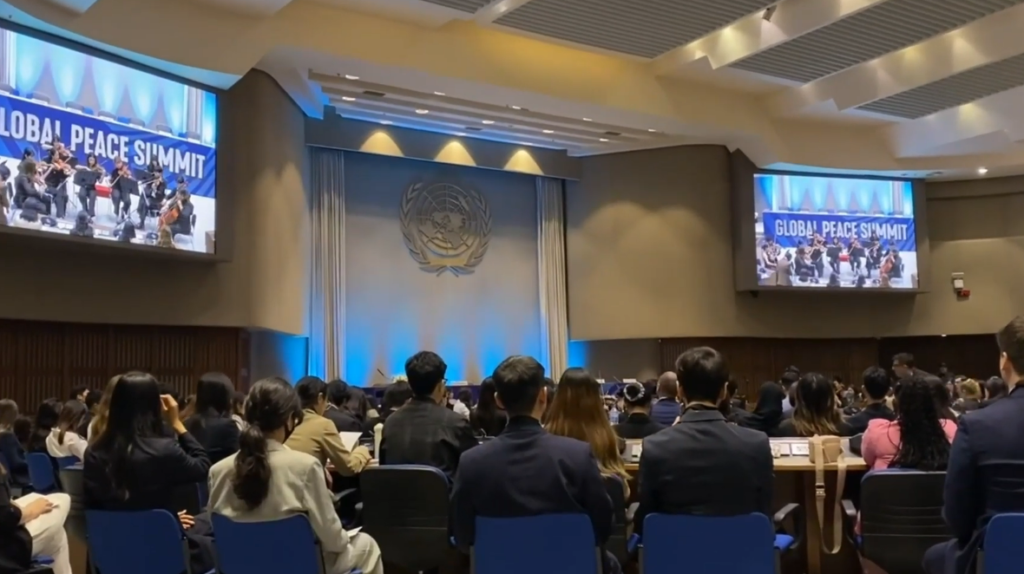
Ten goals for the proposed UN Decade were outlined in the declaration itself, ranging from bolstering national policy frameworks to safeguarding children from violence and making sure early childhood education is viewed as a public good rather than a commercial commodity. The recommendation to allocate at least 10% of national education budgets to pre-primary education is one goal that merits greater consideration in the American context. There isn’t currently a universal system of federally funded child care or preschool in the United States. Only a small percentage of eligible families are served by Head Start, which helps some of the most vulnerable families. There is still a glaring discrepancy between what American policy actually funds and what the research indicates is important.
Observing the proceedings from a distance gives the impression that the discussion in Bangkok was taking place at a level of seriousness that is rarely reached in American political discourse regarding early childhood. The assembly discussed more than just expanding the number of preschool classrooms. Using examples from Thailand, Kenya, Japan, and Cyprus, presenters discussed how to incorporate peace education into early learning curricula. One symposium featured paintings by migrant children in Cyprus next to origami cranes created by kids from the Nagasaki region—quiet, concrete reminders that the kids these policies affect are real kids, not abstract policy concepts.
OMEP’s Vice President for North America and the Caribbean, Asiya Foster, used her position at the assembly to link early childhood investment to environmental awareness and economic resilience. She framed it as infrastructure for the kind of generation that could truly navigate the future rather than as a social program. Although it’s still unclear whether any framing has been able to move federal policy in a sustained direction, this one may resonate differently with American audiences than the typical arguments about school readiness and cognitive development.
Despite the fact that climate change was identified at the beginning of the conference as one of the most urgent threats children face, only about 35 of the 399 presentations addressed early childhood through an explicit human rights lens, and not a single presentation looked at the impact of climate change on young children. One could argue that the discrepancy between declared urgency and actual research focus is a message unto itself. The world is sufficiently aware of the issue to meet in Bangkok and sign declarations. American parents, whose children will grow up in the same world as everyone else’s children, have a legitimate interest in closely observing whether the work that follows aligns with the aspirations of those declarations.
