

The majority of contemporary educational systems exhibit a specific type of cognitive dissonance. Play is one of the most potent forces behind early childhood development, according to decades of developmental research, from Vygotsky in the 1930s to neuroscience labs working today. However, real classrooms are going in the opposite direction, cutting down on free time, speeding up formal education, and viewing play as something kids can earn after finishing their actual work. There is little opportunity for diplomatic hedging in OMEP’s 2026 stance on this tension. Play is not an add-on. It’s the education.
That framing may seem straightforward, even apparent. However, it is controversial because it goes against the structure of most educational systems. The 78th OMEP World Assembly, which is meeting in Poznań this year with the goal of creating a common declaration on early childhood policy, has made it clear that self-directed play develops neural architecture in ways that neither worksheets nor standardized tests can match, and that treating it as optional enrichment rather than fundamental practice is a policy failure with serious developmental repercussions. The cost of making this mistake is compounding for kids who already experience inequality.
It’s difficult to ignore how long this dispute has been going on. Play is the pinnacle of child development, according to Friedrich Froebel, who founded the first kindergarten in the early 1800s. In 1967, Lev Vygotsky mapped the neurological pathways that play creates, especially those related to social-emotional development and self-regulation. In 1989, play was recognized as a legal right under Article 31 of the UN Convention on the Rights of the Child. However, as OMEP and the researchers who support its stance consistently point out, neither curriculum design nor accountability frameworks have consistently incorporated any of that recognition. On paper, the rights are present. A different story is frequently told in the classrooms.
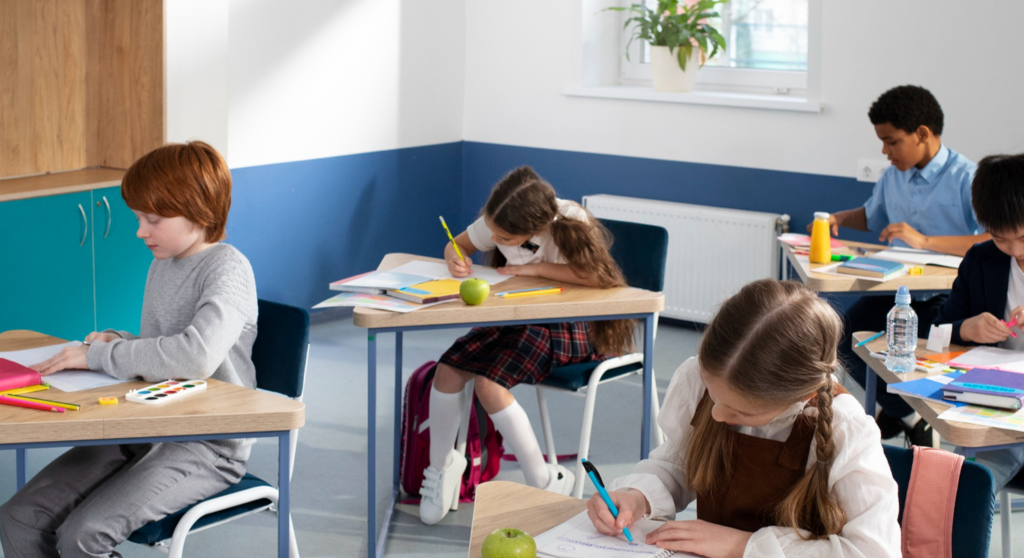
When you examine the research closely, it is more difficult to ignore what it actually reveals than the political opposition implies. According to a 2015 study, Welsh children who continued play-based learning until they were seven years old outperformed their peers in terms of academic performance and wellbeing. Pretend play has been directly linked to vocabulary growth, grammatical development, and metacognitive ability in longitudinal research. Children who engage in physical play—the kind that school risk assessments are increasingly restricting—have lower rates of anxiety and depression. Later on, children who are deprived of social play exhibit quantifiably worse outcomes in terms of their academic performance, peer relationships, and mental health. Even though the evidence gathered here may be among the most convincing in all of early childhood research, there is still a significant implementation gap.
A definitional issue is one of the challenges facing OMEP’s 2026 position. It’s really hard to define play. It is voluntary, intrinsically motivated, process-oriented, and child-controlled—the latter of which is precisely what makes it challenging to incorporate into lesson plans built around preset goals. It’s understandable that educators and school administrators find this challenging. Free play, guided play, and structured games differ significantly, and the research doesn’t support the idea that all types are equally beneficial for all goals. The spectrum is important. However, OMEP contends that giving up the entire strategy in favor of strict instruction is not the best course of action. Better comprehension of it and more deliberate design around it should be the goal.
Reading the position and the surrounding research gives the impression that this debate is finally coming to a turning point. The increasing amount of evidence is just too substantial to continue ignoring. It’s still genuinely unclear if the systems in charge of classrooms move quickly enough to take action.
