

Observing a crossword clue resist you can be enjoyable. You glance away after reading it once or twice. Six letters: “Rich, naturally fermented soy sauce.” The pencil lingers. This small obstacle will seem familiar to anyone who has spent a peaceful afternoon leafing through the back pages of a newspaper. It appears to be fairly straightforward, almost generous in its description. However, the solution doesn’t always appear right away.
Most of the time, TAMARI is the word the puzzle seeks. The most dependable solution for that exact phrase, according to the majority of solving databases, is six letters that naturally ferment. Regular solvers feel that crossword editors have come to love it. Tamari shows up infrequently enough for novice solvers to still hesitate, but frequently enough to feel like an old friend. USA Mirror Quiz puzzles These days, commuter newspapers’ syndicated grids have all relied on it.
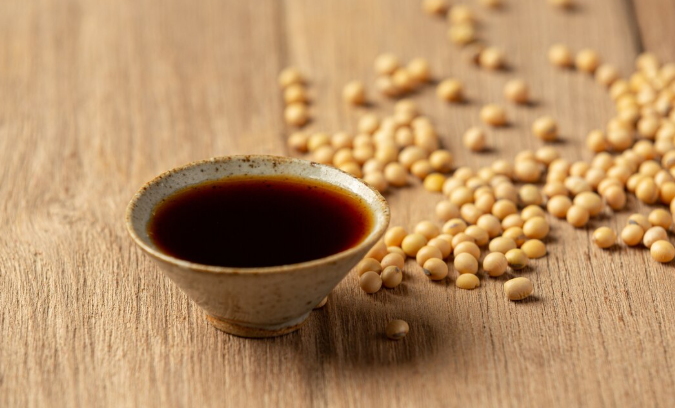
This is the interesting part, though. The answer changes if the clue changes even a little. “Japanese rich sauce made from soy beans naturally fermented with wheat or barley” actually uses the five-letter word SHOYU. Different pantry shelf, same family. And people don’t realize how important that little difference is. Because tamari is typically made with little to no wheat and is a byproduct of miso production, it has a deeper, thicker, almost meatier flavor. The more general term is “shoyu,” which refers to the common Japanese soy sauce that most of us pour without giving it much thought.
Over the past ten or so years, there has been a noticeable shift in crossword puzzle designers’ use of Japanese culinary vocabulary. In the past, “soy sauce” would be clearly indicated, and the response would be SOY. There is now a silent expectation that the solver understands the distinction between miso and mirin, as well as between tamari and shoyu. It’s unclear if this is a reflection of changing food culture or simply the need for new words with four to six letters. Most likely both.
As you observe this in a variety of puzzle databases, such as Wordplays, Crossword Heaven, and The Word Finder, you begin to see trends. Publications frequently reuse the same clue, sometimes verbatim. Years later, a clue from the 2023 Mirror Quiz reappears in a USA Today grid. Mental note-takers begin to identify the rhythm. Rich, fermented, six letters? Tamari. Five letters, barley or wheat? Shoyu. It turns into muscle memory.
The clue “Like soy sauce,” which completely confuses solvers, is another issue. Five letters, SALTY, is what that one wants. a descriptive response as opposed to a varietal one. The kind of pivot that distinguishes casual solvers from those who complete the Sunday grid in pen is the change from naming a sauce to describing its character.
The difficulty isn’t really what makes these clues enjoyable. It’s the meager education they sneak in. On a Tuesday morning, someone in Karachi, Birmingham, or Boise might fill in TAMARI and briefly wonder what it tastes like. Perhaps they will research it. The next time they visit the grocery store, they might purchase a bottle. Incorporating geography, chemistry, mythology, and now seemingly Japanese fermentation into the daily ritual of breakfast and coffee is something that crosswords have always done covertly.
It’s still unclear if tamari will continue to be the standard response or if a more recent term will eventually take its place. For the time being, however, when the clue says “rich, naturally fermented soy sauce,” the pencil should move confidently. There are six letters. T-A-M-A-R-I. Proceed to the following clue.
