

Every wall in Ryan Nelson’s kindergarten classroom at Jenny Lind Elementary has a timer. Every wall, not just one. He divides the day into these brief, intentional blocks because he thinks kids this age concentrate best in fifteen-minute increments. Most of his students pause in the middle of their sentences, look up, and move when the timer goes off. Observing five-year-olds who are already learning that time is structured and that things have an order is strangely touching. Knowing what many of them missed in the years prior to coming here is what makes it so moving.
The kids who will start kindergarten in the fall of 2025 were born in 2020, during the beginning or peak of a worldwide pandemic. They are the first generation to have that distinction, having spent the first few months of their lives in homes that were locked down, surrounded by adults wearing masks, and with little interaction with people outside of their immediate family. Since soon after birth, researchers have been observing this group and speculating about the significance of that beginning.
Classrooms across North America are now receiving the answers, and they are not wholly comforting.
According to a recent University of Alberta study, preschoolers born before and during the pandemic had more impairments in executive function, which is the group of cognitive abilities that control self-control, concentration, and adaptability. Significant increases in enrollment in speech and language therapy, an increase in the number of reports of language and hearing impairments, and delays in meeting developmental milestones were also observed. There was a noticeable lag in fine motor skills. These results are not abstract. They appear in classrooms as kids who have trouble gripping pencils, who are still unable to control their outbursts of frustration when something goes wrong, and who find it difficult to follow two-step instructions without losing the thread.
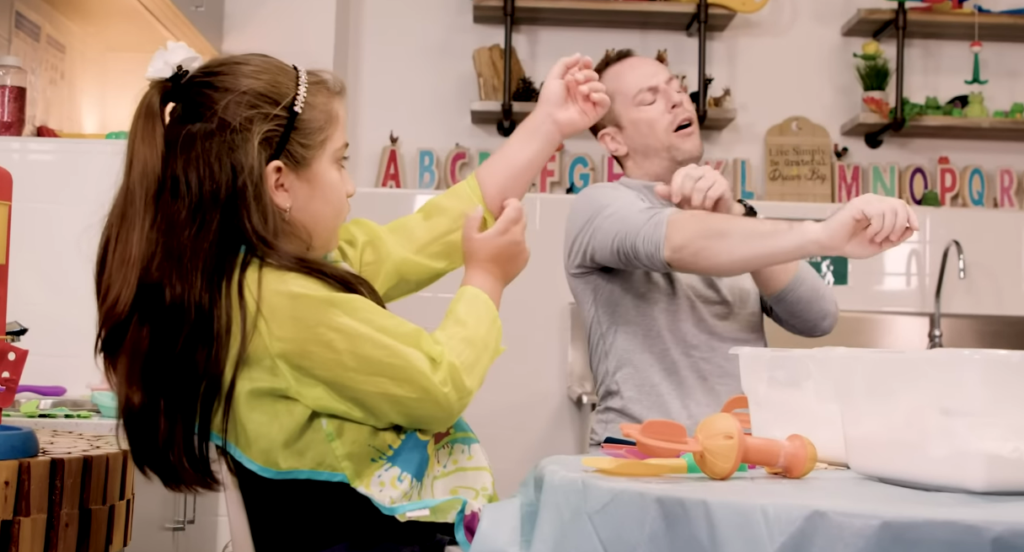
After fifteen years of teaching kindergarten at Minneapolis’ Lucy Laney Community School, Phebe Carr saw the speech delays in her current class right away. She has a cautious but tenable working theory: children learn to make sounds by observing mouths, and for the first year or more of many of these children’s lives, every adult face they saw was partially obscured. Although the research does not conclusively determine whether mask-wearing directly caused the speech delays, the observation is sufficiently common among teachers to be difficult to completely discount. Carr now uses flashcards with pictures of mouths shaped around particular sounds and in various positions. Two years ago, her students did not require nearly as much remedial work.
The image is not consistent. Throughout the pandemic years, children who had at least one very involved parent at home tended to develop more steadily. Without that anchor, they fell farther behind, and the difference between them and their peers grew in ways that closely correlated with neighborhood disadvantage and income. Using data from more than 540,000 kindergarten students with special needs across Canadian provinces, research from McMaster University’s Offord Centre for Child Studies discovered a 2.5 percentage-point increase in developmental vulnerability following the pandemic. This increase is small in percentage terms, but it represents thousands of extra students starting school who require more support than the system was designed to offer. Researchers are still trying to figure out why girls with special needs had a greater post-pandemic increase in vulnerability than boys.
Some of this might be resolved on its own, and with effective instruction and focused assistance, the Class of 2038 will close the gaps over the coming years. According to some preliminary research, children can catch up under the correct circumstances. However, there is a less pleasant possibility that coexists with that optimism: for kids who were already at a disadvantage prior to the pandemic, the developmental setbacks worsen rather than get better, making every year a little more difficult than it should be. Instructors such as Carr and Nelson appear to have an innate understanding of this. They are not holding out for additional research. The work has already started, the flashcard mouths are arranged on the desk, and the timers are mounted on the walls.⁖※
