

Approximately 600 people from all over Australia gathered in front of their screens on November 5, 2025, to participate in a free online symposium on early childhood leadership organized by Charles Sturt University. 600. That figure feels noteworthy for an industry that frequently finds it difficult to be taken seriously at the policy level and for a professional community that spends the majority of its time just maintaining services. This type of attendance indicates that the issue had been gaining traction for some time and that people were eager for a forum to discuss it openly.
Leadership in early childhood settings has never been more crucial, according to Dr. Leanne Gibbs, the Charles Sturt academic who co-convened the event. The industry is dealing with concurrent pressures that would put any workforce to the test, not because it sounds good as an opening statement. complicated changes in policy. shortage of teachers. Concerns about children’s safety and well-being have intensified since the pandemic. Additionally, there is a sustainability question that the industry hasn’t fully addressed: how do you retain seasoned educators when their compensation doesn’t match their responsibilities and when their emotional demands mount up more quickly than their professional support?
| Field | Details |
|---|---|
| Event | ECEC Leadership Research Symposium Online |
| Host Institution | Charles Sturt University |
| Co-Host | OMEP Australia (Organisation Mondiale pour l’Éducation Préscolaire) |
| Event Date | Wednesday, November 5, 2025 |
| Event Time | 12:30 PM – 5:00 PM AEST |
| Format | Free, national, online |
| Registrations | ~600 educators, researchers, and sector leaders |
| Key Convenor | Dr Leanne Gibbs, Charles Sturt University |
| Opening Speaker | Assoc. Prof. Lena Danaia, Charles Sturt University |
| Key Themes | Leadership, mentoring, workforce retention, educator wellbeing, sustainability, rural/remote leadership |
| CSU Presenters | Dr Leanne Gibbs, Dr Belinda Downey, Ms Melanie Elderton, Ms Su Garrett, Assoc. Prof. Lena Danaia |
| External Presenters | Prof. Frances Press (Griffith), Prof. Fay Hadley (Macquarie), Dr Marie White (QUT), Ms Emma Cross (Curtin), Dr Jessica Ciuciu (Deakin) |
| Charles Sturt University Motto | “For the Public Good” |
| University Guiding Ethos | Yindyamarra winhanganha — the wisdom of respectfully knowing how to live well in a world worth living in |
| University Profile | Leading university educating students in regional Australia; 70%+ of graduates live and work in regional areas |
| Research Group | Early Childhood Interdisciplinary Research Group (ECIR), funded by the CSU Sturt Scheme |
| SDGs Supported | SDG 3, 4, 8, 10, 17 |
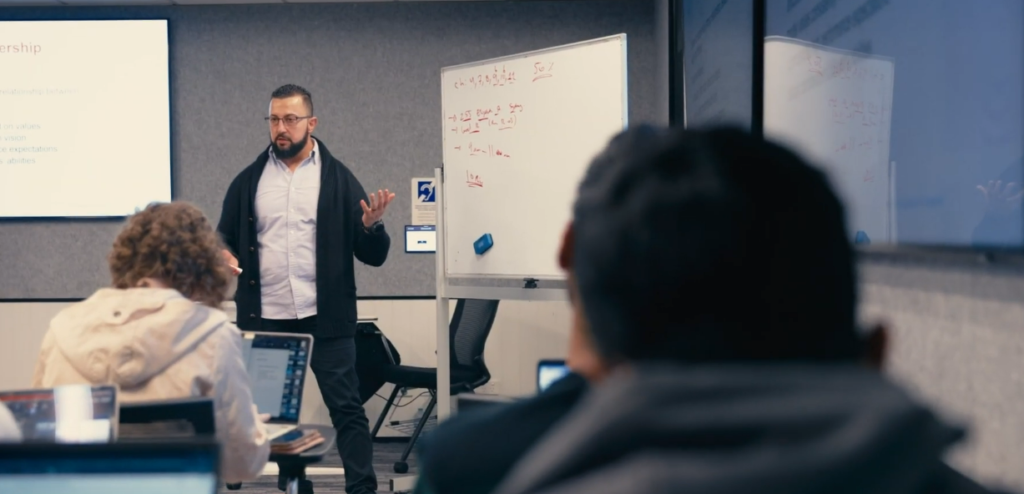
That complexity was reflected in the range of presentations that took place over the next four and a half hours. Griffith University professor Frances Press discussed the results of the Exemplary Early Childhood Educators at Work study, which had no intention of studying leadership but consistently found it to be the thread that connected everything that allowed for excellent practice. It’s worth sitting with just that observation. The research question was not about leadership. It turned out to be the solution. Professor Fay Hadley of Macquarie University argued that mentoring—rather than workshops or frameworks, but rather long-term, deliberate relationships between seasoned professionals and those who are coming up behind them—is the mechanism that truly develops leadership capacity in the industry over time.
The relational argument was stated most succinctly by Dr. Belinda Downey: leaders cultivate strong relationships through reflective practice, and those relationships increase educator retention and wellbeing. It sounds incredibly easy. Building a reflective culture in a small team requires a specific kind of intentional effort for an early childhood director who is juggling compliance requirements, staffing shortages, family concerns, and the daily work of supporting children’s learning. Many ECEC leaders remain ambivalent when discussing their own work as leaders, in part because the prevailing discourses around leadership don’t quite fit how they actually experience and think about what they do, according to Dr. Marie White of QUT. This tension feels quietly significant. The language they have access to and the actuality of the position are at odds. It may be more important to close that gap than any framework for leadership competency.
The day concluded with a talk by Dr. Leanne Gibbs on developing leadership in remote, rural, and regional early childhood settings—the areas where Charles Sturt University has consistently established its strongest ties. More than 70% of the university’s graduates find employment in regional Australia, where the ECEC workforce challenges are more severe than elsewhere due to factors like remote location, a lack of professional networks, difficult-to-fill positions, and a lack of mentorship opportunities. Gibbs’ research elevated the voices of those communities, exposing innovations that are not included in national policy discussions because their proponents are too far away from the venues where those discussions take place.
Looking at what this symposium actually brought together, it seems like Charles Sturt and OMEP Australia created something more than a conference program. By simply showing up, 600 people nationwide affirmed that early childhood leadership should be regarded as a serious field of study and professional investment, creating a legitimizing moment. It’s really unclear if that translates into better policy, better pay, or better resources. The fact that the research has been shared, the conversation has taken place, and the people who needed to hear each other did so is less ambiguous.
