

The city of Sasolburg does not typically garner much national attention. Located in the Free State’s Fezile Dabi District, this town is industrial and pragmatic, centered on petrochemical plants and steady labor that doesn’t make headlines. However, something is currently taking place in its residential streets that is directly related to one of the province’s biggest institutions of higher learning and is beginning to raise unsettling questions.
With three campuses and more than 9,000 full-time students, Flavius Mareka TVET College has become the quiet epicenter of a housing crisis that neither the college nor the municipality appear to be fully prepared to handle on their own. When stated aloud, the number of at least 38 student housing facilities in Sasolburg that have been found to be either operating illegally or failing to comply with fundamental municipal regulations sounds more like a structural failure than a singular issue.
The problems being reported are serious. overcrowding. risks of fire. Poor hygiene. unapproved modifications to the building. unlawful zoning. These are not conditions that appear suddenly. The demand for affordable lodging exceeds the supply of anything safe or regulated, so they develop slowly, block by block. When students come to Sasolburg in search of a place to stay close to campus, they usually end up in whatever they can afford, which is frequently a converted house with too many beds and too few exits. This may have been steadily getting worse for years.
The Metsimaholo Local Municipality is represented by DA Councillor Phemelo Tabile, who has been putting a lot of pressure on the matter. He has written to the municipal manager, made demands at council meetings, and called for long-term planning, audits, and enforcement. In response, the municipality has expressed what appears to be sincere concern. It appears that multidisciplinary operations involving town planning, public safety, environmental health, building control, and law enforcement have been initiated. It’s still unclear if that will result in significant change for students who are currently sleeping in non-compliant buildings.
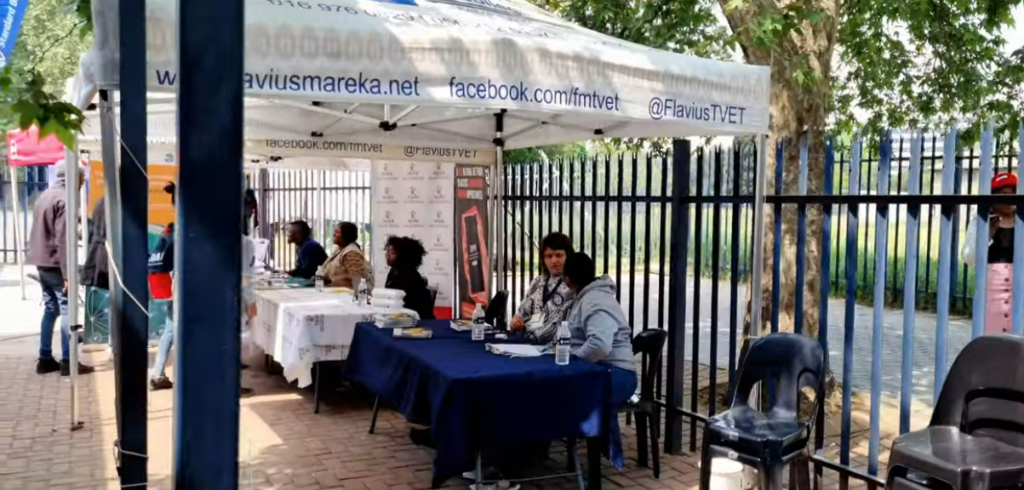
Observing this circumstance gives me the impression that it speaks to a larger issue regarding how South Africa manages the tangible reality of mass education expansion. For twenty years, Flavius Mareka has been competing. More than 200 students are enrolled in learnerships and more than 11,000 students are enrolled in the R191 program alone. In a mid-sized town, there are a sizable number of young people affiliated with a single institution; however, the housing, municipal services, oversight, and infrastructure surrounding them have not kept up. The college provides computer training, human resource programs, and business and engineering courses. What it hasn’t been able to provide, or hasn’t been obliged to provide, is a secure place for all those students to reside.
It is not aided by the national picture. The higher education minister stated that TVET enrollment numbers nationwide have “fluctuated over the five-year period,” citing the financial climate as a constraint. Students in crammed classrooms in Sasolburg, hoping the wiring holds, are at the bottom of the chain caused by funding constraints.
In all of this, it’s difficult not to consider the students themselves: eighteen-year-olds from the Free State pursuing a business qualification or an engineering studies certificate, navigating a new school and a housing market that isn’t looking out for them. Prospective students are cordially invited by Flavius Mareka’s website to contact the admissions office if they are interested. On request, the brochure can be mailed. What happens after you get there and begin looking for a room is something it doesn’t address.
More coordination is required between the municipality and the college than what is currently in place. That much seems clear. The question worth keeping an eye on is whether there is political will or if this is still a local problem that is discreetly handled at a distance.
