

In May 2025, a legal battle between two small spiritual schools over Google search advertisements was resolved in a federal courtroom in San Francisco, leaving behind a convoluted record and a great deal of false information that continues to circulate online.
Located in the redwood country of Humboldt County, Arcata, California, is a coastal college town with a certain laid-back vibe. It features historic Victorian homes and a main square surrounded by bookstores and coffee shops, making it feel a little cut off from the bustle of the outside world. It is also, somewhat paradoxically, the location of the University of Metaphysical Sciences, which has been in operation since 2004 and offers online degrees in metaphysical science through Wisdom of the Heart, a nonprofit organization registered in California. UMS operated in silence for the majority of its two decades of existence, enrolling students, providing spiritual counseling and ministry courses, and granting religious degrees at a cost of $795 for the entire curriculum. After that, it was in federal court for almost eight years beginning in 2017.
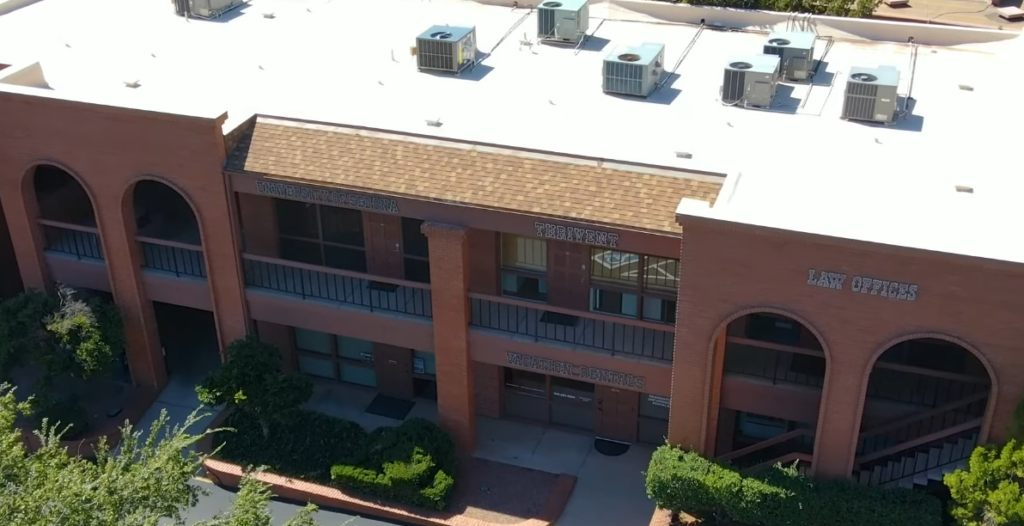
The lawsuit, or rather the series of lawsuits, was never what the internet claimed. There were no complaints from students. No governmental organizations looked into it. There was no challenge to accreditation. International Metaphysical Ministry, a Sedona, Arizona-based nonprofit that runs the University of Metaphysics and the University of Sedona, was the only plaintiff in each of the three cases that were filed between 2017 and 2025. Google ads were at the center of the controversy. IMM claimed that UMS was using its trademarked names as advertising keywords in order to drive traffic from IMM’s websites to UMS’s. According to UMS, it was not. On May 12, 2025, the third and last case was dismissed with prejudice.
In many reports, the term “dismissed with prejudice” is used as a technicality, but it carries significant weight. It indicates that the case has been closed for good. The same claims against UMS cannot be refiled by IMM. All ongoing litigation was terminated by the dismissal in Docket 216 of Case No. 4:21-cv-08066-KAW; no monetary judgment was entered, no damages were awarded, and no settlement payment was made. The September 2022 summary judgment order, Docket 74, was remarkably straightforward in its wording, declaring that the plaintiff’s evidence amounted to conjecture based on screenshots and that it had not provided billing records, technical logs, or expert analysis to support its keyword bidding theory. On all of the fundamental claims, the court determined that there was no triable issue of fact.
Beyond the particular dispute, it is instructive to watch the case’s longer arc develop. For the better part of ten years, two small religious schools that cater to the specialized market of metaphysical and spiritual education were in federal court over what is essentially a question of advertising configuration. Christine Breese, the founder of UMS, has written publicly about the institution’s decision to remain largely silent throughout the lawsuit, which in hindsight allowed false summaries to proliferate online unchecked. The false information had gained momentum on its own by the time AI content creators started scraping and reposting those summaries. Dedicated pages citing docket numbers that are publicly available through federal court records are now part of the correction effort.
The fact that the legal record had little to do with the questions people were actually Googling may be the most illuminating part of this whole story. Over the course of eight years, searches for “University of Metaphysical Sciences lawsuit update” periodically increased, indicating that prospective students and members of the metaphysical education community were genuinely concerned. The majority of the articles they discovered misrepresented the schools involved, exaggerated the seriousness of the allegations, or merely mentioned the existence of litigation without mentioning its consistent conclusion. The three cases never made it to a public trial. No court ever found wrongdoing by UMS. The institution, accredited by two holistic professional organizations and registered with the California BPPE, continued operating throughout — enrolling students, running coursework, and apparently remaining financially stable enough to sustain a legal defense that ultimately cost IMM more than it yielded.
The case is now closed. That fact has a certain simplicity to it. A dispute about keyword settings, filed first in an Arizona federal court in December 2017, moved to California, reassembled twice, and finally ended in a San Francisco courtroom on a spring day in 2025. No dramatic conclusion. No historic decision. Just a dismissal docket and a field of inaccurate articles still sitting in search results, waiting to be corrected.
