

Horse farms, tobacco fields, and the expansive stone campus of the University of Kentucky are all visible when driving through Lexington, Kentucky on a Tuesday morning. The area doesn’t immediately evoke the historic courts and cycling colleges of Cambridge, England. However, educational pipelines are rarely what they appear to be, and the tale of how Kentucky undergraduates wind up conducting research at one of the most prestigious universities in the world is, in a sense, a tale about the true purpose of cross-border education.
Ruschman, a UK alumnus, has given a direct account of the encounter. She claimed that at Cambridge, she realized how much her undergraduate education had prepared her. This wasn’t because Kentucky mimicked the Cambridge setting, but rather because the research culture she established there equipped her with the skills necessary to succeed in an entirely different one. “At Cambridge,” she replied, “I’ve realized how much my research experience at UK prepared me for this.” That is a precise and helpful statement. It’s not appreciation for a certification. It acknowledges the transfer of the skills.
| Field | Details |
|---|---|
| Topic | Cross-border education and research innovation — pathway from University of Kentucky to Cambridge and global institutions |
| Key Example | UK alum Ruschman — Kentucky education prepared her for independent research at Cambridge |
| Lead Institution | University of Kentucky (UK), Lexington, Kentucky — flagship land-grant public research university |
| International Office | UK International Center — supports international partnerships, faculty research abroad, global networks |
| UK College Example | Martin-Gatton College of Agriculture, Food and Environment — prepares students for international research |
| Recent Award | Hunter Coady (2026) — English-Speaking Union Scholarship for study at University of Oxford |
| UK Alliance Example | Estate Whiskey Alliance expanding to Ballindalloch Distillery, Scotland — first non-North American member |
| Global Program | UK Global Footprint — tracks and visualizes UK’s international engagement |
| AI & Cross-Border Education | Frontiers (2025 paper) — AI enabling virtual classrooms, multilingual tutors, adaptive learning across borders |
| Broader Context | Over 90% of top universities adopted AI teaching tools (2025 AI Action Summit data) |
| Key Concept | “The best ideas, the most transformative science, can come from anywhere” — UK International Center |
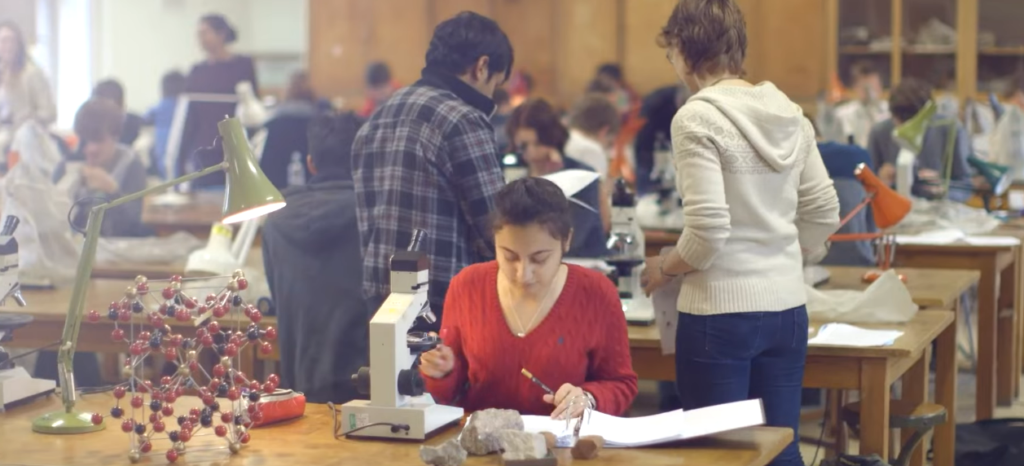
Over the past few years, the University of Kentucky has consciously increased its global presence through a variety of strategies, from formal partnership agreements and collaborative research projects to individual faculty members creating cooperative networks overseas and students pursuing competitive scholarship programs. “The grand challenges facing our commonwealth, nation, and world are often inherently transnational in nature,” according to the International Center’s own framing. The most inventive creative expression, transformative science, and best ideas can originate from any place. It goes beyond institutional messaging. It describes how research actually operates in practice and highlights a lesson that American universities, especially large public institutions with a history of land grants, have only recently learned about their own potential as global actors.
Although it is challenging to maintain in practice, the mechanism of cross-border research innovation is straightforward in theory. A student or researcher who has received extensive training in one setting brings with them a set of presumptions, approaches, and problem formulations that are genuinely distinct from those of colleagues who have received training in another setting. Research that neither party would have produced on their own is frequently the outcome of those sets of presumptions colliding constructively, not in rivalry but in cooperation. One example of this is the Kentucky to Cambridge route. Because it differs from what they already have, research groups in the UK and Europe find value in the perspective of a researcher from the UK’s College of Agriculture who has been trained in the unique requirements of food systems and environmental science in the American Midwest.
In recent years, the larger context for this type of cross-border movement has become increasingly complex. In ways that were not feasible ten years ago, AI tools are facilitating communication, collaboration, and data sharing among researchers across linguistic and geographic barriers. AI translation has been used by the UK’s Open University to translate courses into 37 languages, including Swahili. Currently, China’s National Smart Education Platform links more than 1,300 universities across the globe. These are real increases in cooperation and access. Geopolitical pressures, such as the rivalry between the United States and China over technology, new regulations governing data sharing, and worries about research security, are also causing friction in the very networks that support research innovation.
Over the next ten years, it’s still unclear how those two forces—growing digital connectivity and declining political trust—will balance out. The human element of cross-border education still matters in ways that technology alone cannot match, as evidenced by initiatives like the ones the UK runs and the unique paths taken by students like Ruschman. A researcher’s perspective is altered by a semester of real intellectual exchange in a different nation with different academic demands. Not always dramatically, and not always in ways that are easily readable in a publication list or resume. However, the changes add up, and the networks that develop around common research issues typically outlive the individual projects that gave rise to them.
Geographically and institutionally, Kentucky and Cambridge don’t seem like good partners. That’s one of the reasons the connection merits consideration.
